admin
admin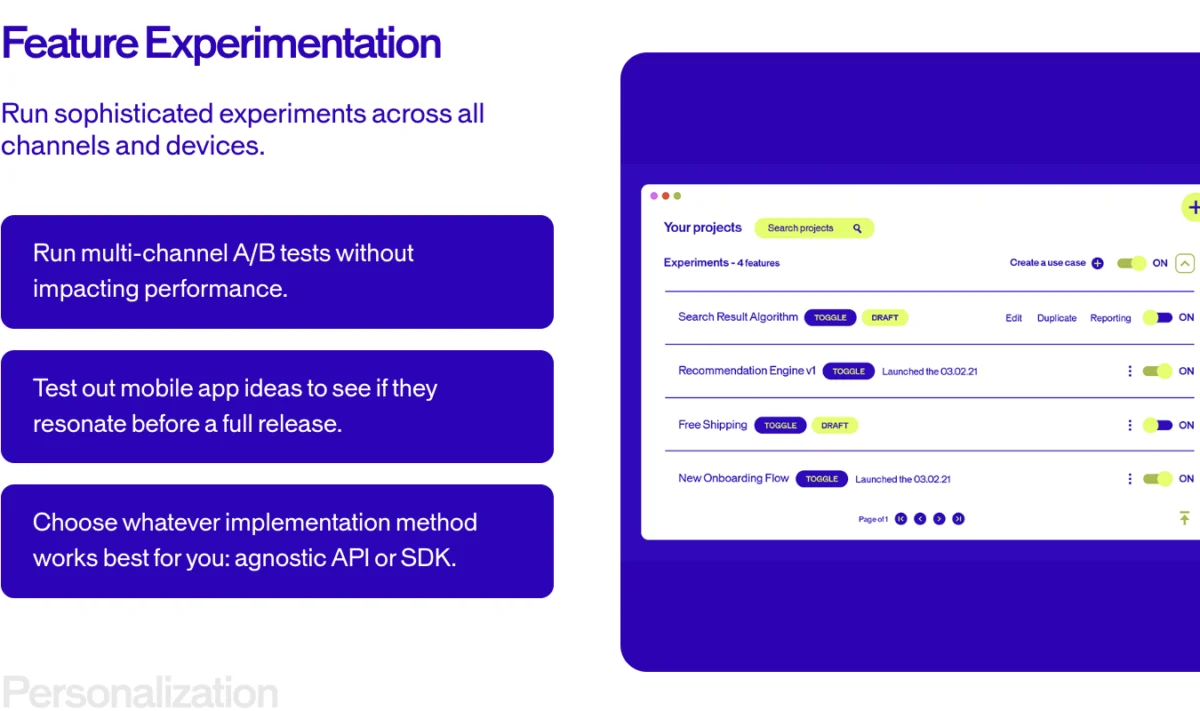
Digital transformation has evolved from a competitive advantage to a fundamental necessity for global enterprises, placing experimentation platforms at the center of modern business strategy. As organizations seek to mitigate the risks of product launches and maximize conversion rates, the choice between leading tools often narrows down to two dominant players: AB Tasty and Optimizely. While both platforms provide the infrastructure for A/B testing and personalization, they represent two distinct philosophies regarding how digital experiences should be optimized, managed, and scaled. This report analyzes the technical capabilities, organizational requirements, and strategic implications of deploying these platforms in a high-stakes corporate environment.
The State of the Experimentation Market
The global conversion rate optimization (CRO) software market is projected to reach several billion dollars by the end of the decade, driven by an increasing reliance on data-driven decision-making. In this landscape, experimentation is no longer confined to simple button-color tests on landing pages. It has matured into "feature experimentation," where backend logic, pricing algorithms, and entire user journeys are validated through rigorous statistical models.
Optimizely, founded in 2010, was a pioneer in the "no-code" visual editor space before pivoting aggressively toward the enterprise market. Following its acquisition by Episerver in 2020, it transformed into a full-scale Digital Experience Platform (DXP). Conversely, AB Tasty, founded in France in 2013, has carved out a significant market share by focusing on the intersection of experimentation and AI-driven personalization, positioning itself as a more agile, yet equally robust, alternative to legacy enterprise suites.
Core Capabilities and Technical Infrastructure
The fundamental difference between AB Tasty and Optimizely lies in their approach to the experimentation lifecycle. AB Tasty is engineered for velocity, whereas Optimizely is built for systemic depth.
AB Tasty: Speed and Personalization-First Logic
AB Tasty operates on a philosophy of "democratized experimentation." Its infrastructure is designed to reduce the friction between an idea and a live test. The platform’s visual editor is widely regarded as one of the most intuitive in the industry, allowing marketing and growth teams to modify front-end elements—such as hero images, copy, and CTAs—without requiring a developer to push code to production.
However, AB Tasty is not merely a "lite" tool. It offers server-side testing capabilities that allow for deeper architectural experiments. Its standout feature is the integration of EmotionsAI, a proprietary segmenting tool that uses predictive modeling to categorize users based on their psychological needs, such as a desire for reassurance or urgency. This allows teams to automate the delivery of personalized variations to specific emotional segments in real time.
Optimizely: The Enterprise Digital Experience Platform
Optimizely has moved beyond the "testing tool" label to become a comprehensive ecosystem. Its Web Experimentation and Feature Experimentation modules are part of a broader suite that includes Content Management Systems (CMS) and Content Marketing Platforms (CMP).
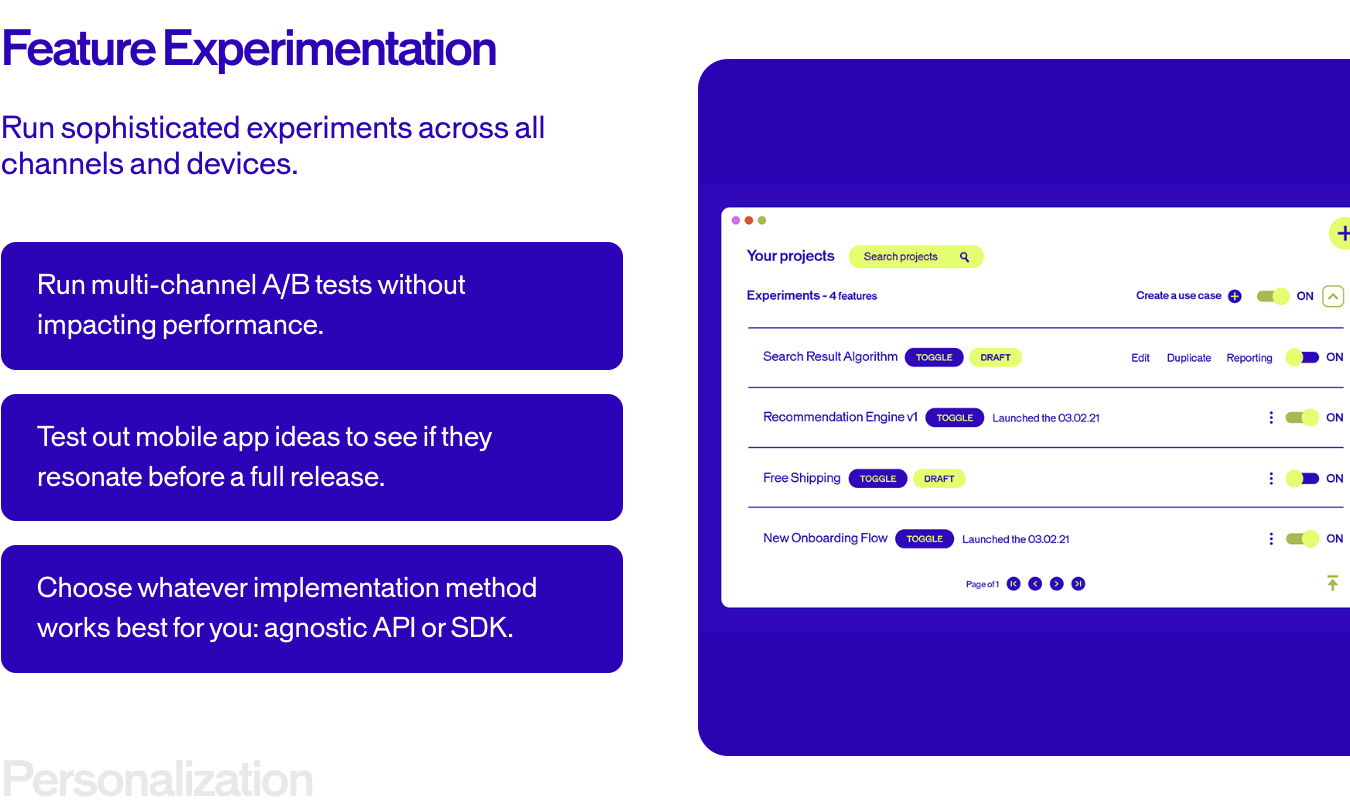
For technical teams, Optimizely offers superior control over the backend. Its use of robust Software Development Kits (SDKs) allows engineers to bake experimentation directly into the application code. This is particularly critical for "multi-armed bandit" testing—a form of machine learning that automatically routes traffic to the winning variation during the test—and for complex experiments involving data sensitive to "flicker" (the momentary flash of original content before the test variation loads).
Feature Management and the DevOps Workflow
A critical juncture in the comparison is how each platform handles feature flags and rollouts. This functionality is essential for modern software development, where teams must release features to a small percentage of users before a full-scale launch.
Optimizely treats feature management as a core pillar of product development. Its platform allows for "controlled rollouts," where a new feature is toggled on for specific user segments. If performance metrics or system stability degrade, the feature can be instantly "killed" without a new code deployment. This makes Optimizely a preferred choice for engineering-heavy organizations practicing Continuous Integration and Continuous Deployment (CI/CD).
AB Tasty also provides feature flagging, but its implementation is more closely tied to marketing experimentation. While it supports gradual rollouts, the workflow is optimized for teams that want to test a feature’s impact on conversion rather than just managing the technical release of that feature. This creates a more cohesive environment for cross-functional teams where marketing and product departments share the same dashboard to track both UI tweaks and new feature performance.
The Evolution of AI in Experimentation
Both platforms have heavily invested in artificial intelligence to differentiate their offerings in an increasingly automated market.
Optimizely’s AI assistant, Opal, acts as a co-pilot for the entire experimentation process. Opal is designed to assist in generating test hypotheses, drafting variations, and—most importantly—interpreting results. For enterprise teams running hundreds of tests simultaneously, the ability of an AI to summarize statistical significance and suggest "next best actions" in plain language is a significant productivity multiplier.
AB Tasty’s AI strategy is more specialized. While it offers insights, its primary focus remains EmotionsAI. This tool analyzes behavioral patterns—such as mouse movements, scroll depth, and click speed—to determine a user’s intent. This data allows for a level of personalization that goes beyond standard demographic or geographic targeting. By understanding the "why" behind user behavior, AB Tasty helps teams create more empathetic and effective digital experiences.
Organizational Requirements and Implementation Timelines
The choice between these two platforms often dictates the type of team an organization must hire or maintain.
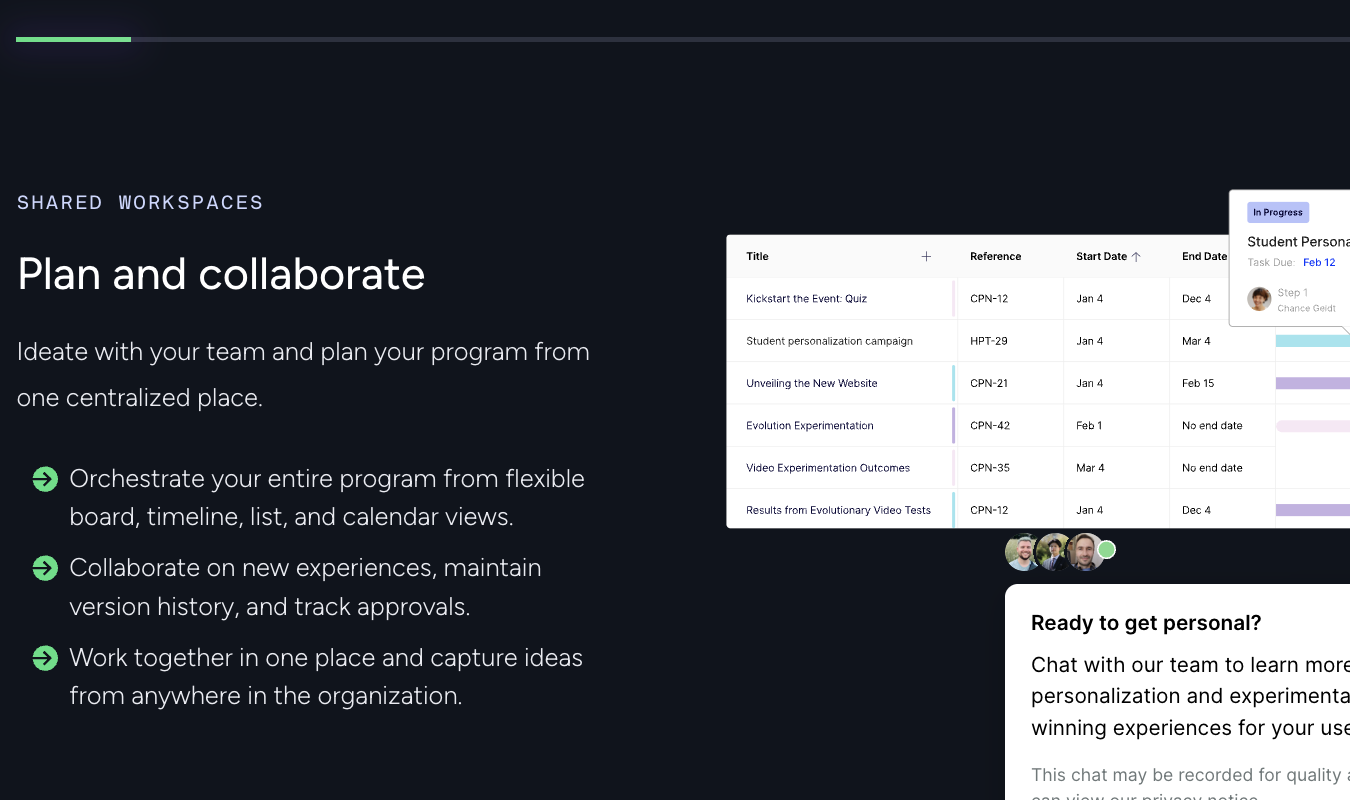
- AB Tasty Requirements: Because of its lower technical barrier to entry, AB Tasty can be managed by a leaner team. A typical setup involves a CRO manager, a designer, and a part-time developer for more complex scripts. Implementation is generally faster, with "time-to-value" measured in weeks rather than months.
- Optimizely Requirements: Optimizely often requires a dedicated "Center of Excellence" (CoE). This typically includes data scientists to interpret complex results, dedicated backend engineers for SDK integration, and product owners to manage the DXP ecosystem. Implementation is a significant undertaking that involves deep integration with the company’s existing tech stack, often taking several months to fully mature.
Pricing Structures and ROI Analysis
Neither AB Tasty nor Optimizely offers transparent, self-serve pricing. Both utilize a custom, quote-based model tailored to the organization’s traffic volume, feature requirements, and level of support.
Industry data suggests that Optimizely’s total cost of ownership (TCO) is generally higher, not only in terms of licensing fees but also in the overhead required to manage the platform. However, for organizations with multi-million dollar digital footprints, the incremental gains from Optimizely’s advanced statistical engine can represent a massive return on investment.
AB Tasty is often viewed as a more cost-effective solution for mid-market and large enterprises that want to avoid the "platform bloat" of a full DXP. By bundling experimentation and personalization into a single, unified interface, AB Tasty allows teams to achieve high ROI through agility and rapid iteration.
Strategic Implications and Future Outlook
As the digital landscape moves toward a privacy-first, cookie-less future, both AB Tasty and Optimizely are shifting their focus toward first-party data and server-side experimentation. The "flicker effect" and browser-based tracking limitations are making traditional client-side testing more difficult, favoring platforms that can operate deeper within the application stack.
For decision-makers, the "AB Tasty vs. Optimizely" debate is a question of strategic alignment:
- Agility vs. Scale: If the goal is to empower marketing teams to iterate quickly and deliver highly personalized experiences with minimal engineering intervention, AB Tasty is the superior choice.
- Infrastructure vs. Tooling: If the organization views experimentation as a fundamental part of the software engineering lifecycle and requires a platform that can manage content, commerce, and testing across a global enterprise, Optimizely is the industry standard.
The broader impact of this choice extends to the company culture. Adopting Optimizely often signals a shift toward a rigorous, engineering-led experimentation culture. Adopting AB Tasty suggests a focus on customer psychology and marketing fluidity.
In conclusion, both platforms are leaders in the Gartner Magic Quadrant for a reason. They offer the stability and statistical rigor required by modern corporations. However, the divergence in their feature sets—AB Tasty’s focus on emotional intent and ease of use versus Optimizely’s focus on feature management and DXP integration—means that the "right" choice depends entirely on the organization’s technical maturity and strategic priorities. As AI continues to automate the interpretation of data, the value of these platforms will increasingly lie in their ability to turn raw user behavior into actionable business intelligence.