
 rifanmuazin
The landscape of digital experimentation has undergone a radical transformation as of 2026, driven by the democratization of sophisticated testing tools and the integration of generative artificial intelligence. In an era where AI can generate hypotheses, write front-end code for variants, and summarize complex statistical results in seconds, the barrier to entry for A/B testing has effectively vanished. However, industry experts warn that while execution has become inexpensive, the competitive advantage for modern enterprises now resides in the rigor of their processes, the transparency of their data, and the discipline of their decision-making frameworks.
The Shift from Tactical Growth to Operational Necessity
For much of the early 21st century, A/B testing was viewed as a tactical "growth hack" utilized primarily by high-traffic tech giants. By 2026, this perspective has shifted entirely. As customer journeys have become increasingly fragmented across multiple devices, platforms, and social commerce channels, companies can no longer rely on marketing intuition or static campaigns. Experimentation is now an everyday operational necessity.

Leading organizations, such as HubSpot, have spearheaded this shift by embedding experimentation directly into their core marketing systems. HubSpot’s "Loop framework" serves as a primary example of how modern companies are moving away from isolated tests toward a continuous cycle of learning. This systemic approach reflects a broader industry trend where the goal is not merely to "win" a specific test, but to build a cumulative knowledge base that informs long-term strategy.
The Foundation of Modern Experimentation: Avoiding GIGO
As the volume of experiments increases, the risk of the "Garbage In, Garbage Out" (GIGO) effect has become the primary threat to data integrity. In the current environment, GIGO typically manifests when hypotheses are built on shallow research, unvalidated AI outputs, or messy tracking protocols.
Market analysts point out that the over-reliance on AI-generated buyer personas is a growing concern. When companies run experiments based on synthetic data rather than observations of real customer behavior, they risk optimizing for an audience that does not exist. To combat this, the industry has seen a resurgence in the importance of foundational research. Professional testers in 2026 emphasize that an experiment is only as strong as the research that preceded it.

The Role of Mental Models in Interpreting Outcomes
The psychological framework through which a team views experimentation often dictates the value they derive from it. Modern practitioners utilize specific mental models to guide their inquiry. One such model, famously articulated by physicist Richard Feynman, suggests that if a result disagrees with the experiment, the hypothesis is simply wrong—regardless of how elegant the initial guess was.
Furthermore, the objective of optimization has evolved. In 2026, the industry consensus is that experiments should not aim to prove a team right or wrong, but rather to determine the underlying "why" behind user behavior. Understanding the mechanics of a conversion lift is considered more valuable than the lift itself, as it allows for replication across different channels and product lines.
Strategic Criteria: When to Launch an Experiment
Despite the ease of running tests, high-performing teams in 2026 are more selective than ever about when to deploy an A/B test. Strategic testing is generally reserved for scenarios where the potential impact is high and the data is clean enough to provide a definitive answer.
Organizations should proceed with an A/B test when there is a clear, data-backed hypothesis and when the traffic volume is sufficient to reach statistical significance within a reasonable timeframe (typically 14 to 30 days). Conversely, testing is discouraged when a change is a "no-brainer" fix for a broken user experience or when the traffic is so low that the test would need to run for months to reach a conclusion. In these low-traffic cases, qualitative methods like user testing or heuristic evaluations are increasingly preferred over quantitative A/B tests.
The 2026 Experimentation Stack: Beyond Flashy AI
Marcella Sullivan, a prominent Conversion Rate Optimization (CRO) expert, recently conducted a survey of experimenters across in-house teams and global agencies to identify the features that truly matter in a 2026 experimentation stack. While vendors often market "flashy" AI features, the survey respondents highlighted a different set of priorities.
The recurring themes among professionals include:

- Prompt-Led Workflows: The ability to use natural language to set up experiments and segments.
- Raw Data Access: A move away from "black box" analytics toward transparent, exportable data that can be audited by internal data science teams.
- Stronger Integrations: Seamless connections between testing platforms, Customer Data Platforms (CDPs), and CRM systems.
- Automation of Repetitive Tasks: Using AI for documentation and quality assurance (QA) rather than just idea generation.
The takeaway from the current market is that the best platforms are those that reduce manual labor while maintaining a high degree of human oversight and transparency.
Data Triangulation: Reaching Defensible Insights
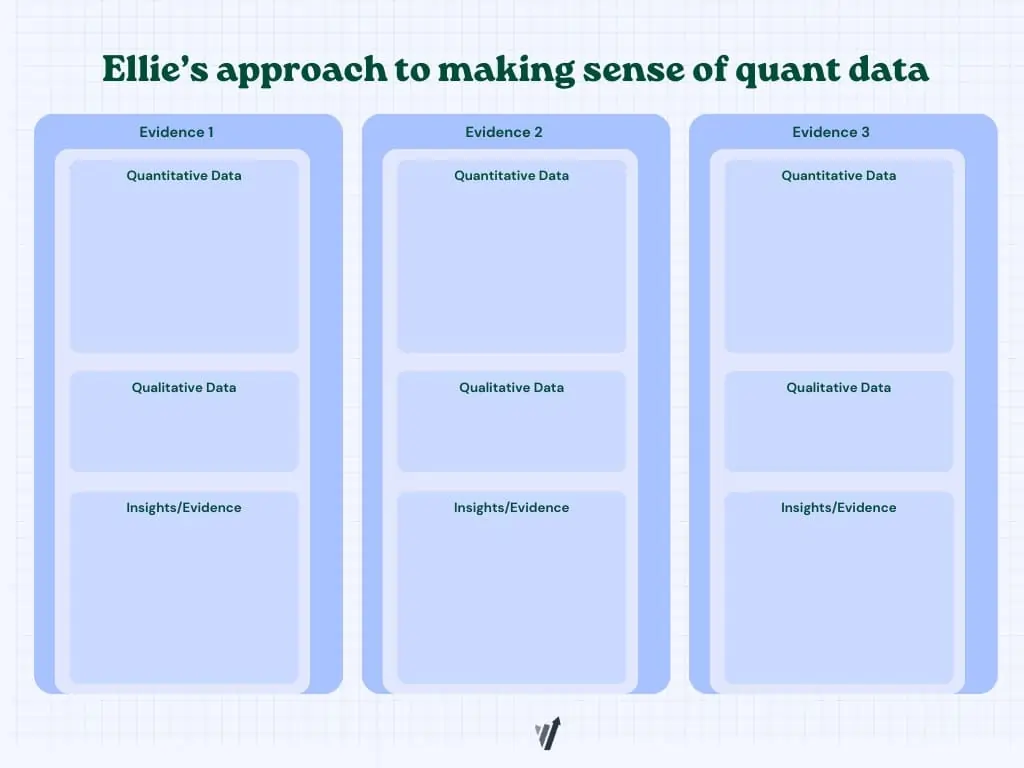
A significant trend in 2026 is the move toward data triangulation. Recognizing that no single data source provides a complete picture, teams now synthesize multiple data types before finalizing a hypothesis. This involves combining quantitative data (analytics, heatmaps) with qualitative data (user interviews, surveys) and competitive intelligence.
Ellie Hughes, Head of Consulting at Eclipse Group, advocates for a "qualitative approach to quantitative data." This involves visualizing numbers in ways that reveal human patterns and pairing those insights with direct user feedback. For example, if analytics show a high drop-off rate on a checkout page, a team might use session recordings to see if users are struggling with a specific form field, and then cross-reference this with customer support tickets. This multi-dimensional approach ensures that insights are defensible and grounded in reality.

Statistical Frameworks: Frequentist vs. Bayesian
The debate between Frequentist and Bayesian statistical frameworks remains a central topic in the experimentation community.
- Frequentist Testing: Based on randomized controlled trials, this method relies on fixed sample sizes and p-values. It is valued for its robustness in de-risking decisions, though it is often criticized for being unintuitive for non-statisticians.
- Bayesian Testing: This probabilistic framework updates its "beliefs" as more data becomes available. It answers the question: "How likely is it that version B is better than version A?"
While Bayesian testing is often seen as more "business-friendly" due to its easier-to-understand outputs, practitioners warn that it can be sensitive to the "priors" (initial assumptions) set at the beginning of a test. In 2026, many leading tools offer both frameworks, allowing teams to choose the method that best aligns with their risk tolerance and organizational culture.
The ALARM Protocol for Variant Design
To ensure that variants are designed for maximum learning rather than just "quick wins," many teams have adopted the ALARM protocol. This structured framework challenges teams to think critically about their executions:

- Alternative Executions: Exploring multiple ways to test the same hypothesis.
- Loss Factors: Identifying why an experiment might fail before it launches.
- Audience and Area: Precision in defining who sees the test and where.
- Rigor: Applying psychological principles and prior research to the design.
- MDE & MVE: Determining the Minimum Detectable Effect and the Minimum Viable Experiment.
By following this protocol, organizations reduce the likelihood of "flat" results caused by poor execution rather than a flawed hypothesis.
The Reality of GenAI: Efficiency vs. Hallucination
As of 2026, approximately 83.3% of experimenters report using generative AI tools like ChatGPT or Claude on a daily basis. The primary use cases involve analyzing large datasets, coding variants, and drafting documentation. However, the industry has also become acutely aware of "AI hallucinations"—scenarios where models produce confident but entirely fabricated insights.
To mitigate this risk, the "human-in-the-loop" model remains the gold standard. While AI can surface anomalies or draft variants, human judgment is required to declare winners and interpret the strategic implications of a test. Leading firms have implemented "AI guardrails," ensuring that all AI-generated code and data summaries are audited by a human expert before any deployment.

Common Pitfalls and the Future Horizon
Even with advanced tools, several common mistakes continue to plague experimentation programs in 2026. These include "peaking" at results before statistical significance is reached, ignoring "guardrail metrics" (such as site speed or customer support volume), and failing to document why a test was run.
Looking toward 2027, the industry is bracing for further evolution. Trends suggest a move toward deeper server-side experimentation to bypass browser limitations, an increased focus on privacy-compliant tracking, and the rise of "hyper-personalization" where A/B testing evolves into real-time, AI-driven experience optimization for individual users.
In conclusion, the state of A/B testing in 2026 is one of paradoxical simplicity and complexity. While the tools have made it easier than ever to "run a test," the true leaders in the space are those who have mastered the art of rigorous thinking, data triangulation, and disciplined decision-making. The future belongs not to the fastest testers, but to the most systematic learners.








