
 rifanmuazin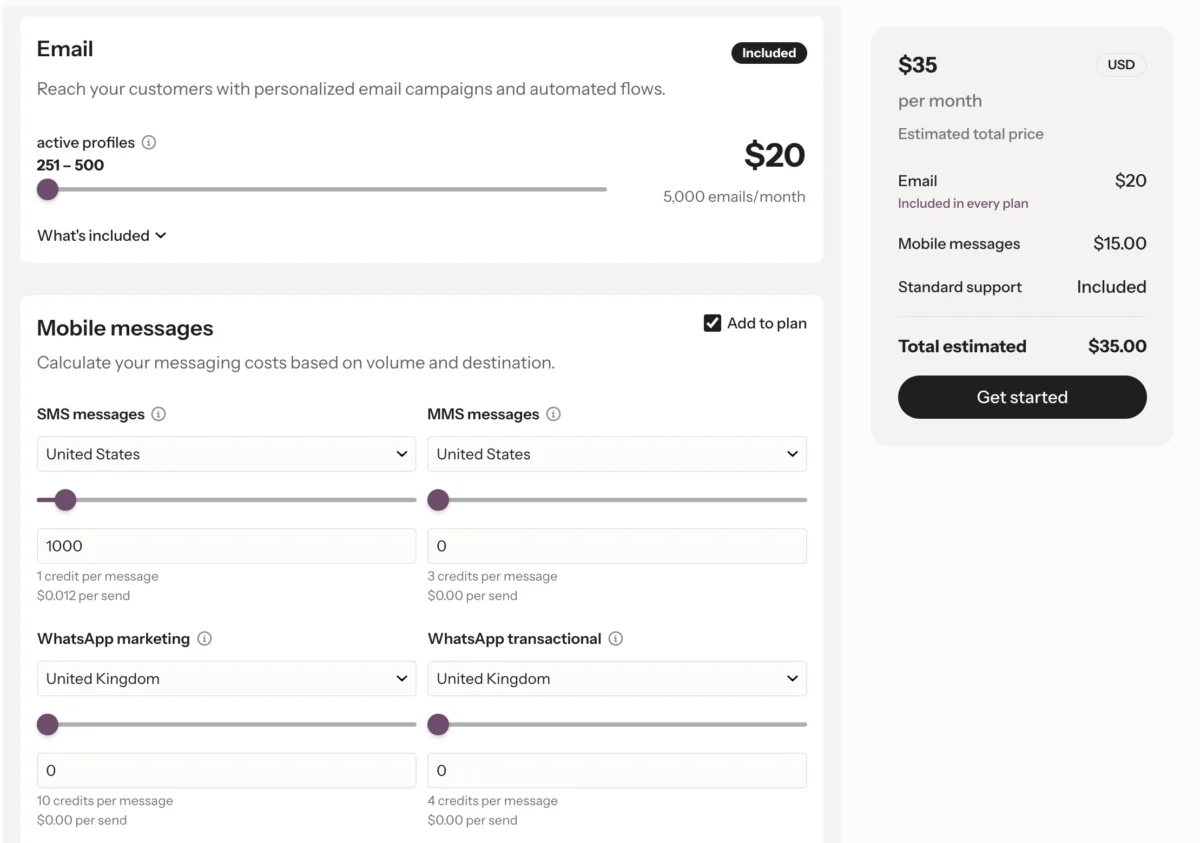
Klaviyo SMS operates as an integral component of Klaviyo’s comprehensive email and SMS marketing platform, positioning itself as a unified solution for e-commerce brands seeking to consolidate their communication channels. This strategic integration is particularly appealing to businesses already leveraging Klaviyo for email marketing, offering a seemingly seamless pathway to expand into SMS capabilities. However, a detailed examination of its features, pricing model, and inherent limitations reveals a nuanced landscape, especially when benchmarked against alternatives like Omnisend. This analysis, accurate as of April 2026, delves into the operational realities of Klaviyo SMS, dissecting its value proposition, potential friction points, and competitive standing in the rapidly evolving digital marketing ecosystem.
The Evolving Landscape of Multi-Channel Marketing
The contemporary e-commerce environment increasingly demands a cohesive multi-channel strategy to effectively engage customers. As consumers navigate a multitude of digital touchpoints, brands are compelled to adopt platforms that facilitate integrated communication across email, SMS, push notifications, and more. SMS marketing, in particular, has witnessed a resurgence, driven by its immediacy and high engagement rates. Industry data consistently shows SMS messages boasting open rates significantly higher than email, often exceeding 90% within minutes of delivery, making it an indispensable tool for time-sensitive promotions, transactional alerts, and customer service updates.
Klaviyo entered this arena with a strong foundation in email marketing, quickly establishing itself as a preferred platform for e-commerce businesses due to its robust segmentation capabilities and automation workflows. The subsequent integration of SMS was a natural progression, aimed at providing a holistic marketing automation suite. This move reflects a broader industry trend where standalone marketing tools are being supplanted by integrated platforms that promise streamlined operations, unified customer data, and enhanced personalization across all touchpoints. The challenge, however, lies in delivering this integration without compromising on flexibility, global reach, or cost-effectiveness.
Klaviyo SMS Capabilities: A Closer Look
Klaviyo SMS is not merely an add-on; it is deeply embedded within the platform’s architecture, drawing upon the same audience data and automation infrastructure used for email. This allows for the creation of sophisticated, multi-channel customer journeys that can dynamically switch between email and SMS based on customer behavior and preferences.
-
SMS Campaign Management: The process of setting up one-off SMS campaigns within Klaviyo is generally straightforward. Marketers can easily compose messages, select specific customer segments, schedule delivery times, and launch campaigns with minimal friction. A standout feature is the platform’s advanced audience targeting, which enables highly granular segmentation based on historical actions, purchase behavior, and engagement metrics. This capability allows for the delivery of highly relevant messages, moving beyond generic blasts to personalized communications that resonate more deeply with recipients. For instance, a brand can target customers who have viewed a specific product category but not purchased, or those who have made a purchase within a certain timeframe. While effective for smaller, targeted sends, throughput rates become a consideration for larger campaigns. Default sender IDs (branded, toll-free, long codes) typically operate at 10-25 messages per second, prompting Klaviyo to recommend short codes for campaigns exceeding 30,000 messages—a clear indicator of its tiered performance capabilities based on volume and urgency.
-
SMS Automation Workflows: The true power of Klaviyo SMS emerges in its automation capabilities. The platform allows for the construction of intricate workflows that seamlessly blend email and SMS messages within a single customer journey. Common automation sequences, such as abandoned cart reminders, browse abandonment flows, and post-purchase follow-ups, are readily available as pre-built templates. Additionally, specialized flows like "back in stock" notifications demonstrate the platform’s adaptability to various e-commerce scenarios. While robust, the setup of these automation flows demands meticulous attention to detail. Marketers must carefully configure triggers, timing, and conditional logic, especially when message sequences depend on specific customer actions or external event data. This complexity, while offering immense power, often necessitates thorough testing and previewing to ensure desired outcomes and avoid unintended consequences, indicating a steeper learning curve for new users.
-
Segmentation and Personalization: This remains a cornerstone of Klaviyo’s offering, and its SMS functionality benefits significantly from this strength. The platform provides extensive options for segmenting audiences, including demographics, purchase history, website activity (visits, opens), customer lifetime value (CLV), and past message interactions. This depth of segmentation allows for hyper-personalized messaging, where dynamic fields can insert customer names, specific product details, or unique discount codes directly into SMS messages. The ability to generate and embed unique coupon codes within SMS/MMS messages further enhances the promotional potential, enabling direct conversion pathways from a text message. This granular approach to targeting and personalization is critical for maximizing engagement and ROI in SMS marketing.
-
Subscriber List Growth Tools: Klaviyo offers a comprehensive suite of tools designed to facilitate SMS list growth while ensuring compliance with stringent regulatory requirements. These include customizable sign-up forms, "tap-to-text" options, plain phone number fields, subscribe links, and checkout consent mechanisms. The flexibility to use dynamic blocks allows for optimized opt-in experiences across different devices. Crucially, Klaviyo enforces separate consent collection for SMS, distinct from other communication channels, and meticulously tracks opt-in status on individual customer profiles. This explicit consent management is vital for adherence to regulations such as the Telephone Consumer Protection Act (TCPA) in the US, GDPR in Europe, and other regional data privacy laws, mitigating legal risks for brands.
-
MMS Support: For richer, more engaging communications, Klaviyo SMS includes MMS (Multimedia Messaging Service) support. The transition from SMS to MMS is intuitive, automatically converting messages with images (PNG, JPEG, GIF) or GIFs into MMS format without requiring separate workflows. This integration simplifies the creation of visually appealing messages. However, MMS availability is geographically restricted, primarily limited to US numbers (toll-free and short codes), Canadian toll-free numbers, and Australian long codes. This limitation means MMS cannot be universally deployed, hindering brands with a broad international customer base. Furthermore, MMS messages consume more credits than standard SMS, leading to higher costs, and their throughput is slower, with campaigns potentially timing out after approximately four hours, making them less suitable for large-scale, time-sensitive blasts.
-
Reporting and Analytics: Klaviyo provides dedicated SMS reporting dashboards that offer key performance indicators such as clicks, conversions, and revenue attributed to SMS campaigns. This allows marketers to assess the direct impact of their SMS efforts against defined conversion metrics. The platform also offers shared reporting across email, SMS, and push notifications, utilizing message attribution models to provide a holistic view of channel performance. While robust in its data offering, the reporting structure can be somewhat fragmented, requiring users to navigate between dedicated SMS dashboards and broader campaign/flow reports to compile a complete picture of multi-channel performance.
Klaviyo SMS Pricing: A Complex Equation
One of the most significant aspects of Klaviyo SMS, and frequently cited as a point of contention, is its credit-based pricing model. Unlike many competitors that offer a flat rate per message or tiered monthly packages, Klaviyo’s SMS costs are integrated with its email plans and determined by a complex credit system.
-
Integrated Pricing Model: Klaviyo SMS is not available as a standalone service; it must be bundled with an email plan, the cost of which is primarily determined by the size of a brand’s email list. For instance, a base email plan for up to 500 contacts can start as low as $20 per month. Adding SMS functionality incurs additional costs based on the number of SMS credits purchased.
-
Credit Consumption and Geographic Variance: The core of the complexity lies in how credits are consumed. In the US, one credit typically equates to one SMS message, while an MMS message consumes three credits. This ratio changes significantly across different countries due to varying carrier costs and regulatory fees. For example, 1,000 SMS credits might cost $10 in the US but could be substantially higher in other regions, as reported in April 2026 data. This geographic variability means that a global brand’s SMS costs can fluctuate wildly depending on its customer distribution.
-
Illustrative Cost Escalation (as of April 2026):

- For an email list of 500 contacts ($20/month) and 1,000 US SMS credits: the combined monthly cost would be $30 ($20 for email + $10 for SMS).
- However, as message volume increases, these costs compound rapidly. For a brand with a 500-person email list:
- 10,000 US SMS credits could push the combined monthly cost to $120.
- 100,000 US SMS credits could result in a combined monthly cost of $920.
- This structure makes accurate cost forecasting challenging, particularly for businesses with fluctuating message volumes or those expanding into new geographic markets. The opaque nature of credit conversion rates by country often blindsides users with unexpected expenses, contrasting sharply with platforms offering simpler, more predictable tiered pricing.
Where Klaviyo SMS Faces Challenges
Despite its strengths, Klaviyo SMS presents several limitations that can impact its suitability for certain businesses.
-
Geographic Restrictions: A significant constraint is its limited geographic availability. Klaviyo SMS is primarily supported in the US, Canada, the UK, Ireland, Australia, New Zealand, and a select few European countries. This restricted coverage poses a substantial hurdle for global e-commerce brands with customers in regions not supported, such as large parts of Asia, Latin America, or Africa. The even more limited availability of MMS further exacerbates this issue, preventing a truly universal rich media messaging strategy.
-
Pricing Opacity and Complexity: As highlighted, the credit-based pricing model is a recurring pain point. The variable cost per message across different countries and message types (SMS vs. MMS) makes budgeting and ROI calculation intricate. User reviews, such as a 2026 Capterra comment noting the "quite pricey" nature of SMS expansion, underscore the perceived lack of transparency and predictability, making it difficult for businesses to scale their SMS efforts confidently without potential financial surprises.
-
Throughput Limitations for High Volume: While adequate for moderate volumes, Klaviyo’s default sender IDs (branded, toll-free, long codes) have stated throughput limits of 10-25 messages per second. For brands requiring rapid delivery of very large campaigns (e.g., flash sales, urgent notifications to hundreds of thousands of customers), this can be a bottleneck. The recommendation to use short codes for campaigns exceeding 30,000 messages implies that the standard setup is not optimized for maximum speed. Furthermore, the four-hour timeout for MMS campaigns, where queued messages are skipped, is a critical drawback for high-volume, time-sensitive multimedia sends.
-
Learning Curve for Advanced Automation: The powerful automation features, while comprehensive, come with a noticeable learning curve. Setting up sophisticated SMS flows requires a deep understanding of consent management, quiet hours, Smart Sending features, and intricate trigger logic. This is not a "plug-and-play" experience and demands time, effort, and potentially specialized training for marketing teams, particularly those new to advanced SMS automation or the Klaviyo ecosystem. G2 reviews citing Klaviyo as "complex and overwhelming at first, especially when setting up advanced flows or managing large numbers of segments," corroborate this observation.
-
Support Availability and Responsiveness: Customer support, particularly for SMS-specific issues, has received mixed feedback. While some users report positive experiences, recent 2026 reviews on platforms like G2 mention slow and unclear responses. Concerns have been raised about the efficacy of chat bots for specific queries and extended wait times for email support, with some users reporting days for resolutions. For a channel as immediate and compliance-sensitive as SMS, prompt and expert support is crucial for addressing deliverability issues, consent queries, or urgent flow adjustments. Inconsistent support can transform minor troubleshooting into significant operational hurdles.
Klaviyo SMS vs. Omnisend SMS: A Comparative Analysis
Both Klaviyo and Omnisend offer integrated email and SMS marketing solutions, but they cater to slightly different market segments and operational philosophies.
| Feature | Klaviyo SMS | Omnisend SMS |
|---|---|---|
| Countries Supported for SMS | US, Canada, UK, Ireland, Australia, New Zealand, and several European countries (19+ total). | SMS is available worldwide, offering broader global reach. |
| MMS Support | Limited to US toll-free and short codes, Canadian toll-free numbers, and Australian long codes. | MMS available in the US and Canada; GIF support included. |
| SMS + Email in Automation | Yes. Comprehensive flow library supports email, SMS, or mixed workflows. | Yes. Allows SMS-only workflows or combined SMS, email, and push in the same automation. |
| Pricing Structure | Complex, credit-based model. Credit cost varies by country and message type (e.g., 1 SMS = 1 credit, 1 MMS = 3 credits in US). | Simpler credit-based structure: 1 credit = $1 USD. Email plans often include some SMS credits. |
| Transactional SMS | Supported. Requires separate consent for marketing and transactional messages. | Supported. In the US, only for subscribers; in other regions, for any customer. |
| Subscriber List Growth | Opt-in forms, tap-to-text, checkout consent, subscribe links, email-to-SMS, Instagram stickers, API. | Signup forms, checkout, Text-to-Join, and imports. |
| Support Availability | Email support 24/7; chat/virtual assistance varies by location and plan type, sometimes with delays. | 24/7 support for all users, regardless of plan, often cited for accessibility and responsiveness. |
Strategic Implications:
- Global Reach vs. Deep Integration: Omnisend clearly wins on global SMS availability, making it a more suitable choice for brands with an internationally diverse customer base or those planning global expansion. Klaviyo, while strong within its supported regions, limits the universal application of SMS strategies.
- Pricing Transparency and Predictability: Omnisend’s simpler "1 credit = $1 USD" model offers greater predictability and ease of budgeting, which is crucial for businesses managing costs tightly. Klaviyo’s complex, variable credit system demands detailed calculation and carries a higher risk of unexpected costs, particularly for larger or international volumes.
- Ease of Use vs. Advanced Control: Klaviyo’s automation and segmentation tools offer immense power and granular control, ideal for sophisticated marketing teams deeply integrated into its ecosystem. However, this power comes with a steeper learning curve. Omnisend, while robust, often prioritizes ease of use and accessibility, making it a practical choice for teams seeking powerful features without excessive complexity.
- Support as a Differentiator: Omnisend’s universal 24/7 support for all plans stands out, addressing a critical need for prompt assistance in SMS marketing. Klaviyo’s tiered support and reported inconsistencies can be a significant drawback, especially for businesses where quick issue resolution directly impacts campaign performance and compliance.
For businesses already heavily invested in the Klaviyo ecosystem and operating within its supported geographic regions, the deep integration and advanced segmentation capabilities of Klaviyo SMS can be highly advantageous. It allows for a single-platform approach to managing complex, multi-channel customer journeys.
However, for brands seeking broader global SMS reach, transparent and predictable pricing, and highly accessible support, Omnisend emerges as a more practical and user-friendly alternative. Its streamlined approach often translates to quicker implementation and less operational overhead, making it appealing for businesses prioritizing efficiency and widespread accessibility.
Is Klaviyo SMS a Worthwhile Investment?
The question of whether Klaviyo SMS is a worthwhile investment hinges on a brand’s specific context and strategic priorities. For businesses that are deeply entrenched in the Klaviyo platform for email marketing, leveraging its extensive data and automation capabilities, adding SMS is a logical extension. The seamless integration, powerful segmentation, and ability to orchestrate complex multi-channel flows within a single interface provide significant operational efficiencies and strategic advantages.
However, outside this specific scenario, the trade-offs become more pronounced. The geographic limitations of SMS coverage can restrict international growth. The intricate credit-based pricing model introduces budgetary unpredictability, potentially leading to higher-than-anticipated costs, particularly for high-volume or international sends. Furthermore, the platform’s learning curve for advanced automation and the reported inconsistencies in support availability for SMS-specific issues can increase operational friction and resource demands.
In essence, Klaviyo SMS is a powerful tool tailored for a specific type of user: the sophisticated e-commerce brand already committed to the Klaviyo ecosystem, with a clear understanding of its pricing structure and operating within its geographic sweet spots. For such teams, the depth of integration and personalization capabilities can drive substantial ROI.
Conversely, for brands prioritizing global SMS reach, transparent and straightforward pricing, and universally accessible and responsive customer support, Omnisend presents a compelling alternative. It allows for the creation of effective SMS campaigns and automated workflows without the added complexity or potential cost surprises associated with Klaviyo’s model, thus enabling broader market penetration and simpler operational management. The choice between these platforms ultimately reflects a strategic decision balancing deep platform integration and advanced features against global accessibility, cost predictability, and ease of use.









