
 rifanmuazin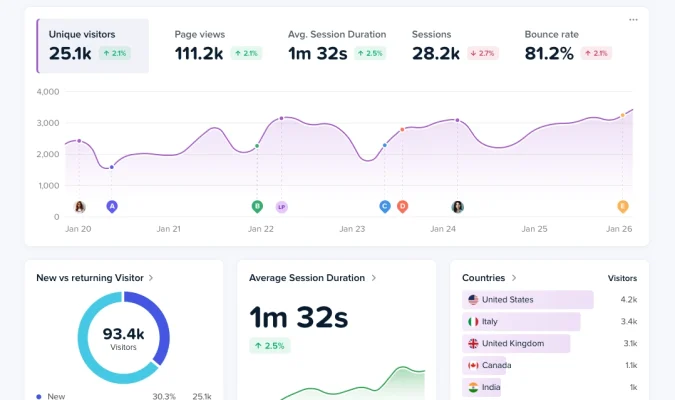
The digital marketing landscape is currently undergoing a significant transition as a growing number of website owners, developers, and data analysts migrate away from Google Analytics 4 (GA4). Since the mandatory sunsetting of Universal Analytics (UA) in July 2023, the industry has voiced consistent concerns regarding GA4’s steep learning curve, its complex event-based data model, and perceived issues with data accuracy. While Google’s platform remains the dominant force in web traffic monitoring, the friction caused by its interface and the increasing demand for user privacy has created a robust market for specialized alternatives. This shift represents a broader movement toward "de-Googling" the tech stack in favor of tools that offer greater transparency, ease of use, and compliance with international privacy regulations.
The Chronology of the Analytics Transition
To understand the current dissatisfaction with Google’s offering, it is necessary to examine the timeline of its evolution. For over a decade, Universal Analytics served as the industry standard, utilizing a session-based tracking model that was intuitive for marketers and business owners. In October 2020, Google introduced GA4 as the next generation of its platform, designed to track users across both websites and mobile applications using an event-based model.
The transition became critical on July 1, 2023, when Google officially stopped processing data for standard Universal Analytics properties. This forced migration required millions of users to adopt a platform that functioned on entirely different logic. Unlike its predecessor, GA4 does not offer "out-of-the-box" reports for many standard metrics; instead, it requires users to build custom explorations or export data to BigQuery for advanced analysis. This complexity, combined with "data thresholding"—a process where Google hides data to prevent the identification of individual users—has led many organizations to seek simpler, more reliable alternatives.
Critical Challenges Driving the Migration
Industry analysts point to three primary factors driving the exodus from GA4. First is the interface and usability. GA4’s dashboard is often described as non-intuitive, requiring significant training for staff who were previously proficient in Universal Analytics. Second is the issue of data accuracy. Because GA4 relies heavily on machine learning to fill in gaps caused by cookie consent rejections, the reported numbers are often estimates rather than raw counts.
Third, and perhaps most importantly, is the global shift toward data privacy. Regulations such as the General Data Protection Regulation (GDPR) in Europe and the California Consumer Privacy Act (CCPA) in the United States have made the collection of personal data a legal liability. As GA4 continues to track a wide array of demographic and psychographic data, many companies are looking for "cookieless" solutions that do not require intrusive consent banners or risk violating international data residency laws.

Leading Alternatives: A Comparative Analysis
As organizations evaluate their options, the market has segmented into three distinct categories: conversion-focused tools for marketers, privacy-first platforms for compliance, and high-power infrastructure for developers.
1. Crazy Egg: The Conversion-Focused Alternative
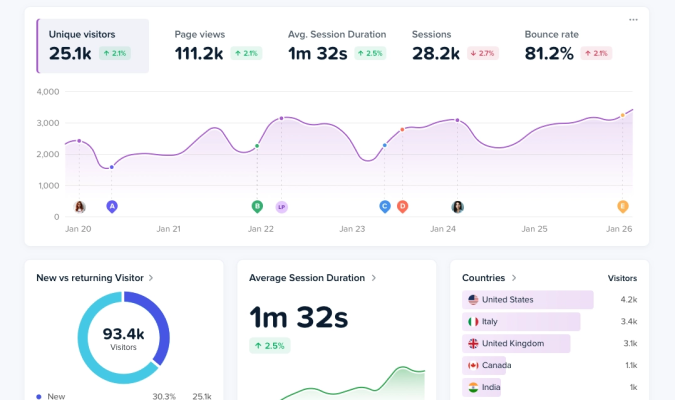
For many small to medium-sized businesses, Crazy Egg has emerged as a frontrunner for those seeking a free or low-cost replacement for GA4’s essential functions. Originally known for its heatmapping technology, the platform has expanded into a full-service web analytics suite.
Key Features and Capabilities:

- Intuitive Reporting: Unlike GA4, Crazy Egg provides pre-built reports that highlight traffic metrics, top-performing pages, and geographic data without requiring manual configuration.
- Behavioral Integration: The platform uniquely combines quantitative data (page views and bounce rates) with qualitative insights (heatmaps and scrollmaps), allowing users to see exactly where visitors click.
- AI-Driven Summaries: To combat data fatigue, the tool uses artificial intelligence to generate short summaries of data trends, highlighting significant changes in traffic patterns automatically.
While Crazy Egg lacks the deep path analysis found in enterprise-grade tools, its "free forever" plan makes it an accessible entry point for those who find Google’s ecosystem overwhelming.
2. Plausible: The Privacy-First Vanguard
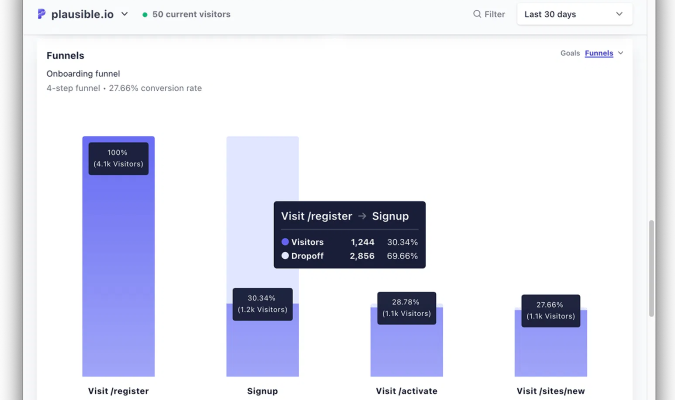
Plausible Analytics has seen rapid adoption among European organizations and privacy advocates. As an open-source, lightweight platform, it positions itself as the ethical alternative to Google’s data collection practices.
Technical and Regulatory Advantages:

- Cookieless Tracking: Plausible does not use cookies and does not collect personal data. This allows many website owners to operate without a cookie consent banner, potentially increasing the volume of captured data by 30% to 40% compared to GA4, which is often blocked by privacy-conscious users.
- Performance: The tracking script is significantly smaller than Google’s, which contributes to faster page load speeds and better Search Engine Optimization (SEO) performance.
- Search Console Integration: It allows users to view Google Search Console keyword data directly within the dashboard, bridging the gap between SEO and on-site behavior.
3. PostHog: The Developer’s Infrastructure
For organizations with significant technical resources, PostHog offers a comprehensive "all-in-one" platform that goes far beyond simple web analytics. It is designed for product teams who need to track complex user journeys across web and mobile apps.
Advanced Functionality:
- Feature Flagging and A/B Testing: PostHog allows developers to roll out new features to specific user segments and run experiments directly from the analytics dashboard.
- SQL Access: Advanced users can query their data using SQL, providing a level of customization that GA4 only offers through external BigQuery integrations.
- Generous Free Tier: The platform offers a highly competitive usage-based model, with a free tier that includes web analytics, session recordings, and surveys.
4. Pirsch: Server-Side Reliability and Data Sovereignty
Based in Germany, Pirsch focuses on technical accuracy and data residency. It is particularly attractive to agencies and developers who require server-side tracking to bypass browser-based ad blockers.
Operational Benefits:
- Server-Side Integration: By sending data directly from the server rather than the visitor’s browser, Pirsch ensures that tracking is not interrupted by extensions or privacy settings.
- European Data Residency: All data is stored on German servers, ensuring full compliance with the strictest interpretations of GDPR and the Schrems II ruling.
- Developer Flexibility: The platform offers robust APIs and SDKs, making it a preferred choice for custom-built web applications.
5. Clicky: Real-Time Monitoring for Agencies
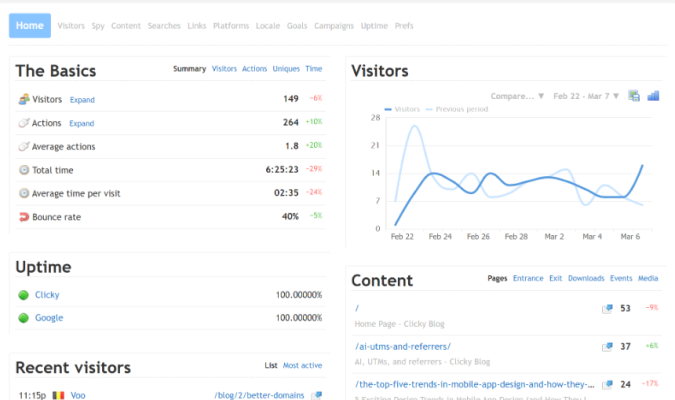
Clicky is one of the oldest players in the analytics space, maintaining a loyal following due to its real-time data processing and no-frills interface. While its visual design is often considered dated, its functionality remains highly efficient for agency environments.
Market Positioning:
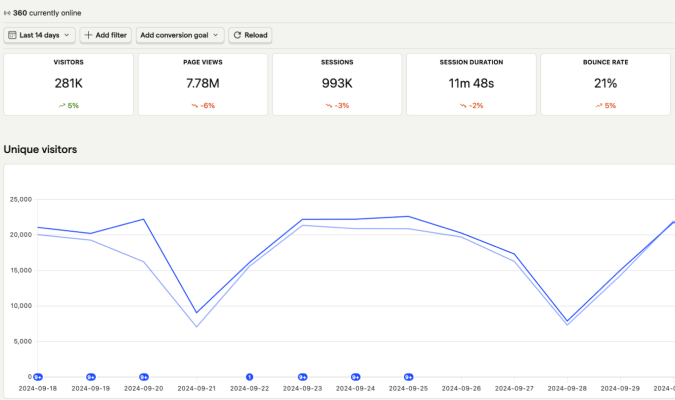
- Path Analysis: Clicky provides detailed visitor paths, showing the exact sequence of pages a user visited. This feature was a staple of Universal Analytics that many users find difficult to replicate in GA4.
- Uptime Monitoring: Unique among many analytics tools, Clicky includes an alert system that notifies site owners if their website goes offline.
- White-Labeling: Agencies can brand the dashboards for their clients, providing a professional reporting interface at a fraction of the cost of enterprise software.
6. Fathom: Ethical Marketing and Streamlined Design
Fathom Analytics targets brands that prioritize "ethical marketing." The company’s philosophy centers on the idea that website owners should be able to gather necessary business intelligence without surveilling their visitors.
Core Philosophies:
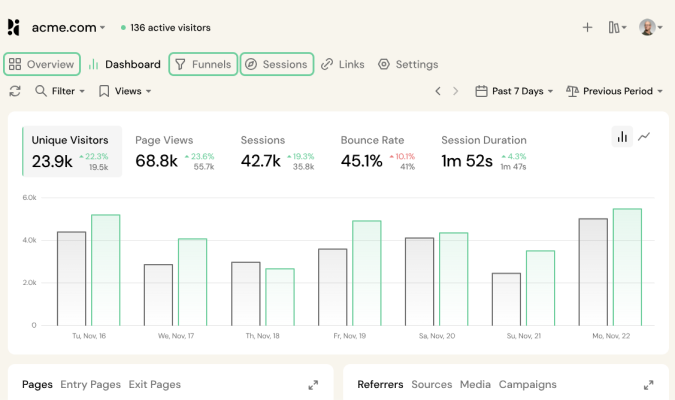
- Single-Screen Dashboard: Fathom rejects the complex menu systems of GA4 in favor of a streamlined, single-page view that displays all vital metrics.
- Cross-Domain Visibility: The platform allows users to see an aggregated view of traffic across multiple domains simultaneously, a feature highly requested by multi-site operators.
- Human-Centric Support: As a smaller firm, Fathom emphasizes direct customer support, contrasting with Google’s largely automated help systems.
Industry Response and Official Perspectives
Google has defended GA4 as a necessary response to a changing digital environment. In various official statements, the company has emphasized that the event-based model is more flexible and better suited for a "privacy-centric" future where third-party cookies are obsolete. Google executives have argued that the integration with BigQuery and the use of AI-driven "predictive metrics" provide value that traditional session-based tools cannot match.
However, industry feedback suggests a disconnect between Google’s vision and the daily needs of marketers. In a series of forum discussions and tech audits, users have reported that "key events" (formerly known as conversions) are often difficult to set up and that the 24-to-48-hour delay in data processing in GA4 hinders real-time decision-making.
Broader Impact and Future Implications
The rise of GA4 alternatives is more than a technical preference; it is a symptom of a decentralizing internet. For nearly two decades, Google Analytics was the unchallenged "default." Today, the diversification of the analytics market suggests that businesses are increasingly willing to pay for specialized tools that offer better data ownership and user experiences.
The implications for digital strategy are profound. As the industry moves toward the "death of the third-party cookie," first-party data has become the most valuable asset for any digital entity. By moving to platforms like Plausible, Pirsch, or PostHog, companies are taking direct control of their data pipelines, reducing their reliance on big-tech ecosystems that are increasingly subject to regulatory scrutiny.
Ultimately, the choice of an analytics platform now depends on an organization’s specific priorities. Those requiring deep product insights may lean toward PostHog, while those focused on compliance will likely choose Plausible or Fathom. Regardless of the specific tool, the trend is clear: the era of the "one-size-fits-all" analytics platform is coming to an end, replaced by a more fragmented, privacy-conscious, and user-centric market. Organizations that adapt to this shift by choosing tools they actually enjoy using—rather than those they feel forced to use—will likely find themselves with more actionable insights and a more loyal, respected user base.








