rifanmuazin
The landscape of Google Search has undergone a profound transformation, evolving far beyond its rudimentary origins as a keyword-matching engine. What began as a sophisticated indexing system designed to connect user queries with relevant keywords on web pages has matured into an intricate artificial intelligence (AI)-driven platform capable of deciphering complex search intent, contextual nuances, and, crucially, the inherent quality of content. This evolution necessitates a fundamental shift in content strategy for publishers and marketers alike; relying solely on outdated keyword research and optimization techniques is increasingly proving to be a losing proposition in the quest for prominent search rankings.
The Evolution of Search: From Keywords to Semantic Understanding
In its nascent stages, Google’s algorithm primarily relied on factors like keyword density and backlinks (PageRank) to determine relevance and authority. This era fostered practices like "keyword stuffing," where content creators would unnaturally inject keywords into their articles in an attempt to game the system. However, Google’s continuous advancements, marked by significant algorithmic updates such as Hummingbird (2013), RankBrain (2015), BERT (2019), and MUM (2021), have ushered in an era of semantic search. These updates have empowered Google to understand not just the words on a page, but the underlying concepts, relationships between entities, and the true meaning behind a user’s query. This sophisticated understanding allows Google to deliver search results that are not merely keyword-rich but genuinely helpful, comprehensive, and authoritative.
The challenge for Google, and by extension for content creators, has always been the subjective nature of "quality." What constitutes high-quality content varies drastically depending on the searcher’s needs and the topic at hand. To address this ambiguity and to guide its algorithms toward identifying truly valuable information, Google developed and continuously refines a framework known as E-E-A-T.
The Genesis of E-E-A-T: A Response to Digital Disinformation
The concept of E-A-T (Expertise, Authoritativeness, Trustworthiness) was first formally introduced in Google’s Quality Raters’ Guidelines (QRG) around 2014-2015. These guidelines, an extensive document utilized by thousands of human quality raters globally, serve as a manual for evaluating the quality of web pages and websites. The raters’ feedback, while not directly influencing rankings, is crucial for training Google’s machine learning algorithms to identify what "quality" content looks like in practice.
The initial emphasis on E-A-T emerged partly in response to the growing concern over misinformation and low-quality content proliferating across the internet, particularly in sensitive areas. Google recognized the potential harm that inaccurate medical advice, financial guidance, or news reporting could inflict on users. The framework was designed to help distinguish credible, reliable sources from those that were misleading, biased, or simply lacked the necessary depth.
A significant update to this framework occurred in December 2022, when Google added a fourth ‘E’ – "Experience" – expanding E-A-T to E-E-A-T. This addition underscored Google’s increasing focus on first-hand knowledge and real-world experience as a critical component of content quality, particularly for topics where personal insight adds significant value. This chronological evolution highlights Google’s ongoing commitment to refining its understanding of content excellence.
Deconstructing E-E-A-T: Experience, Expertise, Authoritativeness, and Trustworthiness
E-E-A-T stands for Experience, Expertise, Authoritativeness, and Trustworthiness. This comprehensive framework applies not only to the content itself but also, crucially, to the creator of the content and the website hosting it.
- Experience: This component assesses whether the content creator has direct, first-hand experience with the topic they are discussing. For instance, a review of a software product holds more weight if written by someone who has actually used the software extensively. A travel guide written by someone who has lived in or frequently visited a destination is more valuable than one compiled purely from secondary research. This ‘E’ was added to emphasize the value of practical knowledge and personal engagement.
- Expertise: This refers to the demonstrable knowledge and skill of the content creator in a particular subject area. For medical topics, this would entail a certified doctor; for financial advice, a licensed financial advisor. Even for less formal topics, expertise can be demonstrated through deep understanding, detailed analysis, and insightful perspectives that go beyond surface-level information.
- Authoritativeness: This signifies the recognition of a website or content creator as a go-to source or respected voice within a specific niche. This is often built over time through consistent creation of high-quality content, citations from other authoritative sources, mentions in reputable media, and a strong online presence. For example, a renowned scientific journal is authoritative in its field, as is a prominent journalist on current affairs.
- Trustworthiness: This is arguably the most critical component, encompassing the accuracy, honesty, and safety of the content and the website. A trustworthy website has clear privacy policies, secure connections (HTTPS), accurate factual information, unbiased reporting (where objectivity is expected), and transparent error correction processes. For YMYL topics, trustworthiness is paramount to prevent harm to users.
The Criticality of E-E-A-T for "Your-Money-Your-Life" (YMYL) Content
The importance of E-E-A-T is amplified for what Google classifies as "Your-Money-Your-Life" (YMYL) topics. These are subjects where inaccurate or misleading information could directly impact a person’s health, financial stability, safety, or well-being. Examples include:
- Medical and Health Information: Content covering diagnoses, treatments, medications, or general health advice must come from qualified medical professionals or reputable health organizations. For instance, an article on vaccine efficacy should cite data from the World Health Organization (WHO) or national health bodies, not anecdotal evidence.
- Financial and Legal Advice: Articles offering investment tips, tax advice, legal interpretations, or debt management strategies require input from certified financial advisors, accountants, or legal professionals. Providing sound, professionally vetted information is essential to prevent financial harm.
- News and Current Events: Reporting on significant local, national, or international events must be factually accurate, unbiased, and produced by experienced journalists from established news organizations. Transparency about sources and potential biases is also critical.
- Civic and Government Information: Content related to voting procedures, legislation, public policy, or citizen rights should originate from or accurately reference official government websites and recognized civic institutions.
- Topics Related to Children: Any advice concerning child care, education, or safety must be drawn from reliable sources, such as pediatricians, child development experts, or established educational institutions.
- Product and Service Reviews: With the addition of "Experience," reviews gain significantly more weight when they demonstrate genuine first-hand use of the product or service, coupled with a detailed, transparent methodology for assessment. This goes beyond simply summarizing other reviews; it requires personal interaction and critical evaluation.
For these YMYL topics, Google’s quality raters are instructed to apply a much higher standard of E-E-A-T. A lack of demonstrable expertise or trustworthiness can severely impact a page’s perceived quality and, consequently, its search ranking. It is important to note, however, that while a strong reputation is beneficial, its absence is not automatically indicative of low E-E-A-T. Many small businesses or individual creators can still produce high-quality content, especially if they demonstrate genuine first-hand experience and meticulous research.
Navigating the Modern Content Landscape: Strategies for E-E-A-T Optimization
Adapting to Google’s E-E-A-T framework requires a holistic shift in content strategy, moving away from purely technical SEO tricks toward a user-centric approach focused on value creation.
1. Prioritizing User Intent and Comprehensive Content
The days of targeting single keywords in isolation are over. Modern content strategy revolves around understanding the user’s underlying intent and providing comprehensive answers to their questions within a broader topic. This involves building "topic clusters," where a central "pillar content" piece covers a broad subject in depth, supported by numerous "cluster content" articles that delve into specific sub-topics. These cluster pages link back to the pillar, establishing semantic relevance and demonstrating comprehensive coverage of a subject.
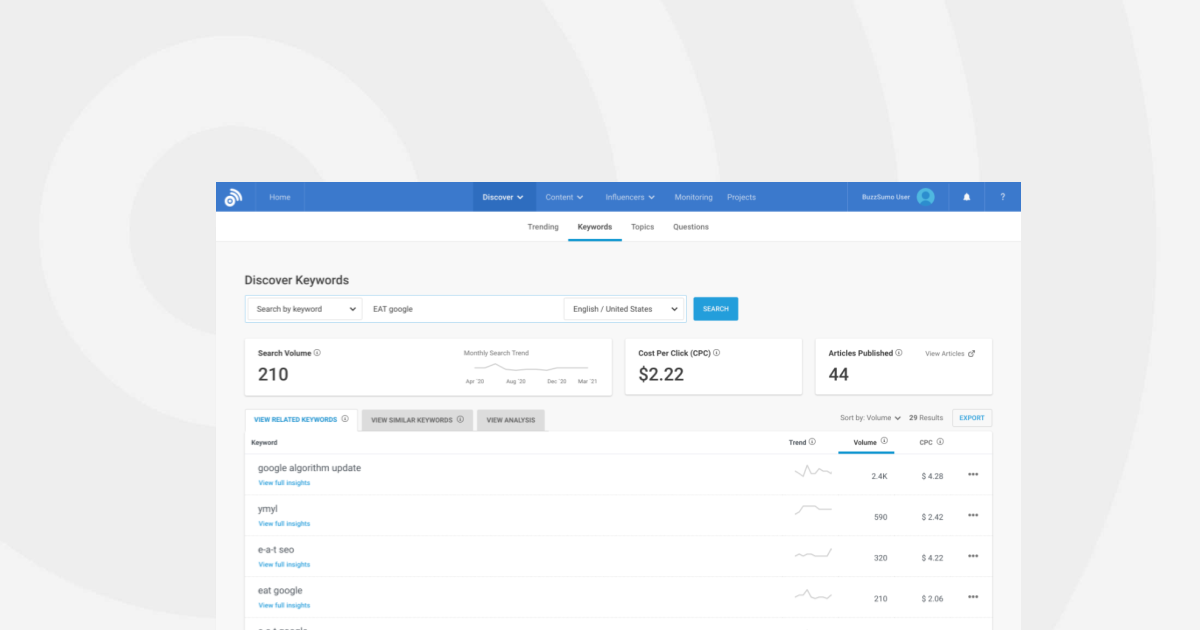
For example, a pillar page on "Digital Marketing Strategy" could be supported by cluster content on "SEO Best Practices," "Social Media Marketing Fundamentals," "Email Marketing Campaigns," and "Content Marketing for Beginners." This structure not only satisfies various user intents but also signals to Google that the website is a thorough resource for the entire subject. Tools exist that help analyze popular associated topics around a keyword, providing insights into what customers truly want to read and how to structure content effectively.
2. Cultivating Demonstrable Expertise and Authority
To improve E-E-A-T, content creators and organizations must actively build and showcase their expertise and authority.
- Author Credentials: Ensure that all authors have clear, detailed bios that highlight their relevant experience, qualifications, and achievements. Link to their professional profiles (LinkedIn, academic institutions, personal websites) and any other publications or media appearances.
- Thought Leadership: Actively participate in industry discussions, contribute to reputable publications, appear on podcasts, and speak at conferences. This builds personal brand authority that Google can recognize.
- Website Authority: Ensure your "About Us" page clearly outlines your organization’s mission, history, and the credentials of your team. Include contact information, physical addresses (if applicable), and clear policies.
- Structured Data (Schema Markup): Implement Organization and Author schema markup on your website. This provides Google with explicit, machine-readable information about who created the content and the entity behind the website, helping it to connect your brand and authorship across the web.
- Consolidate Online Presence: Platforms that allow creators to consolidate all their channels and columns onto a single branded page can help Google understand the full scope of their expertise and authority.
3. Fostering Trust Through Transparency and Verifiable Information
Trustworthiness is built on a foundation of accuracy, transparency, and reliability.
- Cite Reputable Sources: Always cite your sources, especially for factual claims, statistics, or recommendations. Prioritize official, authoritative sources such as government agencies (e.g., using
site:.govin Google search for official data), academic institutions, peer-reviewed journals, and established industry bodies. This demonstrates thorough research and reduces bias. - Editorial Guidelines: Implement and publish clear editorial guidelines outlining your commitment to accuracy, objectivity, and ethical content creation.
- Fact-Checking: Develop a robust fact-checking process for all content, particularly for YMYL topics.
- Privacy and Security: Ensure your website uses HTTPS for secure connections and has a transparent privacy policy that clearly outlines how user data is handled.
- Correction Policies: Be prepared to correct errors swiftly and transparently. A visible correction policy can enhance trust.
4. Building a Network of Credibility: The Role of Relationships and Mentions
Beyond traditional backlinks, Google’s advanced algorithms can semantically understand relationships between entities. Building genuine connections with authoritative voices and publications in your niche is a powerful E-E-A-T signal.
- Media Outreach: Identify influential journalists, bloggers, and industry experts who cover your topics. Engage with their content, build rapport, and then pitch them compelling stories, exclusive insights, or opportunities for collaboration. When reputable figures mention your brand or content, even without a direct link, it contributes to your perceived authority.
- Collaborative Content: Partner with other experts or organizations on research, reports, webinars, or guest posts. This association with established entities enhances your own credibility.
- Brand Mentions: Encourage mentions of your brand or specific content in news articles, industry reports, and social media discussions. Google’s understanding of entities allows it to recognize these associations, even if they aren’t explicit hyperlinks.
5. Crafting Content for "Satisfying" Depth
Google emphasizes providing a "satisfying amount" of content, which is highly dependent on search intent and topic. There is no one-size-fits-all answer for content length.
- Analyze Competitors: For a given topic, analyze the length and depth of top-ranking content. If comprehensive guides are ranking, then a thorough, long-form article (e.g., 3,000-10,000 words) might be necessary. If quick answers are needed, concise content may be more appropriate.
- Meet User Needs: A "satisfying" amount means providing enough information to fully address the user’s query without excessive fluff. For complex subjects, this often means going into significant detail, providing examples, case studies, and multiple perspectives. For simple questions, a brief, direct answer is more satisfying. Tools can analyze engagement by content length for specific topics, helping identify optimal word counts.
The Broader Implications for Digital Publishing
The shift towards E-E-A-T represents a maturation of the internet and a significant challenge and opportunity for digital publishers. It signals a move away from purely technical SEO tactics towards a model where genuine value creation, integrity, and user satisfaction are paramount. Brands that invest in developing real expertise, building strong reputations, and consistently producing high-quality, trustworthy content will be rewarded with better visibility and stronger audience engagement.
The implications are far-reaching:
- Increased Investment in Quality: Publishers must allocate more resources to expert content creators, thorough research, and robust editorial processes.
- Focus on Brand Building: E-E-A-T intrinsically links content quality to brand reputation. Companies must actively cultivate their brand’s authority and trustworthiness.
- Long-Term Strategy: Building E-E-A-T is not an overnight task; it requires sustained effort and a long-term commitment to excellence.
- Combating Misinformation: By prioritizing credible sources, Google aims to clean up search results, making it harder for low-quality or misleading content to rank, thereby fostering a more reliable information ecosystem.
In conclusion, Google’s intelligence, powered by AI and machine learning, is rapidly approaching a human-like understanding of content quality. Therefore, for SEOs and content marketers, the imperative is clear: create content for your customers – addressing their real needs, demonstrating genuine expertise, and building unquestionable trust – rather than attempting to appease outdated search engine algorithms. The era of E-E-A-T demands a renewed commitment to journalistic principles of accuracy, authority, and valuable user experience.