
 rifanmuazin
The digital landscape for small businesses is increasingly competitive, demanding efficiency and consistent engagement to capture and retain customer attention. In this environment, email marketing automation has emerged not merely as a convenience but as a critical strategic imperative, transforming how lean teams manage customer relationships and drive growth. Gone are the days when a new subscriber or a potential customer would languish in an unaddressed inbox, their initial interest fading into forgetfulness. Today, sophisticated yet accessible automation systems ensure that every interaction, from a new signup to a purchase, triggers a timely and relevant response, fostering relationships that were once impractical for resource-constrained enterprises.
The Evolution and Necessity of Email Automation
For decades, email has remained a cornerstone of digital communication, evolving from simple broadcast messages to highly personalized, dynamic interactions. Early email marketing often involved manual outreach, where businesses would send mass emails only when there was a new product, a sale, or a specific announcement. This reactive approach, while better than no communication, was inherently inconsistent and often missed crucial opportunities for engagement. A potential customer downloading a free guide on a Tuesday might not hear back for weeks, by which point their interest has waned, and competitors may have filled the void.
The advent of email marketing automation fundamentally changed this paradigm. It introduced a system capable of dispatching the right email at the precise moment a customer takes a specific action, or inaction. This includes subscribing to a newsletter, making a purchase, clicking a link, or even becoming inactive. The key advantage is that the entire sequence—whether a single email or a multi-stage journey—is built once and then runs autonomously, freeing up invaluable time for small business owners and their lean teams. For businesses operating with limited marketing personnel or even as solo ventures, this shift from reactive to proactive, automated communication is transformative. Industry research consistently underscores the importance of email marketing, with a significant majority of small businesses (79% according to AWeber’s research) identifying it as important or very important to their overall business strategy. Automation is the engine that makes this strategy sustainable and scalable.
Defining Email Marketing Automation: Beyond the Basics
At its core, email marketing automation is a powerful mechanism where emails or entire sequences of messages are automatically dispatched based on predefined triggers. These triggers can be diverse: a new subscriber joining a mailing list, a customer completing a purchase, clicking a specific link within an email, or even a prolonged period of inactivity (e.g., 90 days without opening an email). The defining characteristic is the absence of manual intervention after the initial setup; the system handles the timing and delivery once a trigger is met.
This capability extends beyond single messages to elaborate multi-email sequences. While a simple welcome email is a common starting point, businesses can construct complex nurture campaigns, re-engagement flows, or post-purchase journeys. The true power lies in its ability to maintain consistent follow-up, a crucial element often neglected by small businesses due to time constraints. Data from AWeber indicates that while 86% of small businesses send emails at least monthly, only 54% manage weekly communication. This inconsistency is a significant factor in lead attrition. Automation ensures that every prospect receives timely, relevant communication, nurturing relationships without demanding constant attention from the business owner. Moreover, automation scales effortlessly. A manual follow-up system might handle ten leads, but it falters with a hundred or a thousand. Automated systems perform consistently, irrespective of volume, enabling growth without proportionate increases in labor.
The Quintessential Automation Sequences for Small Businesses
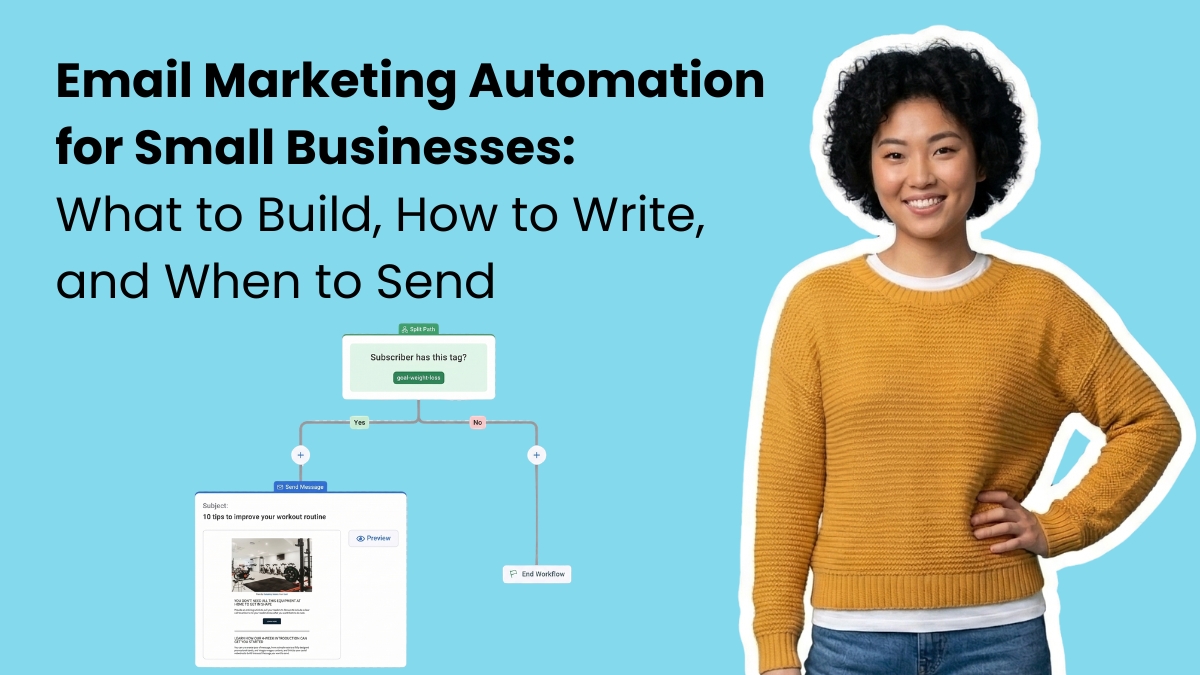
To harness the full potential of email automation, small businesses should prioritize building a core set of sequences. These five automations represent the highest-impact strategies, offering significant returns on investment and forming the backbone of an effective email marketing strategy.
-
Welcome Series (3 to 5 emails): The welcome email is arguably the most crucial communication a business sends, boasting exceptionally high open rates. Industry statistics show welcome emails generate up to 320% more revenue per email than standard promotional messages and achieve open rates four times higher than other emails. This initial moment of peak attention, immediately after a new subscriber signs up, is invaluable. A well-structured welcome series extends this introduction over several days or weeks, introducing the brand, setting expectations, delivering value, and guiding the subscriber toward further engagement. A typical series might include:
- Email 1 (Immediate): The initial greeting, thanking the subscriber, delivering any promised lead magnet, and introducing the brand’s mission.
- Email 2 (Day 2): Sharing a popular piece of content (blog post, video, case study) to demonstrate value and expertise.
- Email 3 (Day 4): A deeper dive into the brand’s unique selling proposition or a customer success story.
- Email 4 (Day 6): An invitation to connect on social media or explore specific product categories.
- Email 5 (Day 8): A soft call to action, perhaps an exclusive offer for new subscribers, to encourage a first purchase or deeper engagement.
-
Lead Nurture Sequence: Not all subscribers are ready to buy immediately. A lead nurture sequence systematically builds trust and demonstrates value over time, positioning the business as the ideal choice when the prospect is ready. This sequence focuses on educating, informing, and addressing potential objections without overt sales pressure. As brand coach Coleen Otero aptly states, high open rates indicate interest, but not necessarily readiness; the job is to continuously provide value until they are. A simple nurture sequence might involve:
- Email 1: Addressing a common pain point the target audience faces.
- Email 2: Presenting a solution, potentially with a brief case study or testimonial.
- Email 3: Offering additional resources or insights related to the solution.
- Email 4: A gentle call to action, such as scheduling a demo or exploring a relevant product.
This continuous engagement ensures the brand remains top-of-mind.
-
Abandoned Cart Recovery (for e-commerce): For e-commerce businesses, abandoned carts represent significant lost revenue. A customer has shown intent by adding products but left before completing the purchase. This isn’t a lost cause; it’s a warm lead that simply got distracted or had second thoughts. Abandoned cart recovery emails are most effective when sent within the first hour of abandonment, capitalizing on the recency of interest. Industry data shows typical conversion rates for these emails range from 10% to 15%, making them one of the highest-performing automation sequences. A three-email sequence often yields the best results:
- Email 1 (1 hour after): A friendly reminder of the items left in the cart, offering assistance.
- Email 2 (24 hours after): Highlighting product benefits, customer reviews, or addressing common concerns (e.g., shipping, returns).
- Email 3 (48-72 hours after): A final nudge, potentially with a small incentive (e.g., free shipping, a minor discount) to overcome any remaining hesitation.
-
Re-engagement Campaign: Email lists naturally decay over time. Subscribers become inactive, change email addresses, or simply lose interest. A substantial portion of inactive subscribers can negatively impact email deliverability, causing legitimate messages to be routed to spam folders even for engaged subscribers. A re-engagement sequence serves a dual purpose: it attempts to win back subscribers who might still be interested and provides a clear mechanism to remove those who are no longer engaged, thus cleaning the list and improving overall deliverability and open rates. A three-email sequence might look like this:
- Email 1 (after 90 days of inactivity): "We Miss You!" – A friendly check-in, reminding them of the value they’re missing.
- Email 2 (7 days later): Offering an exclusive piece of content or a special discount to entice interaction.
- Email 3 (7-14 days later): A "Last Chance" email, clearly stating that if no action is taken, they will be removed from the list. Subscribers who do not engage after this sequence can be confidently removed, leading to a healthier, more responsive list.
-
Post-Purchase Follow-up: The sale is not the culmination but the beginning of a customer relationship. A well-executed post-purchase sequence transforms one-time buyers into loyal, repeat customers, significantly boosting customer lifetime value (CLTV). This sequence focuses on customer satisfaction, product usage, and encouraging further engagement.
- Email 1 (Immediate): Order confirmation and thank you, including tracking information.
- Email 2 (Delivery + 1-3 days): Product usage tips, FAQs, or links to support resources to ensure a positive experience.
- Email 3 (7-14 days after delivery): Requesting a product review or feedback on their purchase experience.
- Email 4 (30-60 days after purchase): Suggesting complementary products, exclusive offers for repeat customers, or a loyalty program invitation. This automation ensures ongoing relationship maintenance, a task often overlooked by busy small businesses.
Implementing Email Automation: A Strategic Blueprint
Setting up email automation, while seemingly complex, can be broken down into manageable steps using modern email marketing platforms. Each automation sequence consists of three fundamental components: a trigger, a series of emails, and the timing between them.
-
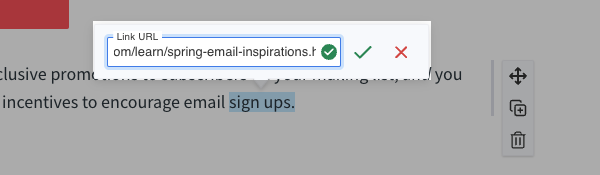
Define Your Trigger: The trigger is the specific action that initiates the automation. For a welcome series, this is typically a new subscriber joining the list. Other common triggers include a purchase, a specific link click, or the application of a tag. Start with a straightforward trigger and gradually incorporate more complex logic as proficiency grows.
-
Craft the Email Content First: A common pitfall is diving directly into the workflow builder. Instead, write all the emails for the sequence in a separate document first. This ensures message consistency, narrative flow, and clarity of purpose for each email. Knowing exactly what needs to be said significantly streamlines the technical setup.
-
Establish Timing and Delays: Determine the optimal time intervals between each email in the sequence. For a welcome series, sending emails on days 0, 2, 4, 6, and 8 is a proven structure. For re-engagement campaigns, longer intervals of 7 to 14 days allow subscribers ample time to respond before the next message arrives. Strategic timing is crucial for maximizing engagement without overwhelming the recipient.
-
Integrate Tags for Segmentation: Tags are powerful tools for tracking subscriber behavior and preferences. Apply tags when a subscriber completes a sequence, clicks a specific link, or takes a particular action. For instance, tagging a subscriber as "welcomed" after they complete the welcome series prevents them from receiving it again if they re-subscribe later. Tags enable granular segmentation for future targeted campaigns, ensuring relevance and reducing irrelevant communications.
-
Thorough Testing is Non-Negotiable: Before activating any automation, perform rigorous testing. Send every email to yourself, checking its appearance on various devices (especially mobile), verifying all links, and confirming that wait times are correctly configured. A broken link or an incorrectly timed email in an automated sequence can severely damage a brand’s reputation and negate the benefits of automation.
-
Activate and Monitor Performance: Once tested, activate the automation. Crucially, don’t "set it and forget it" entirely. Monitor key metrics such as open rates and click-through rates after the first 50 or so subscribers complete the sequence. Significant deviations in performance for any particular email indicate a need for optimization, whether it’s adjusting the subject line, content, or timing. Many modern email platforms, like AWeber, offer intuitive visual workflow builders that simplify this process, often including pre-built templates and features like URL checkers to ensure links are valid. For businesses preferring a hands-off approach, services like AWeber’s Done-For-You service can build a complete email system, including branded templates, welcome workflows, and landing pages, within a short timeframe.
Crafting Effective Automated Emails: The Art of Engagement
Beyond the technical setup, the success of automated emails hinges on compelling content. Several principles consistently lead to higher engagement:
- Lead with Value, Not Just Offers: The "value-value-value-offer" framework is highly effective. Provide genuinely useful content or insights in the initial emails before presenting a direct sales pitch. This builds trust and positions the business as a helpful resource.
- Write for One Person: Even though automated emails are sent to many, each recipient reads it individually. Maintain a personal, conversational tone, addressing "you" rather than "everyone" to create a more intimate connection.
- Consistent Sender Name: Use a recognizable sender name, ideally a person’s name (e.g., "Sean from [Your Business Name]") rather than just the brand name. People are more likely to open emails from individuals they perceive to know.
- Keep it Concise: Automated emails are not newsletters designed for extensive reading. Aim for two to three paragraphs with a single, clear call to action. Brevity respects the recipient’s time and improves readability.
- Leverage AI for First Drafts: Tools like AWeber’s AI Writing Assistant can generate initial drafts from simple prompts, overcoming the "blank page" syndrome. Business owners can then refine these drafts with their unique voice and specific brand details, accelerating content creation.
Tailoring Automation by Business Type: Strategic Customization
The optimal automation strategy varies significantly across different business models, requiring tailored approaches to maximize impact.

- Service Businesses (Coaches, Consultants, Freelancers, Agencies): For businesses with longer sales cycles, welcome and lead nurture sequences are paramount. These build trust and demonstrate expertise over weeks. Additionally, a discovery-call confirmation automation, triggered upon booking, can significantly reduce no-shows by setting expectations and providing preparatory materials.
- E-commerce and Retail: Welcome series and abandoned cart recovery are immediate revenue drivers. Post-purchase follow-up is then critical for fostering repeat business and enhancing customer lifetime value.
- Restaurants and Local Businesses: A welcome email often includes a first-time discount or offer. Pre-visit reminders (for reservations) and post-visit follow-ups requesting reviews or feedback are highly effective. Re-engagement campaigns on a 60-day cycle can keep regulars returning.
- Nonprofits: A welcome series introducing the organization’s mission and impact is crucial. A donor nurture sequence builds the case for giving, while a robust post-donation thank-you sequence is vital for improving donor retention. Studies show donors who receive strong thank-you communications are significantly more likely to give again.
- B2B Businesses: Lead nurture is the undisputed priority. B2B sales cycles are typically extended, requiring a 4-to-6-week sequence that systematically addresses objections, shares proof points (case studies, whitepapers), and establishes authority, outperforming single campaign efforts.
- Creators and Bloggers: A welcome series delivering their best content establishes credibility and provides immediate value. Subsequent sequences can introduce paid products, memberships, or courses. Tagging subscribers based on content consumption or clicks allows for hyper-targeted future communications.
The Unsung Hero: Re-engagement Campaigns
While welcome and nurture sequences grab headlines, the re-engagement campaign is arguably the most overlooked yet vital automation for small businesses. It addresses list hygiene, which directly impacts email deliverability. Email service providers monitor engagement rates; if a significant portion of a list consistently ignores emails, the provider may flag the sender, leading to messages being routed to spam even for active subscribers. Regular re-engagement campaigns (e.g., every six months) ensure the list remains clean, composed of genuinely interested subscribers, thereby safeguarding deliverability and improving overall email marketing effectiveness.
Addressing Common Inquiries on Email Automation
- Best Platform: The ideal platform for a small business balances robust features (welcome series, abandoned cart, re-engagement, post-purchase) with ease of use, requiring no developer expertise. Key considerations include 24/7 support, pre-built templates, and scalable pricing. Platforms like AWeber are designed with these small business criteria in mind, offering features such as comprehensive analytics, landing page builders, and AI writing assistants.
- Number of Emails in a Sequence: This varies by sequence type: 3-5 for a welcome series, 4-6 for lead nurture, 2-3 for abandoned cart, 3 for re-engagement, and 3-5 for post-purchase. The guiding principle is purposeful communication; every email should have a clear objective.
- Value for Small Lists: Automation is arguably more crucial for small lists. A smaller list with consistent, automated follow-up (welcome, nurture, re-engagement) will almost always outperform a larger list that only receives sporadic broadcast emails. Automation establishes foundational consistency that scales effortlessly as the list grows.
- Cost: Costs range from free tiers (for smaller lists, like AWeber’s free plan up to 500 subscribers) to hundreds of dollars monthly for advanced features and larger lists. Most small businesses find suitable solutions in the $15-$50 per month range for mid-tier plans.
- Setup Time: A basic welcome series can be set up in 2-3 hours (1 hour for writing, 1-2 hours for building and testing). More complex sequences naturally take longer, but the initial investment of time yields continuous returns. For those short on time, "Done-For-You" services offer complete system setups in days.
- Sequence vs. Campaign: An email sequence (or automated series/workflow) is triggered by an action and runs automatically on a preset schedule without manual intervention. An email campaign refers to a single, broadcast email sent manually to a list at a specific time (e.g., a newsletter or promotion). Most small businesses utilize both, with sequences handling foundational relationship-building and campaigns addressing timely announcements.
The Strategic Imperative for Sustainable Growth
In recap, the strategic implementation of email marketing automation is not just about sending more emails; it’s about sending the right emails, to the right people, at the right time, consistently and without manual effort. Starting with a robust welcome series, expanding to lead nurture, integrating abandoned cart recovery for e-commerce, fostering loyalty with post-purchase sequences, and maintaining list health through re-engagement campaigns provides a comprehensive, high-impact system.
The key to success lies in purposeful content—writing to one person, leading with value, maintaining brevity, and using a consistent sender identity. Leveraging AI for initial drafts can remove creative blockers, allowing small businesses to focus on refining their message. Ultimately, automation liberates small business owners from the repetitive tasks of manual follow-up, ensuring their marketing judgment is applied consistently and effectively, regardless of their daily schedule or workload. It transforms email marketing from a reactive chore into a proactive, scalable engine for sustained customer engagement and business growth.









