
 rifanmuazin
The strategic evolution of email marketing in 2026 has ushered in an era of sophisticated refinement, moving beyond the initial reactive phase to generative AI and the implementation of new privacy regulations that reshaped the digital landscape in the preceding years. Subscribers, now more discerning and skeptical than ever, possess a heightened ability to identify generic or overtly AI-generated content, making the delicate balance between cutting-edge automation and authentic human engagement paramount for brand success. This year marks a pivotal moment for email marketers, demanding a mastery of tactical shifts—from advanced lifecycle strategies and hyper-personalization to the rise of intelligent gatekeepers and the imperative of accessibility—all designed to ensure email programs remain a brand’s most potent engine for growth and customer loyalty.
Background and Chronology: A Decade of Transformation in Email Marketing
The journey to 2026 in email marketing has been marked by a series of rapid technological advancements and shifting consumer expectations. The early 2020s witnessed the nascent stages of AI integration, primarily focused on automating mundane tasks like segmenting audiences or drafting rudimentary subject lines. However, the true inflection point arrived with the widespread adoption of generative AI models around 2023-2024. This period initially sparked a wave of excitement, quickly followed by a period of adjustment as marketers grappled with integrating these powerful tools without sacrificing brand voice or authenticity. Simultaneously, a global push for enhanced data privacy, spearheaded by regulations like the General Data Protection Regulation (GDPR) in Europe (effective 2018), the California Consumer Privacy Act (CCPA) in the United States (2020), and significant platform-level changes such as Apple’s Mail Privacy Protection (MPP) in 2021, fundamentally altered how subscriber data could be collected and utilized. These privacy measures, by limiting access to traditional metrics like open rates, inadvertently accelerated the need for more sophisticated engagement indicators and a deeper understanding of subscriber intent.

By 2025, the novelty of basic AI-generated content had begun to wane, and the market started to differentiate between superficial automation and truly intelligent application. This set the stage for 2026, where the focus has decisively shifted from merely using AI to strategically orchestrating its capabilities to enhance the human experience rather than diminish it. The emergence of "intelligent gatekeepers" within major email platforms like Apple Intelligence and Gmail’s Gemini further solidified this trend, introducing a new layer of machine interpretation between the sender and the recipient. This evolving ecosystem has compelled marketers to adopt a more holistic, data-driven, and human-centric approach, demanding a continuous re-evaluation of established best practices and a proactive embrace of innovative strategies to maintain relevance and drive measurable results.
Key Tactical Shifts for Email Marketing in 2026
1. Hyper-Personalization at the Core of Engagement
In 2026, personalization is no longer merely a feature but the foundational principle of effective email marketing. The expectation among subscribers for relevant, timely, and deeply personalized messages across every touchpoint of their customer journey has intensified. Research consistently demonstrates the tangible benefits: a study by Epsilon indicated that 80% of consumers are more likely to make a purchase when brands offer personalized experiences, while McKinsey reported that personalization can reduce acquisition costs by up to 50% and lift revenues by 5-15%.
Effective personalization today rests on several critical pillars: comprehensive data aggregation, advanced segmentation, and dynamic content delivery. This involves leveraging a robust Customer Data Platform (CDP) to unify disparate data points—purchase history, browsing behavior, demographic information, geographic location, past email interactions, and stated preferences—into a single, actionable customer profile. Marketers are moving beyond basic "first-name" personalization to hyper-personalization, where content, product recommendations, offers, and even the call-to-action are dynamically tailored to an individual’s real-time context and predictive needs. For instance, an email promoting winter wear might automatically adjust its product display based on the recipient’s local weather forecast, or a promotional offer could be dynamically generated based on their specific loyalty tier and recent browsing activity. The goal is to create a seamless, almost intuitive, dialogue that anticipates subscriber needs, making each email feel like a direct, personal communication rather than a mass broadcast.
2. Designing for the AI-Gatekeeper: The New Inbox Reality
One of the most profound shifts in 2026 is the recognition that emails are now being read not only by human subscribers but also by sophisticated AI systems. Tools such as Apple Intelligence and Gmail’s Gemini have become "intelligent gatekeepers," processing and summarizing email content for users even before they open the message. This fundamental change has rendered traditional metrics like open rates increasingly unreliable, as a "summary view" might fulfill a user’s information need without a full open, yet still count as an "open" in some tracking systems due to pre-fetching.
This paradigm shift requires marketers to adopt a design philosophy akin to Search Engine Optimization (SEO). The critical question is no longer merely, "Did my email land and look appealing?" but rather, "Did the AI accurately surface the most important topics and value propositions in its summary?" To achieve this, email content must be front-loaded with clear keywords and explicit statements of value, much like optimizing for a snippet in search results. Marketers must ensure that their primary message is readily digestible by machine learning algorithms. For image-heavy emails, thorough and descriptive alt attributes are indispensable, providing context that AI can interpret. Furthermore, specialized preview tools that simulate how AI gatekeepers summarize content are becoming essential, allowing marketers to refine their messaging for optimal machine readability. In this new landscape, victory goes not to the most flowery prose, but to the marketer who meticulously crafts content with machine interpretation in mind, ensuring the core message penetrates the AI layer to reach the human recipient effectively.
3. Embracing Minimalist and Structured Design for Clarity
The prevailing trend in email design for 2026 leans heavily towards minimalism and clear structural hierarchy. While the notion of an 8-second human attention span is largely a myth, the underlying principle holds true: users consistently gravitate towards content that offers the quickest possible understanding and immediate value. This translates into a move away from dense, text-heavy emails towards leaner, visually streamlined builds that load faster and are inherently easier for both human readers and AI tools to interpret and summarize. Data suggests that every second of loading time can decrease conversions by 7%, making lean design a performance imperative.
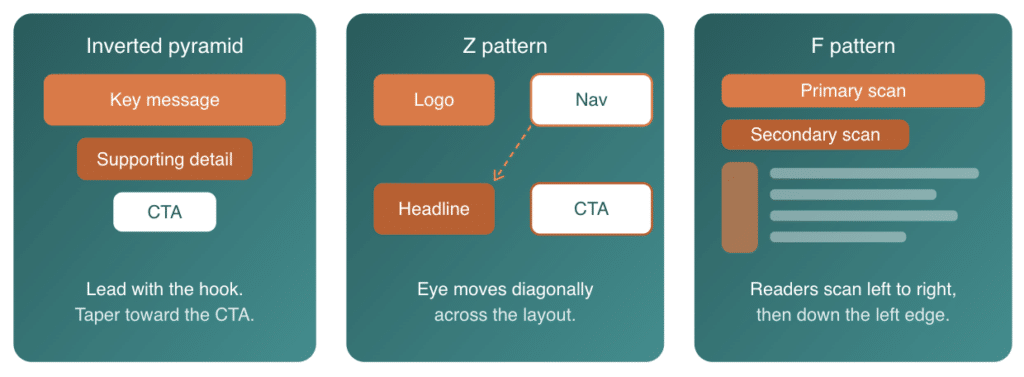
Modern email aesthetics prioritize clarity and scannability. Marketers are increasingly leveraging established content hierarchy patterns, such as the Inverted Pyramid (most important information first, then details), or the Z and F-patterns (which map to natural eye movement across a page), to guide the reader’s attention efficiently. Crucially, the proper use of semantic HTML heading tags (e.g., <h1> for main section titles, <h2> for sub-sections, rather than merely using large font sizes for visual effect) is paramount. These tags not only improve accessibility for screen readers but also act as clear signals to AI gatekeepers, indicating the relative importance and thematic structure of the content. This structured approach ensures that the email’s core message is conveyed with maximum efficiency, enhancing both human comprehension and machine readability.
4. Leveraging Annotation Schema for Enriched Inbox Experiences

The strategic deployment of annotation schema, utilizing structured data formats like JSON-LD or Microdata, has emerged as a significant differentiator for email marketers in 2026. Years ago, Gmail pioneered support for such structured data, enabling mailbox providers to render special UI elements directly within the inbox. These can include dynamic image carousels, prominently displayed discount codes with expiration dates, or even real-time updates for flight information – features predominantly visible for messages that successfully land in the promotions tab. This capability was introduced to enhance the utility of the Promotions tab, moving it beyond a mere filter.
While there is no official confirmation explicitly linking structured data directly to Gmail’s AI summarization process, it is an integral part of the message body and is undeniably parsed by AI systems. At a minimum, structured data provides the AI engine with meaningful, highly organized signals about the email’s content, making it easier for algorithms to extract key information and present it effectively. For example, explicitly marking a discount code with Offer schema ensures the AI understands its promotional value. Given that a substantial portion of senders have yet to fully adopt this capability, embracing annotation schema now offers a straightforward and powerful competitive advantage. It allows brands to present richer, more engaging previews and offers directly in the inbox, enhancing user experience and improving the likelihood of interaction even before the email is fully opened. Industry analysts predict a rapid increase in schema adoption as its benefits become more apparent.
5. The Email Marketer as an Orchestrator, Not Just a Builder
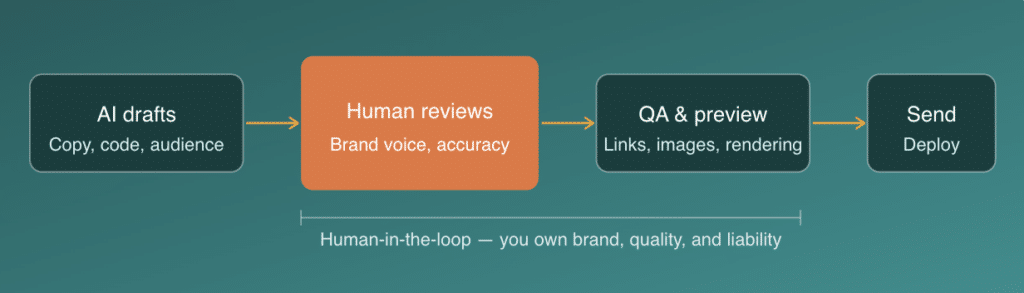
The role of the email marketer has fundamentally transformed in 2026, evolving from a primary content builder and coder into a strategic "orchestrator." With advanced AI taking over much of the heavy lifting—such as drafting subject lines, segmenting audiences, A/B testing variations, interpreting performance results, and even generating basic HTML structures—the marketer’s value now lies in their ability to manage, refine, and strategically deploy this AI-generated output. This shift demands a more analytical and









