rifanmuazin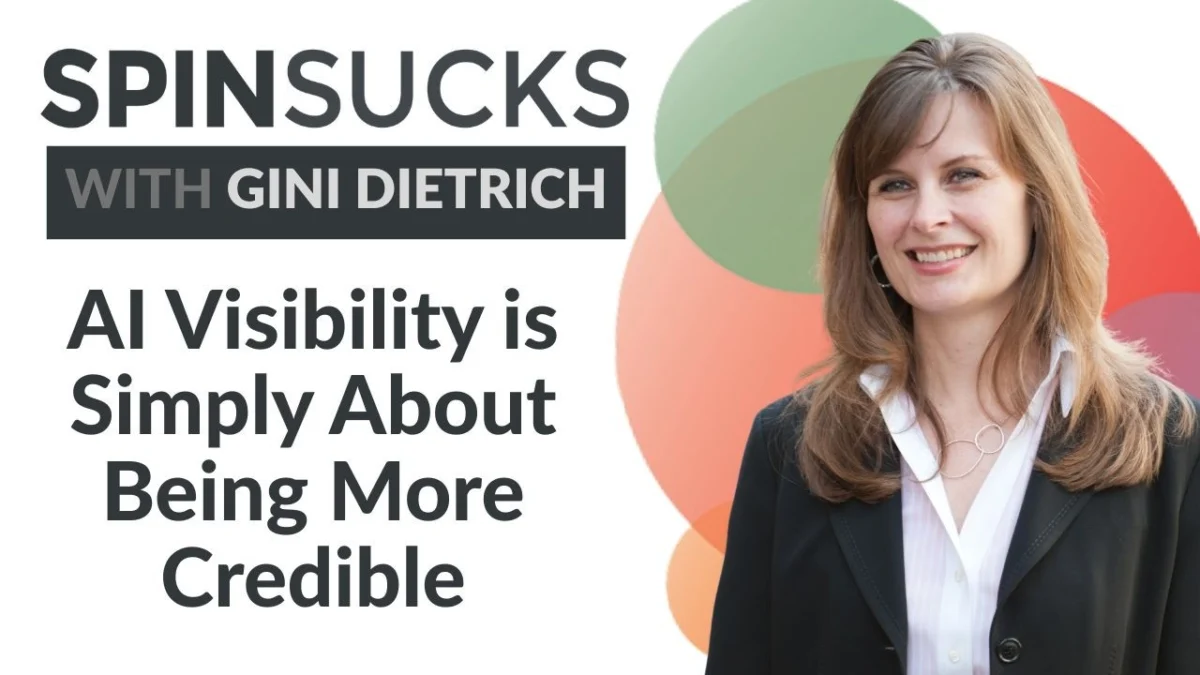
The landscape of digital visibility is undergoing a fundamental transformation as artificial intelligence redefines how information is consumed, synthesized, and recommended. For over a decade, the prevailing logic in digital marketing and search engine optimization (SEO) focused on content volume—the idea that publishing more frequently across more channels would inevitably lead to higher visibility. However, as generative AI tools like ChatGPT, Claude, and Google’s AI Overviews become the primary interfaces for information retrieval, this "volume-first" strategy has reached a point of diminishing returns. Industry experts now argue that AI visibility is no longer a contest of quantity, but a rigorous game of credibility, where expertise, structured data, and third-party validation serve as the new currency of the digital economy.
The Erosion of the Volume-Based Strategy
Since the advent of the commercial internet, brands have treated content as a numbers game. This era was characterized by a "hustle culture" in communication, where speed was viewed as a virtue and visible activity was equated with strategic substance. The rise of generative AI initially accelerated this trend, providing teams with the tools to produce blog posts, social updates, and newsletters at a scale previously unimaginable. However, this flood of AI-generated content has led to a saturation of "perfectly fine" but generic information that offers little unique value to the reader.
In the current market, AI systems are designed to filter out this noise. Large Language Models (LLMs) and search algorithms are increasingly prioritizing content that demonstrates high levels of Experience, Expertise, Authoritativeness, and Trustworthiness (E-E-A-T). When a brand focuses solely on volume, it often fails to provide the clear, consistent, and structured expertise that AI tools need to cite a source with confidence. Consequently, the pressure to "get more done with less" is proving counterproductive, as it often results in interchangeable assets that fail to establish a brand as a definitive authority in its field.
A Chronology of the Shift in Digital Visibility
To understand the current state of AI visibility, it is essential to trace the evolution of search and content discovery over the last several years:
- 2011–2019: The Keyword and Backlink Era. Search visibility was largely determined by keyword density and the sheer number of backlinks. Brands focused on "skyscraper" content—long-form articles designed to out-rank competitors through length and keyword optimization.
- 2020–2022: The Rise of Intent and Authority. Google’s introduction of BERT and later updates began to prioritize the context and intent behind searches. High-quality, expert-led content started to outperform generic SEO-driven pages.
- November 2022: The Generative AI Explosion. The launch of ChatGPT democratized content production. Initially, brands used these tools to flood the web with low-cost content, leading to an immediate "AI content arms race."
- 2023–2024: The Implementation of AI Overviews. Google and Bing integrated generative AI directly into search results. Clicks began to decline as AI provided direct answers, pulling information from sources it deemed most credible and structured.
- 2025 and Beyond: The Credibility and Veracity Era. Visibility is now governed by "corroboration loops." AI models look for consistency across owned media (websites) and earned media (third-party validation) to determine which brands are worth recommending to users.
Supporting Data: The Cost of Low-Credibility Content
Recent industry data underscores the shift toward quality over quantity. According to a 2024 report by Gartner, search engine volume for brands is projected to drop by 25% by 2026 as users migrate toward AI-driven conversational interfaces. This "zero-click" reality means that if a brand is not cited within the AI’s summary, it effectively does not exist for that user.
Furthermore, the 2024 Edelman Trust Barometer highlights a growing skepticism among B2B buyers and consumers. The report found that 61% of respondents are more likely to trust a brand if its expertise is validated by a third-party expert or a peer, rather than through its own advertising or self-published content. This data aligns with the technical requirements of AI models, which use "triangulation"—checking multiple sources across the web—to verify the accuracy of the information they present. If a brand’s leadership team says one thing on LinkedIn, its website says another, and trade publications say a third, AI models perceive a lack of authority and are less likely to recommend that brand.
The Credibility Framework: Owned and Earned Media Synergy
The path to AI visibility lies in the strategic integration of owned and earned media, a concept rooted in the PESO Model (Paid, Earned, Shared, Owned). While owned media—such as a company’s website and evidence libraries—serves as the "source of truth," it often hits a credibility ceiling. Self-published expertise is, by definition, biased.
To break through this ceiling, brands must utilize earned media to provide "credibility transfer." When a reputable trade publication, an industry analyst, or a popular podcast reinforces the same themes and data points found on a brand’s website, it creates a corroboration loop. AI systems interpret this consistency as a signal of high authority.
Strategic communications professionals are increasingly being viewed as "visibility engineers." Their role is not merely to generate PR hits, but to ensure that every piece of earned media reinforces the brand’s core "authority anchors." This systematic approach ensures that both humans and machines can connect the dots of a brand’s expertise without confusion.
The Emergence of "Level-Three" Content
As AI tools become better at answering basic questions (Level-One) and providing general comparisons (Level-Two), the value of "Level-Three" content has surged. This type of content focuses on nuance, judgment, and proprietary evidence that AI cannot fabricate. Characteristics of Level-Three content include:
- Proprietary Data Storytelling: Using internal usage data, benchmarks, or survey results to provide unique insights that do not exist elsewhere on the web.
- Real-World Frameworks: Sharing specific methodologies and implementation lessons that demonstrate a brand’s "in-the-trenches" experience.
- Nuanced FAQs: Answering complex questions such as "When should you not use this solution?" or "What are the hidden costs of this strategy?" These answers require the critical thinking and risk-assessment skills that human experts provide.
- Proof-Backed Assets: Utilizing before-and-after case studies and verified customer outcomes to ground theoretical claims in reality.
By focusing on these high-value assets, brands create "citable" content. When an AI tool looks for a specific statistic or a expert framework to complete a user’s query, it will pull from the brand that has provided the most structured and evidence-backed answer.
Official Responses and Expert Perspectives
Communications leaders and CMOs are beginning to pivot their budgets toward this new reality. Gini Dietrich, founder of Spin Sucks and creator of the PESO Model, has noted that AI visibility rewards the "clearest brand." Dietrich suggests that the industry must move away from the "busyness badge" of high-volume publishing and toward a more disciplined, strategic cadence.
Similarly, marketing analysts suggest that the role of the "content creator" is evolving into that of a "meaning maker." The focus is no longer on how quickly a "gist" can be published, but on whether the content is clear enough, consistent enough, and structured enough to be trusted. This shift is particularly critical for professionals in strategy-driven roles who are feeling the pressure of AI automation. By producing generic content, these professionals inadvertently prove that they can be replaced by a prompt. By producing high-credibility, evidence-based strategy, they demonstrate value that AI cannot replicate.
Broader Impact and Strategic Implications
The long-term implication of the credibility game is a winnowing of the digital field. Brands that continue to rely on high-volume, low-quality content will likely see their organic reach and AI citations collapse. Conversely, brands that invest in "authority anchors" and structured expertise will find themselves as the "obvious answer" in AI-generated summaries.
This shift also necessitates a change in internal organizational structure. PR, marketing, and leadership teams can no longer operate in silos. If a CEO’s public statements do not align with the technical documentation on the website, the brand’s overall authority is diluted in the eyes of AI. Total alignment—from leadership bios to media pitches to website FAQs—is now a prerequisite for visibility.
Ultimately, AI visibility is a reflection of a brand’s real-world reputation. The machines are learning to value what humans have always valued: clarity, consistency, and proof. In an AI-shaped market, the winner is not the one who speaks the loudest or the most often, but the one who is the most believable. Brands must stop asking how much more they need to publish and start asking if they have made it unmistakably clear who they are and why they should be trusted. In the era of artificial intelligence, credibility is the only sustainable competitive advantage.