rifanmuazin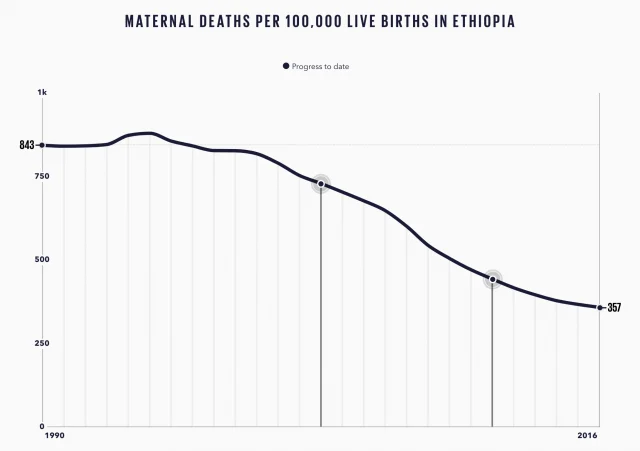
The Bill and Melinda Gates Foundation recently inaugurated its inaugural "Goalkeepers" report, a comprehensive data-driven analysis titled "Goalkeepers 2017: The Stories Behind the Data." This initiative is designed to accelerate global progress in the fight against extreme poverty and disease by diagnosing urgent problems, identifying scalable solutions, and measuring key results against the United Nations Sustainable Development Goals (SDGs). Central to this year’s report is a profound examination of maternal mortality, a metric that serves as a critical barometer for the overall health of a nation’s medical infrastructure and social equity. By synthesizing data from international bodies like UNICEF with ground-level case studies from nations such as Ethiopia, the report highlights both the devastating reality of maternal health crises and the tangible pathways toward systemic improvement.
The Strategic Importance of the Goalkeepers Initiative
The Goalkeepers report was established to track progress on the 17 Global Goals—also known as the Sustainable Development Goals—agreed upon by world leaders in 2015. The 2017 report serves as a benchmark, utilizing sophisticated information design to transform dense datasets into actionable narratives. According to the foundation, the objective is to ensure that the momentum generated by the Millennium Development Goals (MDGs) does not stagnate. The report utilizes a multi-medium approach, integrating text, visualizations, and video to engage policymakers and the public alike.
Bill and Melinda Gates have characterized maternal mortality as one of the most efficient ways to devastate a community. The loss of a mother often precipitates a "domino effect" of social and economic instability. Beyond the immediate tragedy, the death of a mother significantly increases the risk of mortality for her newborn and can lead to lower educational and health outcomes for her surviving children. By focusing on this metric, the Goalkeepers report aims to catalyze investment in primary healthcare systems that can prevent the majority of these deaths.
Global Trends in Maternal Mortality: A Statistical Overview
The baseline for much of the Goalkeepers’ analysis is derived from UNICEF’s maternal health datasets. In 2015, UNICEF recorded approximately 302,530 maternal deaths globally due to complications related to pregnancy or childbirth. This equates to a global maternal mortality ratio (MMR) of 168.7 deaths per 100,000 live births. While these figures remain alarmingly high, they represent a significant decline from 1990 levels, when the global MMR was estimated to be 385 deaths per 100,000 live births.
The data reveals a stark geographical divide. Approximately 99% of all maternal deaths occur in developing countries, with more than half occurring in sub-Saharan Africa and nearly one-third in South Asia. The leading causes of death—hemorrhage, hypertension, sepsis, and complications from delivery—are largely preventable or treatable with access to skilled health professionals and essential medicines. The Goalkeepers report argues that the disparity between wealthy and developing nations is not merely a matter of biology, but a direct reflection of resource allocation and political will.
Case Study: Ethiopia’s Transformation in Maternal Care
One of the most compelling narratives within the Goalkeepers 2017 report is the case study of Ethiopia. The nation has emerged as a global leader in health reform, demonstrating that rapid progress is possible even in resource-constrained environments. Between 1990 and 2015, Ethiopia successfully reduced its maternal mortality ratio from 843 deaths per 100,000 live births to 357. This represents a reduction of nearly 60%, a feat that many analysts deemed impossible two decades ago.
Ethiopia’s success is attributed to a multi-pronged strategy that prioritized rural access to healthcare. A cornerstone of this effort was the Health Extension Program (HEP), launched in 2003. This program involved the training and deployment of over 38,000 health extension workers—mostly women—who were stationed in rural villages. These workers provided essential services, including prenatal care, immunizations, and education on sanitation and nutrition. By bringing healthcare to the "last mile," Ethiopia significantly increased the number of supervised births and early interventions for pregnancy complications.
Furthermore, the Ethiopian government invested heavily in the "Motorcycle Ambulances" initiative and the expansion of primary hospitals. These infrastructure improvements ensured that women in labor could reach emergency obstetric care facilities within the "golden hour," the critical window during which life-saving interventions are most effective.
A Chronology of Global Health Commitments
To understand the context of the 2017 report, one must look at the timeline of international health agreements that shaped the current landscape:
- 1990: The baseline year for the Millennium Development Goals. Global maternal mortality is at a historical peak, with little standardized tracking in many developing regions.
- 2000: The United Nations adopts the Millennium Declaration, leading to MDG 5, which aimed to reduce the maternal mortality ratio by three-quarters by 2015.
- 2003: Ethiopia launches its Health Extension Program, signaling a shift toward community-based primary healthcare.
- 2010: The UN Secretary-General launches the "Every Woman Every Child" movement to mobilize international action for women’s and children’s health.
- 2015: The transition from MDGs to SDGs. The new target (SDG 3.1) is to reduce the global maternal mortality ratio to less than 70 per 100,000 live births by 2030.
- 2017: The Gates Foundation releases the first Goalkeepers report, highlighting that while progress is being made, the world is currently not on track to meet the 2030 targets without increased investment.
Data Visualization as a Tool for Policy Reform
The Goalkeepers 2017 report is noted for its sophisticated information design. Experts in data science argue that the way information is presented is just as important as the data itself. By using interactive charts and comparative animations, the report allows users to visualize the gap between the "current trajectory" and the "SDG target."
For instance, horizontal bar charts comparing different nations allow for an immediate understanding of regional outliers. While Ethiopia shows a steep downward trend, other nations have seen stagnation or even slight increases in mortality rates due to conflict, economic instability, or the breakdown of health services during the Ebola crisis in West Africa. This level of granularity enables organizations like UNICEF and the Gates Foundation to identify exactly where interventions are failing and where "best practices" can be exported from successful models like Ethiopia.
Official Responses and Global Implications
The release of the Goalkeepers report has drawn reactions from international health leaders and heads of state. Proponents of the report emphasize that it provides a necessary "reality check" for the international community. Dr. Tedros Adhanom Ghebreyesus, Director-General of the World Health Organization (and former Health Minister of Ethiopia), has frequently cited the need for universal health coverage (UHC) as the only sustainable way to achieve maternal health targets.
However, some critics and health analysts warn that the focus on specific "case studies" can sometimes overlook the complexities of fragile states. They argue that while Ethiopia’s centralized government was able to implement a top-down health worker program effectively, similar models may struggle in countries with ongoing civil unrest or decentralized governance.
Despite these nuances, the broader implication of the Goalkeepers report is clear: maternal mortality is a solvable problem. The data proves that when governments prioritize primary healthcare and empower community health workers, mortality rates plummet. The challenge moving forward lies in the "funding gap." To reach the 2030 goal of fewer than 70 deaths per 100,000 births, global health spending must not only be maintained but strategically increased in the highest-burden areas.
Conclusion: The Path Toward 2030
As the global community moves deeper into the SDG era, the Goalkeepers 2017 report serves as a reminder that data is a powerful weapon in the fight against inequality. The stories of mothers in Ethiopia and the hard numbers provided by UNICEF create a roadmap for future interventions. The report underscores that maternal health is not just a medical issue; it is a human rights issue and an economic necessity.
The "procrastination" in publishing health data, as noted by some independent analysts, is a luxury the world can no longer afford. Transparency, frequent reporting, and the use of modern data visualization tools are essential for holding leaders accountable. If the trends highlighted in the Goalkeepers report can be replicated globally, the devastation of maternal mortality may eventually become a relic of the past, ensuring that children across the globe grow up with the essential pillar of a mother’s presence. The call to action is evident: by analyzing the data, identifying the solutions that work, and spreading those best practices, the international community can indeed help make the world a better and more equitable place.