Iffa Jayyana
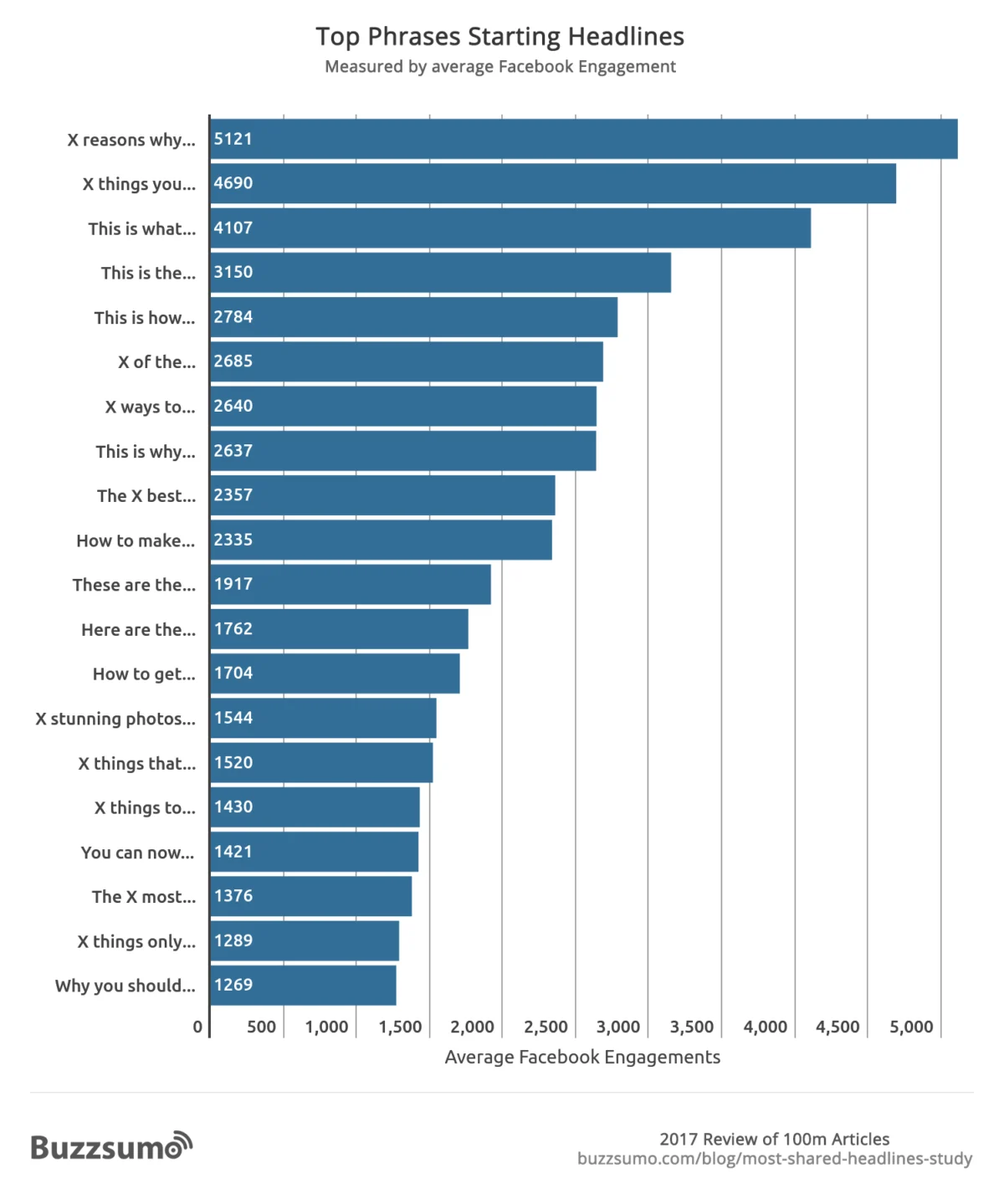
A recent in-depth study by BuzzSumo, building upon its seminal 2017 research, has meticulously analyzed 100 million article headlines across Facebook and Twitter to uncover the evolving landscape of digital content engagement. The findings highlight a significant transformation in what captures audience attention on social platforms, underscoring the critical role of headlines as primary gateways to content in an increasingly competitive and algorithm-driven digital environment. This updated research, conducted primarily between 2019 and 2020, provides invaluable insights for publishers, content creators, and marketers navigating the complexities of modern social media.
Methodology and Scope of the Study
The analytical foundation of this research involved scrutinizing 100 million headlines from the vast BuzzSumo index. The methodology focused on identifying "trigrams" – three-word phrases – that consistently generated the highest average social media shares on Facebook and Twitter. To ensure accuracy and prevent results from being skewed by dominant publishers, the data cleaning process included only one headline trigram/phrase per domain in the analysis. This meticulous approach allowed for a broader and more representative understanding of engagement patterns, measuring engagement by average median shares to minimize the impact of outliers. The study also incorporated expert opinions from leading marketing professionals, providing a qualitative layer to the quantitative findings.
This 2021 report serves as a direct comparison and update to BuzzSumo co-founder Steve Rayson’s influential 2017 study, which similarly analyzed 100 million headlines. By revisiting the data after a few years, researchers aimed to detect significant shifts in audience preferences and algorithmic influences, offering a chronological perspective on headline effectiveness.
The Evolving Landscape: A Comparison of 2017 and 2020/2021 Trends
The most striking revelation from the updated analysis is the profound change in effective headline strategies since 2017. The digital landscape, shaped by algorithmic maturity, evolving audience preferences, and a dynamic publisher ecosystem, has rendered many once-dominant headline types obsolete.
1. The Decline of Emotional, Tribal, and Quiz-Based Headlines:
The 2017 study prominently featured emotional phrases like "will make you" (e.g., "This Video Will Make You Cry Tears of Joy") and "melt your heart" as top engagement drivers on Facebook. Similarly, quiz-style headlines such as "Can We Guess Your Real Age?" or "Only X in Y People Can Identify…" along with tribal content like "X Things Only Teachers Will Understand," were highly effective, appealing to curiosity and identity.
However, the 2019-2020 data shows a dramatic reversal. Overtly emotional or sensational headlines are now rare. For instance, "in love with" appeared as the 55th most popular trigram with significantly fewer shares than its 2017 counterparts. The once-dominant "will make you" saw its top headline shares plummet from 1.7 million in 2017 to just 143,000 in the updated study. Quiz and tribal headlines have largely disappeared from the top-performing lists, signaling a shift away from clickbait and identity-focused content towards more substantive engagement.
2. Algorithmic Impact and the Rise of Trustworthy Sources:
This significant shift can be directly attributed to major platform changes, particularly on Facebook. In May 2017, Facebook began actively demoting "clickbait" headlines that exaggerated content or withheld information. This policy was further refined on January 19, 2018, when Facebook announced it would prioritize news from "trustworthy sources," and again on June 30, 2020, to boost original and authoritative news reporting. This algorithmic evolution has fundamentally reshaped the content landscape, favoring established news organizations and informative content over sensationalism. The study’s comparison of top publishers on Facebook from 2017 to 2020 clearly illustrates this, with major news outlets like cnn.com, dailymail.co.uk, nbcnews.com, washingtonpost.com, cbsnews.com, and time.com dominating the list in 2020, a stark contrast to the more diverse and often less authoritative sources seen in 2017.
3. Shorter, More Concise Headlines:
Another notable trend is the shrinking length of effective headlines. In 2017, the optimum formula was 15 words and 95 characters. The updated study, however, reveals that the ideal length has decreased to 11 words and 65 characters. This reduction of approximately four words and 30 characters reflects a broader audience preference for "speed to insight" in an era of content overload. A separate BuzzSumo study noted a 64% increase in online content published since 2016, making concise and direct headlines crucial for cutting through the noise.
4. Increased Homogenization Across Platforms, Yet Divergent Engagement:
While 2017 saw only one common top-20 headline phrase between Facebook and Twitter, the 2019-2020 analysis shows eight shared phrases, indicating a 20% similarity. This suggests that certain universal hooks now resonate across both major platforms, potentially simplifying content distribution strategies.
However, despite this growing similarity in phrases, the volume of engagement has diverged significantly. The most engaging Facebook trigram in 2020 ("of the year") garnered 26,702 average shares, nearly triple the 8,691 average shares for Facebook’s top phrase in 2017 ("will make you"). Conversely, Twitter saw a nearly four-fold decrease in shares for its most popular phrases between 2017 and 2020. An analysis of 11 million Twitter engagements confirmed a 14% drop in overall Twitter shares from 2017-2020, even as monthly active users remained largely stable. This suggests that while content might be similar, audience behavior and platform utility differ, with Facebook potentially becoming a stronger sharing platform for certain content types.
What Works Now: Deep Dive into 2019-2020 Headline Dynamics
The updated study provides granular details on specific elements that drive engagement on each platform.
Ideal Headline Length and Numbers:
The sweet spot for headline length in 2019-2020 is precisely 11 words and 65 characters. This contradicts older advice for extremely short headlines, emphasizing the need for specificity and detail to draw readers in without being overly verbose.
Regarding numbers, "10" remains the magic number for engagement. Beyond 10, single-digit numbers (3 through 10) consistently drive the most social media shares on both Facebook and Twitter. Interestingly, there’s no strong preference for odd or even numbers within the top 20. Larger double-digit numbers like 15 and 20, which were once more popular, have fallen out of favor, again reinforcing the audience’s desire for quicker insights over longer lists.
Top Headline Phrases and Themes on Facebook:
Facebook engagement is now predominantly driven by themes of ranking, newness, instruction, and hyperbole.
- Ranking: Phrases like "of the year" (e.g., "Joe Biden and Kamala Harris: TIME’s Person of the Year 2020" with 418K shares) dominate, often tied to awards or public recognition. These generate discussion and solidarity among supporters, and sometimes derision from detractors, driving shares.
- Newness: Phrases such as "in X years" and "for the first time" evoke intrigue by highlighting rare or unique events (e.g., "For the first time in history, U.S. billionaires paid a lower tax rate than the working class" with 1.2M shares). These build curiosity, compelling users to click for details on exceptional circumstances.
- Instructional: This category emerged as a powerhouse. Phrases like "you need to," "need to know," "why you should," and "everything you need" signal direct value and urgency to the reader. They tap into a "Fear of Missing Out" (FOMO) by implying essential information that "everyone else does." Examples include "Everything you need to know about washing your hands to protect against coronavirus (COVID-19)" (2.2M shares).
- Hyperbole (Carefully Applied): While raw emotional headlines are out, exaggerated phrases like "one of the most," "of the most," and "of the best" still perform well when referring to truly exceptional content or experiences (e.g., "Why Your Older Sister Is One of the Most Important People in Your Life" with 2.1M shares). This is a refined form of emotional appeal, focused on quality rather than pure sensationalism.
- Curiosity and Guidance: "Here are the" (revealing results, e.g., "Museum Asks People To Recreate Paintings With Stuff They Can Find at Home, Here Are The Results" with 3.1M shares), listicles like "X reasons why," and "How to" tutorials (guidance, e.g., "How to make cookie cereal, the hottest new food trend" with 941K shares) are also highly effective, indicating Facebook users seek explanations and practical advice.
Starting and Ending Phrases on Facebook:
Listicle numbers are prominent at the start of successful Facebook headlines, with six out of the top 20 starting phrases featuring a number. "How to" phrases are also highly effective, suggesting a strong appetite for learning. At the end of headlines, time-centric phrases (e.g., "in 2020," "in 2021") and numbers used to induce surprise or highlight speed-to-insight ("in just 5 minutes") are common. Social media trends fueling content headlines ("on social media") also perform well, reflecting a content-conversation loop.
Top Headline Phrases and Themes on Twitter:
Twitter audiences exhibit distinct preferences, leaning towards forward-looking, research-oriented, and immediate content.
- Curiosity and Future-Oriented: "The future of" is the top-performing trigram, frequently appearing at the start of headlines (e.g., "The Future of Remote Work is Hybrid"). This indicates a strong interest in predictions, trends, and explanations.
- Research and Reports: Words like "study" and "report" at the beginning of headlines perform exceptionally well, suggesting Twitter is a prime platform for sharing data-backed insights and academic findings.
- Immediacy and Reactivity: Phrases ending in "2020" or other current dates are highly engaging, with the top eight ending headlines being date-specific. This underscores Twitter’s role as a real-time news and current affairs platform.
- Storytelling: Themes focused on "the story of," "the history of," or "the rise of" also perform better on Twitter, appealing to an audience interested in narratives around specific people or topics.
Crossover Phrases for Dual-Platform Success:
Eight out of the top 20 overall headline phrases, and ten of the top starting phrases, successfully crossover between Facebook and Twitter. These included "need to know," "the power of," and "here are the," which appear to have universal appeal, regardless of the platform. However, given the massive difference in average shares (Facebook’s top phrase had 590x more shares than Twitter’s), a tailored approach remains advisable.
B2B Headline Insights (from 2017 Research)
A separate 2017 BuzzSumo study on B2B content, analyzing 10 million posts on LinkedIn, revealed distinct patterns. The top B2B headline phrases focused on professional development and insight, such as "the future of," "how to get," and "reasons why." The optimal length for B2B headlines was also found to be much shorter than for consumer content on Facebook, emphasizing efficiency and directness for a professional audience.
Expert Reflections and Strategic Implications
Leading marketing experts weighed in on these findings, offering critical interpretations for content strategists:
- Heidi Cohen, Chief Marketing Officer at Actionable Marketing Guide, emphasized that the study reflects post-pandemic customer behavior, noting increased reliance on digital content, a need for trusted information, and a desire for actionable advice. She advises marketers to focus on core marketing basics and continually assess evolving customer needs.
- Rand Fishkin, Founder of SparkToro, highlighted the study’s value in contrasting past and present effective strategies. He noted that it "mythbusts" some long-held beliefs about clickbait and emotional triggers, urging content creators to understand the "nuance of what’s really working."
- Brian Dean, Founder of Backlinko, found the rise of instructional headlines on Facebook particularly fascinating, marking a "huge shift from the heyday of BuzzFeed-style clickbait." This suggests that today’s Facebook users seek content that teaches them something new.
- Amanda Milligan, Marketing Director at Fractl, connected the instructional headline trend to a growing desire to learn from experts, arguing that phrases like "everything you need" or "why you should" inherently demonstrate authority, which resonates with readers.
- Ross Simmonds, Founder of Foundation, observed the mainstream adoption of "click-friendly" headlines, even by those who initially resisted. He underscored the importance of understanding human psychology and the "human desire of not missing out on information."
Key Takeaways and Best Practices for Content Creators:
The research strongly suggests that simply copying popular phrases is insufficient. Instead, content creators should internalize the underlying principles and adapt them to their specific audience, industry, and platform.
- Prioritize Value and Instruction: For Facebook, focus on headlines that promise clear, concise, and actionable information, leveraging instructional language and the "need to know" appeal.
- Embrace Nuanced Emotion and Hyperbole: While overt sensationalism is out, use carefully crafted hyperbolic phrases to highlight genuinely exceptional content, rather than fabricating emotional responses.
- Be Specific and Detailed (Within Length Limits): The ideal length of 11 words/65 characters allows for more detail than previously thought, enabling headlines to be specific enough to draw readers in without being overly long.
- Strategic Use of Numbers: Employ the number "10" and other single-digit numbers for listicles, and use numbers at the end of headlines to create surprise or emphasize speed of insight.
- Tailor for Platforms:
- Facebook: Lean into ranking, newness, instructional content, and carefully applied hyperbole.
- Twitter: Focus on curiosity (e.g., "future of"), research ("study," "report"), immediate current affairs, and compelling stories.
- Test and Adapt Continuously: The digital landscape is dynamic. Content creators must continually analyze what resonates with their specific audience on different platforms and adjust their headline strategies accordingly.
- Understand Algorithmic Intent: Acknowledge that social media algorithms increasingly prioritize authoritative, trustworthy, and valuable content. Headlines should reflect this intent rather than attempting to circumvent it with old clickbait tactics.
In conclusion, effective headline writing is no longer about simple formulas or sensational tricks. It demands a sophisticated understanding of audience psychology, platform algorithms, and the dynamic flow of information. By focusing on delivering clear value, sparking genuine curiosity, and adapting to the nuances of each social channel, content creators can craft headlines that truly connect and drive engagement in today’s digital world. The era of the short, snappy, often misleading headline is over; the future belongs to headlines that are informative, relevant,


 Sagoh

 Asep Darmawan