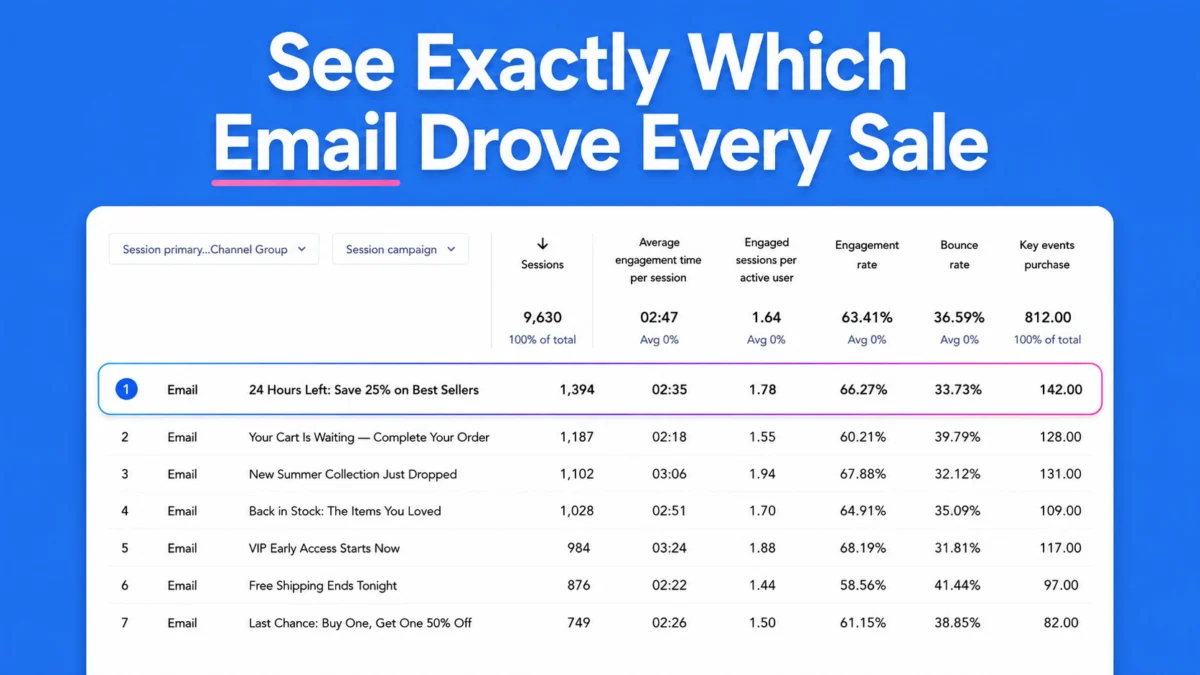
Retail media, an advertising landscape dominated by e-commerce giants and increasingly adopted by online retailers, is rapidly transforming how brands connect with consumers. At its core, retail media refers to advertising placed directly on a retailer’s own digital platforms, such as websites, apps, and email newsletters. The most prominent example, Amazon Sponsored Products, allows sellers to pay for their products to appear prominently in search results and on product pages, directly influencing purchasing decisions at the point of sale. While this burgeoning market offers immense potential for value creation, a closer examination reveals a complex ecosystem where the benefits for advertisers are not always guaranteed, and even the retailers publishing these ads can inadvertently harm their own profitability.
The sheer scale and rapid expansion of the retail media market underscore its significance. A 2025 paper published in the Journal of Retailing projected global retail media spending to surpass $140 billion in 2024, with the United States accounting for a substantial $54 billion of that figure. This upward trajectory shows no signs of abating. More recent forecasts from eMarketer suggest that U.S. retail media ad spending will reach an impressive $69.33 billion by 2026, representing a robust 17.9% increase from 2025. This growth is fueled by retailers seeking new revenue streams and brands aiming to capture consumers with high purchase intent.
The Dual Role of E-commerce Platforms
E-commerce companies are uniquely positioned to participate in the retail media market on both sides of the transaction. They can act as publishers, creating advertising inventory on their platforms, and as advertisers, utilizing retail media to promote their own products or services. For merchants selling through major marketplaces like Amazon, Walmart, or even smaller niche platforms, the ability to purchase advertising slots is a critical tool for enhancing visibility and driving conversions. These sponsored placements can significantly influence a shopper’s journey, especially when a consumer is actively searching for a specific product. For instance, a search query like "waterproof hiking boots" signals a strong intent to purchase, making ads placed in response to such searches highly valuable.
Beyond leveraging external marketplaces, many online merchants also have the capacity to sell and publish advertisements on their own digital storefronts and through their direct customer communication channels, such as email lists. This self-publishing model allows retailers to monetize their own audience and website traffic, transforming their e-commerce presence into a potent advertising platform.
Defining Value Creation in Retail Media
The true measure of success in retail media advertising lies in its ability to create incremental value for the advertiser. Value creation occurs when advertising spend generates new, profitable demand that would not have materialized otherwise. Consider a hypothetical scenario: a brand invests $1,000 in a retail media campaign and, as a direct result, achieves $5,000 in sales that it would not have secured through organic means. If these incremental sales yield a contribution margin of $1,500 before accounting for advertising costs, the campaign has generated a net benefit of $500. This is the ideal outcome – a tangible return on investment that boosts overall profitability.
However, the economic reality of retail media can be far less favorable when the attributed sales are not truly incremental. A concerning dynamic arises when advertising spend merely shifts existing demand or forces advertisers to pay for conversions they would have naturally captured. Imagine a marketplace where a particular seller has historically enjoyed strong organic rankings for their products. As the marketplace introduces more sponsored product placements, competition among sellers to secure these coveted spots intensifies. Consequently, the original seller might find themselves compelled to spend $5 on advertising to maintain a $50 sale that they previously achieved without any advertising expenditure. In such instances, while the marketplace undoubtedly benefits from increased advertising revenue, the advertiser’s profitability can be significantly undermined, or even negated.
This potential for margin erosion is a recognized concern within the industry. The Journal of Retailing report explicitly highlighted apprehensions that retail media can diminish advertisers’ profit margins when the sales generated through these channels are not incremental or represent new demand. This is a critical distinction, as it separates genuine growth from a mere reallocation of existing market share at an increased cost.

The Peril of Margin Erosion for Retailer-Publishers
The risks associated with retail media extend beyond just the advertisers; retailer-publishers themselves can also experience a detrimental impact on their profitability. While the allure of additional advertising revenue is strong, it is crucial for retailers to carefully assess the net effect on their overall business performance.
Consider a retailer whose category page generates $100,000 in monthly merchandise sales, contributing $30,000 in gross profit. A supplier approaches the retailer with an offer to pay $3,000 per month for a prominent advertising placement on this page. On the surface, this arrangement appears to boost the gross profit to $33,000. However, a critical consideration is whether this sponsored placement displaces the retailer’s own direct product sales. If the prominent advertising of the supplier’s product leads to a reduction in the retailer’s own conversions, the gross profit from merchandise sales could fall from $30,000 to, say, $28,000. In this scenario, while the retailer collects $3,000 in media revenue, their overall gain is only $1,000 ($33,000 projected profit minus the $2,000 reduction in merchandise profit).
The situation can become even more precarious. If the sponsored placement causes a more significant disruption, leading to a drop in gross profit from product sales to $26,000, the $3,000 in retail media revenue would actually result in a net decrease of $1,000 in overall margin ($26,000 merchandise profit + $3,000 media revenue = $29,000 total profit, a $1,000 decrease from the original $30,000). In this adverse scenario, advertising revenue has increased, but the fundamental business performance has declined.
This risk is not confined to isolated product placements. An excessive proliferation of sponsored products or the display of irrelevant recommendations can degrade the overall shopping experience. Such practices can make a website more difficult to navigate, erode customer trust over time, and ultimately lead to a reduction in overall conversion rates, impacting the retailer’s core business.
Measuring True Impact Beyond ROAS
For advertisers operating on large marketplaces, relying solely on Return on Ad Spend (ROAS) as a metric for justifying retail media investments can be misleading. An advertiser might achieve an $8 in sales for every $1 spent on advertising, which appears impressive. However, this high ROAS does not definitively prove that the advertising was the sole driver of those sales; the conversions might have occurred organically regardless of the ad spend.
The more pertinent question for advertisers is whether their advertising efforts actually changed the outcome – that is, did they drive incremental sales or acquire new customers? Accurately assessing this incremental impact requires sophisticated analytical methods. Large advertisers often employ randomized controlled experiments, advanced marketing mix modeling, and geo-testing strategies to isolate the true effect of their retail media campaigns. Smaller businesses can adopt simpler yet effective approaches, such as tracking new customer acquisition, monitoring changes in organic search performance during and after campaigns, and comparing periods with and without advertising activity. These methods aim to provide a clearer picture of whether retail media is truly expanding the customer base and driving profitable growth.
The Path to Sustainable Value
Ultimately, retail media is not an inherently positive or negative phenomenon. Its value is contingent on its application and outcome. For advertisers, it represents a win when it effectively generates profitable new demand, expanding their market reach and customer base. Conversely, it becomes a loss when it simply adds cost to conversions that would have happened anyway, eroding their margins without delivering genuine growth.
For retailer-publishers, the equation is similar. Retail media adds genuine value only if it leads to a higher net margin for the business. This distinction is crucial for both sides of the retail media equation. As the market continues its rapid expansion, a nuanced understanding of value creation and a commitment to rigorous measurement will be paramount for ensuring that retail media serves as a sustainable engine for growth rather than a mechanism for margin erosion. The evolving landscape demands a strategic approach, prioritizing incremental gains and genuine customer acquisition over superficial metrics that can mask underlying profitability challenges. The future of retail media hinges on its ability to demonstrate tangible, incremental value for all participants.