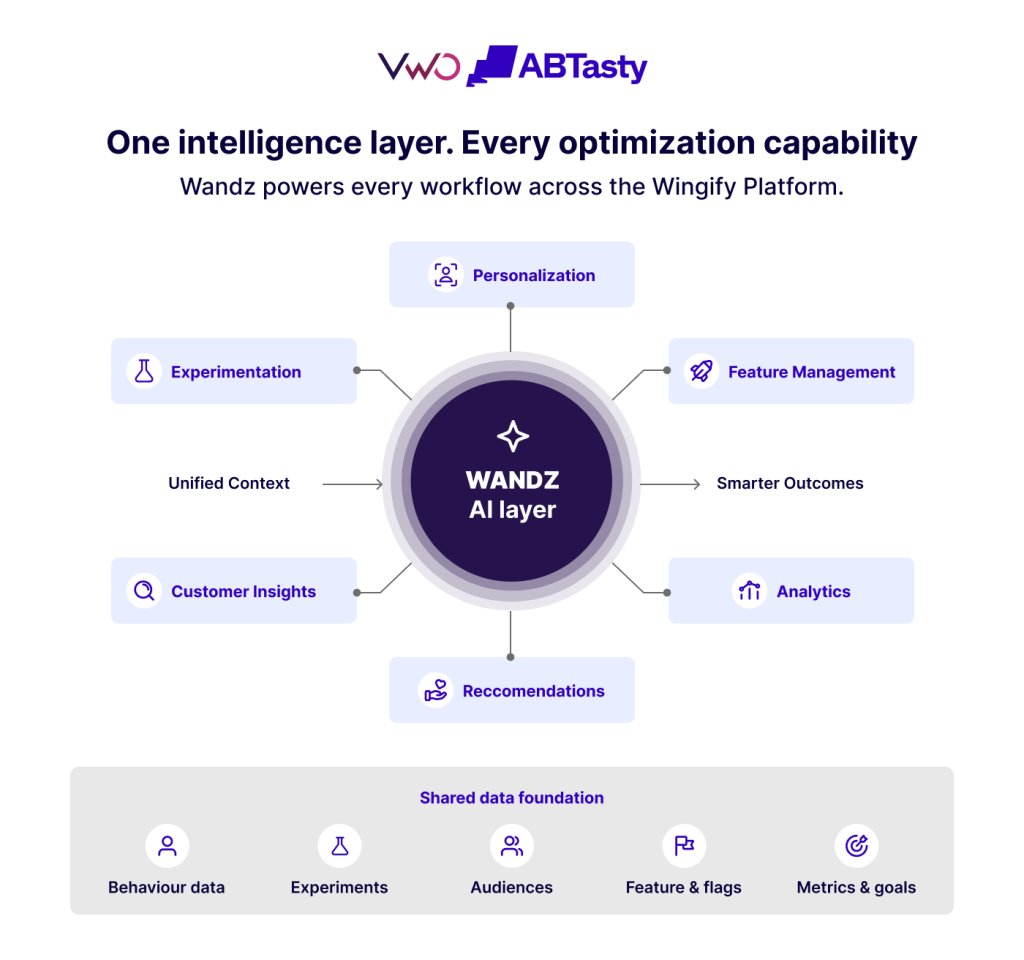
The global landscape of digital experience optimization is undergoing a fundamental shift as Wingify, the parent organization behind industry-leading platforms VWO and AB Tasty, introduces Wandz. This new embedded artificial intelligence layer is designed to integrate directly into the core workflows of experimentation, personalization, feature management, and customer insights. Unlike traditional third-party AI tools that require manual data transfers and extensive prompting, Wandz operates within the existing infrastructure of the Wingify suite, leveraging real-time access to experiments, audience segments, and behavioral metrics to provide immediate, actionable intelligence.
The launch of Wandz marks a significant milestone in the convergence of VWO and AB Tasty. By unifying the AI capabilities previously offered through VWO’s Copilot and AB Tasty’s Evi assistant, Wingify is positioning itself to solve the "friction gap" that currently plagues marketing and product teams. As organizations increasingly rely on general-purpose AI models like ChatGPT, Claude, and Gemini for brainstorming and drafting, a critical disconnect has emerged: these tools lack the specific, internal context of a company’s testing environment. Wandz aims to bridge this gap by functioning as an "agentic" layer that not only analyzes data but also executes the necessary technical steps to implement optimization strategies.
The Problem of Contextual Fragmentation in AI Workflows
In the current digital ecosystem, most optimization teams follow a fragmented workflow when utilizing artificial intelligence. To answer complex questions such as "Why is the conversion rate dropping on the checkout page?" or "Which audience segment should receive this specific offer?", teams must first export raw data from their testing platforms. This data is then cleaned and pasted into a general-purpose AI tool, accompanied by a lengthy prompt explaining the context of the experiment, the traffic split, and the historical performance of previous tests.
This "round trip" creates significant operational friction. The time spent exporting data and re-explaining context often outweighs the efficiency gains provided by the AI’s reasoning. Furthermore, general AI models do not have visibility into live session recordings, heatmaps, or the specific logic of a brand’s audience segments. Consequently, the recommendations provided by external AI tools are often generic or require manual translation into the technical configuration of the testing suite.
Wandz addresses this by living inside the screens where the work happens. Because it is natively integrated, it already "knows" which experiments are running, how traffic is allocated, and what specific behaviors are being tracked. This allows for a shortened cycle of analysis, recommendation, build, validation, and launch, all occurring within a single environment.
Technical Architecture and the Evolution of Wingify’s AI
The development of Wandz is the result of a strategic integration of two previously distinct AI projects. AB Tasty’s Evi was known for its ability to surface insights from user behavior, while VWO’s Copilot focused on assisting users with experiment setup and hypothesis generation. Under the Wingify umbrella, these technologies have been merged into a single, cohesive intelligence layer.
Wandz is designed to sit underneath the entire suite, drawing from a shared data lake that spans across VWO and AB Tasty capabilities. This ensures continuity across different departments. For example, an insight surfaced by Wandz during a qualitative review of heatmaps can be instantly converted into a hypothesis for a new A/B test. That same data can then be used to define a personalization segment, which in turn informs the rollout strategy for a new feature. By maintaining this thread of context, Wandz eliminates the need for manual handoffs between analysts, marketers, and engineers.
Agentic Capabilities: From Suggestion to Execution
The most defining characteristic of Wandz is its transition from a passive assistant to an active agent. While traditional AI tools provide suggestions that humans must then implement, Wandz is built to handle multi-step tasks end-to-end. In the context of Wingify’s workflows, this means the AI can draft an entire experiment, build a complex audience segment, or review a feature flag configuration for potential errors.
In the experimentation workflow, Wandz does not start from a blank slate. It analyzes historical performance data to generate grounded hypotheses. It can define variations, select primary and secondary metrics, and suggest targeting rules. Once the experiment is live and data begins to flow, Wandz interprets the results in plain language, identifying not just "what" happened, but "why" it happened based on behavioral patterns.
For personalization, Wandz identifies high-value visitor segments by scanning behavioral data for patterns that a human analyst might miss. It can then suggest specific experience variations tailored to those segments, effectively compressing a weeks-long analytical cycle into a matter of minutes. In all these instances, the "human-in-the-loop" model remains central; Wandz prepares the work, but a human must provide final approval before any changes are pushed to production.
Detailed Functional Applications Across the Suite
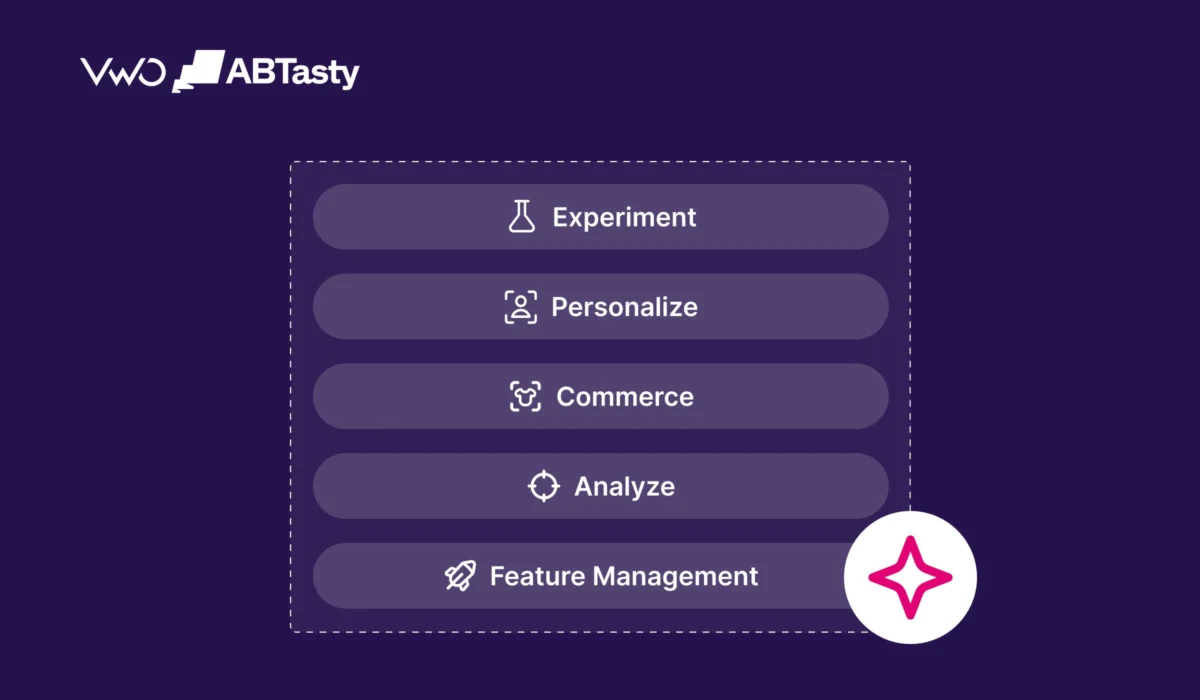
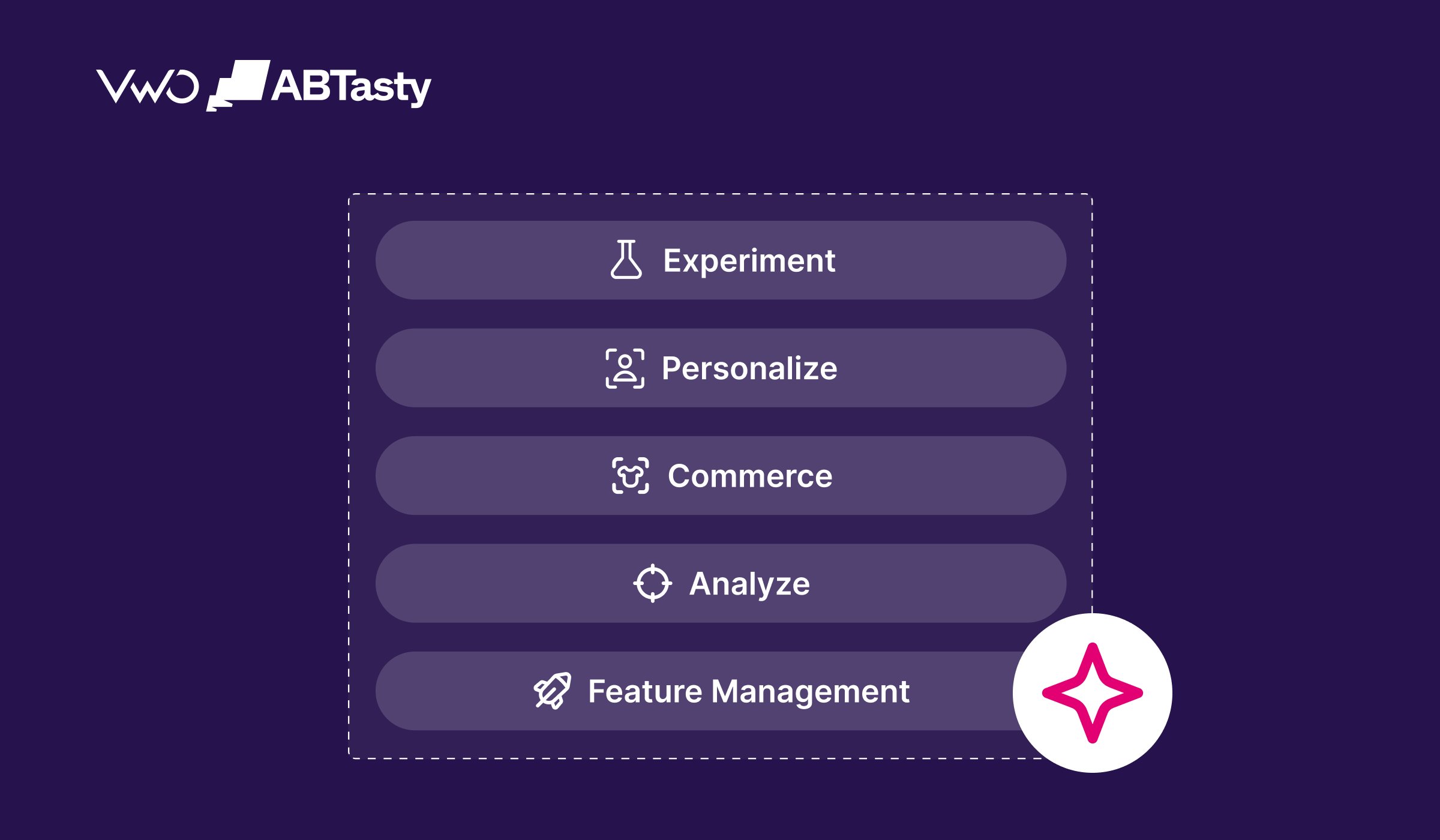
The impact of Wandz is felt across five primary domains of the Wingify ecosystem:
1. Experimentation and Testing: Wandz automates the mechanics of A/B and multivariate testing. By identifying "friction points" in the user journey through session analysis, it suggests specific UI/UX changes. It also acts as a quality assurance layer, flagging potential configuration issues—such as mismatched metrics or overlapping audiences—before a test goes live.
2. Personalization at Scale: Moving beyond simple "if-then" logic, Wandz uses machine learning to predict which content will resonate with specific users. It helps teams build sophisticated segments based on intent, browsing history, and real-time behavior, then assists in drafting the creative assets or offers for those segments.
3. Advanced Feature Management: For engineering teams, Wandz serves as a risk mitigation tool. It reviews rollout plans and traffic allocation rules to ensure they align with the organization’s risk profile. During a rollout, Wandz monitors performance signals and can suggest whether to accelerate the release or trigger a "kill switch" if negative metrics are detected.
4. Qualitative Customer Insights: Analyzing thousands of session recordings or survey responses is traditionally a labor-intensive task. Wandz performs the "first pass" of this data, summarizing common user complaints, identifying sessions where users exhibited "rage-clicking," and connecting these qualitative findings to quantitative drops in conversion.
5. Reporting and Analytics: Wandz simplifies data communication by allowing users to ask questions in natural language. Instead of building custom reports, a user can ask, "How did the mobile audience in Europe react to the new pricing page?" Wandz then pulls the relevant data and provides a summary that can be shared directly with stakeholders.
Strategic Impact for Multi-Disciplinary Teams
The implementation of Wandz changes the daily operations for various roles within an enterprise. Product Managers can use the tool to prioritize backlogs based on the predicted impact of experiments. Marketers can launch personalized campaigns with greater speed, reducing their reliance on technical teams for segment building.
Growth teams, often tasked with rapid iteration, can use Wandz to find the "next big opportunity" immediately after a test concludes. Engineers benefit from a reduced cognitive load when managing feature flags, as the AI handles the sanity-checking of configurations. For e-commerce teams, the primary value lies in identifying and fixing checkout friction in real-time, directly impacting the bottom line.
Governance, Security, and Enterprise Guardrails
As AI becomes more integrated into production environments, security and accountability have become paramount concerns for enterprise organizations. Wingify has built Wandz with a strict "human-in-the-loop" philosophy. The AI does not have the authority to launch experiments or change production code without explicit human sign-off.
Furthermore, Wandz operates within the existing security framework of the Wingify suite. This includes role-based access controls (RBAC), comprehensive audit logs, and compliance with global data privacy regulations such as GDPR and CCPA. Every action taken or suggested by Wandz is logged, allowing teams to see exactly who approved a change and what data the AI used to make its recommendation. For enterprise clients, this transparency is essential for maintaining trust and meeting regulatory requirements.
The Broader Implications for the Optimization Industry
The introduction of Wandz reflects a broader trend in the SaaS industry toward "vertical AI"—intelligence that is purpose-built for a specific domain rather than a general-purpose model. As the cost of generic AI reasoning continues to drop, the value of proprietary, contextual data increases. By keeping the AI close to the data source, Wingify is attempting to redefine the standard for what an optimization platform should be.
Industry analysts suggest that the "agentic" approach taken by Wingify will likely become the benchmark for the next generation of marketing technology. The goal is no longer just to provide a tool for testing, but to provide a partner that handles the "drudge work" of data triage and technical setup, allowing human professionals to focus on high-level strategy and creative problem-solving.
As VWO and AB Tasty continue to merge their capabilities under the Wingify banner, Wandz will serve as the connective tissue that ensures a unified experience. For organizations looking to mature their optimization programs, the shift from manual data manipulation to AI-assisted execution represents a clear path toward greater agility and more consistent revenue growth.