Meta’s introduction of Meta Ads AI Connectors represents a seismic shift in how paid social advertising campaigns are conceived, executed, and analyzed. This innovative feature fundamentally redefines the advertiser’s workflow, moving campaign management from the confines of Ads Manager into the AI-powered tools that many already rely on for insights. This transition signifies a move away from platform-centric operations towards a more integrated, data-driven decision-making ecosystem.
For years, the paid social landscape has been characterized by a clear demarcation: advertisers would log into Meta’s Ads Manager to monitor performance, implement changes, and manage campaigns. While artificial intelligence tools offered valuable interpretations and recommendations, they largely operated as external advisors, disconnected from the live campaign environment. Meta Ads AI Connectors, launched recently, dismantle this separation. They allow advertisers to directly create, manage, and analyze their Meta campaigns from within their existing AI platforms. This eliminates the need for complex API integrations, arduous developer credential acquisition, and lengthy engineering dependencies. Meta’s MCP (Marketing Cloud Platform) server facilitates secure connections to live campaign data, enabling tasks ranging from comprehensive reporting to campaign creation to be performed through natural language prompts.
The Decoupling of Execution from the Platform
The long-standing practice of tying campaign optimization directly to the advertising platform itself is now being challenged. Historically, if an advertiser identified a performance issue, the necessary action involved navigating back into Ads Manager to make manual adjustments. AI tools could identify trends and suggest optimizations, but they lacked the direct capability to implement these changes within the live campaigns. Meta Ads AI Connectors effectively remove this barrier.
By enabling the same environments used for campaign analysis to also enact changes, the critical lag time between identifying a performance gap and rectifying it is dramatically reduced. The traditional workflow often involved exporting data, analyzing it in a separate tool, and then manually applying changes back in Ads Manager. This new paradigm allows for a seamless transition from insight to action within a single, integrated environment. This streamlining is particularly significant for high-frequency campaign adjustments, where speed can be a crucial determinant of success in the dynamic world of digital advertising.
Decision-Making Centers of Gravity Shift Towards Data
A more profound underlying shift is also occurring. By granting AI tools direct access to Meta’s campaign data, Meta is acknowledging a long-held industry understanding: paid social advertising does not operate in a vacuum. Performance metrics on Meta are only truly meaningful when viewed in conjunction with data from other marketing channels, such as search engine marketing (SEM), retail media networks, and broader business intelligence.
When an AI tool can seamlessly pull and act upon Meta data alongside data from these other sources, it naturally evolves into the central hub for strategic decision-making. This empowers teams to achieve the cross-channel visibility that has been a persistent challenge for many years. Instead of optimizing Meta campaigns in isolation, advertisers can now weigh their performance within the context of the entire marketing ecosystem and execute changes without the need to switch between disparate tools. This holistic approach promises more informed, impactful decisions that align with overarching business objectives.
For instance, an advertiser might observe a dip in Meta ad performance. Traditionally, they would investigate within Ads Manager. With AI Connectors, the AI can simultaneously analyze this dip alongside search query volumes for related terms, competitor activity on other platforms, and even recent sales data. The AI can then suggest adjustments not only to Meta ad spend or targeting but potentially to search ad bids or landing page content, based on a comprehensive, real-time understanding of the entire customer journey and business performance.
Reduced Friction Democratizes Execution and Elevates Strategic Skills
The third significant change introduced by Meta Ads AI Connectors pertains to the reduction of friction in campaign management, which in turn has a profound impact on the skills required for success. Tasks that previously demanded intricate navigation of the platform, cross-team coordination, or waiting for technical configurations can now be accomplished through simple, natural language commands. This not only accelerates execution but also broadens the scope of who can effectively manage paid social campaigns.
As the technical barrier to entry lowers, proficiency with the specific nuances of a platform like Ads Manager becomes less of a differentiating factor. Instead, the premium will be placed on an advertiser’s ability to frame their objectives clearly, interpret the insights provided by AI, and strategically guide the system towards desired outcomes. This shift elevates the importance of critical thinking, strategic planning, and prompt engineering – skills that are more transferable and indicative of higher-level marketing acumen.

Consider the process of setting up a new campaign. Previously, this involved selecting campaign objectives, defining audiences through complex filters, setting budgets, and choosing ad formats. With AI Connectors, an advertiser might simply instruct, “Create a prospecting campaign for our new product launch targeting users interested in sustainable fashion, with a budget of $5,000 per week and a focus on driving website traffic.” The AI, connected to Meta’s vast data and ad infrastructure, could then generate campaign structures, draft ad copy variations based on past performance, and suggest audience refinements, all based on this single input.
The Enduring Role of Human Judgment
While the efficiency gains and simplified workflows offered by Meta Ads AI Connectors are undeniable, it is crucial to recognize that these advancements are not solely about optimizing operational speed. The true separation between high-performing teams and their peers will lie in how they leverage these new capabilities for strategic advantage.
The real opportunity presented by these connectors is to treat them as a new layer of workflow intelligence rather than merely a shortcut for reporting. The value proposition is not in asking an AI tool to simply pull a Meta report. Instead, it lies in seamlessly integrating Meta data into a broader decision-making framework that inherently accounts for other marketing channels, key business metrics, and rigorous testing methodologies. The teams that will truly benefit are those that fundamentally redesign their operational processes to embrace this integrated approach, rather than attempting to bolt AI onto their existing routines.
Furthermore, this evolution significantly raises the stakes on human judgment and strategic foresight. When campaigns can be constructed and modified through a single instruction, the importance of defining precise inputs, identifying relevant signals, and establishing clear guardrails becomes paramount. The AI system will act with speed and precision, but it still requires expert guidance to ensure it is directed towards the correct strategic objectives. This direction is ultimately a human decision, rooted in a deep understanding of the business, the market, and the consumer.
For example, if an AI suggests a significant shift in budget allocation based on predicted performance, a human advertiser must critically assess whether this aligns with longer-term brand building goals, potential market saturation, or emerging competitive threats that the AI might not fully comprehend. The AI can optimize for a specific metric, but the human must ensure that metric serves a larger, strategic purpose.
Implications and Future Trajectories
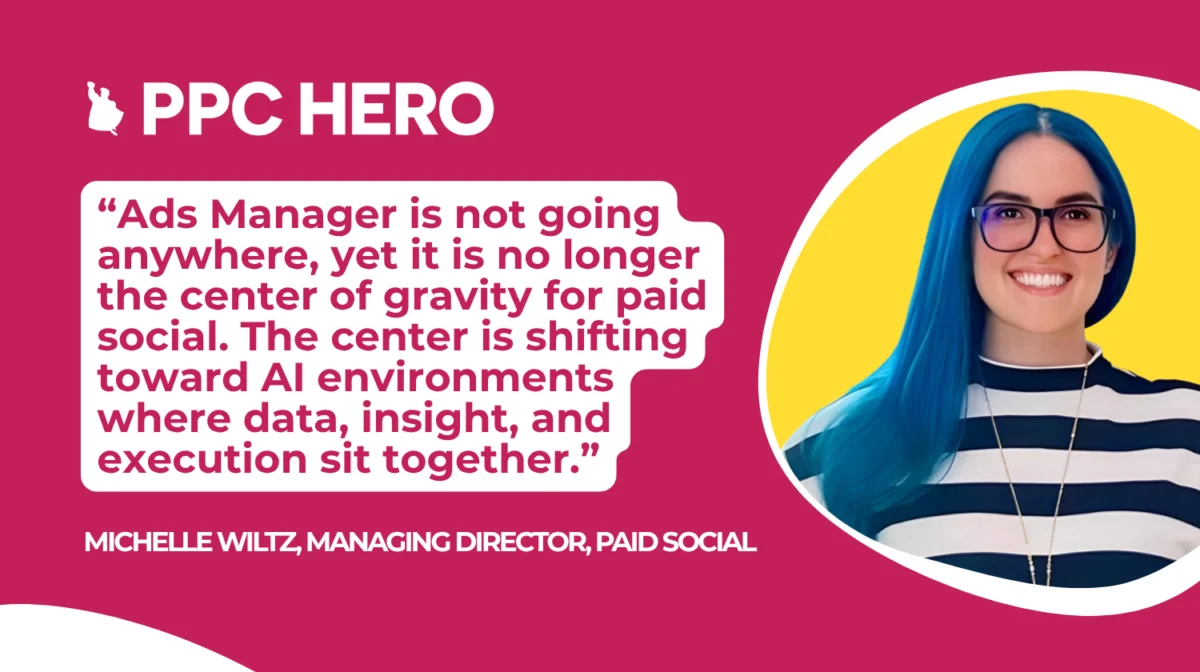
Meta Ads AI Connectors are more than just another AI-powered feature; they represent a fundamental redefinition of where paid social campaign management resides. While Ads Manager will undoubtedly remain a vital tool for oversight and granular control, it is no longer the sole or even primary center of gravity for paid social operations. The gravitational pull is shifting towards AI-driven environments where data, actionable insights, and direct execution converge.
This migration of the operational core has significant implications for the advertising industry. It signals a future where AI becomes an indispensable partner in the entire advertising lifecycle, not just a supplementary tool. The ability to fluidly move between analysis and action within a single, intelligent environment will empower advertisers to be more agile, responsive, and ultimately, more effective.
The teams that proactively adapt to this evolving landscape, embracing the integrated workflows and redefining their strategic approaches, will undoubtedly move faster and make more informed decisions. They will be at the forefront of leveraging AI to unlock new levels of campaign performance and business impact. Conversely, those who remain tethered to traditional, platform-centric workflows risk being left behind, continuously logging in, pulling isolated reports, and struggling to keep pace with the accelerated and integrated nature of modern digital advertising.
This strategic pivot by Meta also suggests a potential catalyst for broader industry change. As AI becomes more integrated into campaign management, the demand for sophisticated data integration across platforms will likely increase, potentially driving further innovation in cross-channel analytics and automation solutions. The success of Meta Ads AI Connectors could encourage other major advertising platforms to follow suit, leading to a more unified and intelligent advertising ecosystem.
The journey towards truly integrated AI-driven advertising is ongoing, but with the introduction of Meta Ads AI Connectors, a significant milestone has been reached, fundamentally altering the operational DNA of paid social advertising. The focus is no longer just on the tools themselves, but on the intelligent integration of data, insight, and action, orchestrated by human strategic direction.