The cultural landscape, workforce dynamics, and consumer behavior continue to be reshaped by Generation Z, a demographic cohort that navigates the world with a unique digital fluency and distinct values. Dismissing them as merely “coming for skinny jeans” or “side parts” would be a profound oversight; this generation, born roughly between 1997 and 2012, is a powerful economic and social force, setting trends and demanding authenticity. For businesses and marketers aiming to connect effectively, understanding the intricate statistics driving Gen Z’s decisions is not merely advantageous but essential for strategic planning in 2026 and beyond.
Demographics and Socio-economic Realities Shaping Gen Z

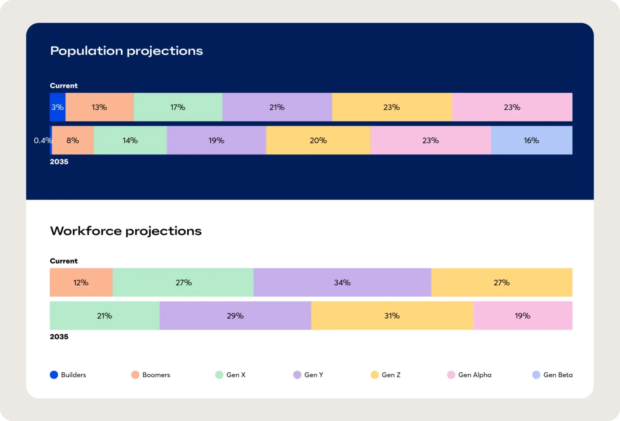
Gen Z represents a significant portion of the global populace and workforce, signaling an undeniable shift in market power. Accounting for 22.9% of the total worldwide population, equating to over 2.9 billion individuals, and comprising approximately 21% of the U.S. population, their sheer numbers alone necessitate attention. The most widely accepted definition places their birth years from 1997, with many researchers concluding the generation around 2010, though some extend it to 2012, marking the beginning of Generation Alpha. This broad age range encapsulates young adults just entering their prime earning years and older teenagers beginning to exert independent purchasing power.
Their presence in the workforce is equally impactful. Gen Z currently makes up 27% of the global workforce, a figure projected to rise to 31% by 2035, at which point they will constitute the largest working generation. This rapid integration into the professional world means they are not just future consumers but active participants in the economy, accumulating disposable income and shaping workplace culture. This workforce presence, however, comes with its own set of challenges, predominantly financial.

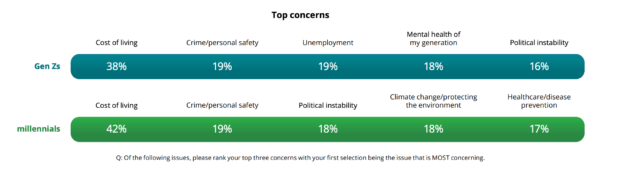
A critical concern for nearly four in ten Gen Z individuals (38%) is the cost of living, mirroring the top concern of millennials (42%), according to Deloitte’s 2026 Global Gen Z and Millennial Survey. This pervasive financial pressure underscores a generation grappling with economic instability, rising inflation, and escalating housing costs, often compounded by student loan debt. Unlike millennials, Gen Z also expresses heightened worry about unemployment (19%) and their generation’s mental health (18%). These economic anxieties are visibly influencing life choices, with many Zoomers delaying traditional milestones such as homeownership and starting families. For brands, this translates into an urgent need to demonstrate tangible value, offer flexible payment options, and acknowledge these financial realities in their messaging rather than presenting an aspirational, detached image. Brands that resonate by understanding and addressing these core anxieties are poised to build stronger trust and loyalty.
Beyond economic factors, Gen Z stands out as the most diverse generation in history. One-quarter identify as Hispanic, a higher percentage than millennials (21%), and a remarkable 24% identify as LGBTQ+, surpassing any preceding generation. This inherent diversity demands that marketing strategies move beyond tokenism, treating representation as a foundational element rather than a mere checkbox. Campaigns must authentically reflect the multifaceted identities within Gen Z, segmenting audiences not just by age but by cultural background, sexual orientation, and unique lived experiences. Furthermore, their perspectives on higher education are nuanced; while 85% of Gen Z students acknowledge its importance, only 62% plan to pursue it, reflecting a pragmatic approach to career paths and an increasing interest in vocational training, apprenticeships, and skills-based learning.
Paradoxically, despite their digital native status, 58% of Gen Z report experiencing digital fatigue. This saturation of online content and constant alerts creates a challenge for marketers. The solution is not to increase posting frequency but to elevate content quality and relevance. In a crowded digital space, brands must prioritize showing up where Gen Z actively seeks information and entertainment, providing content that genuinely captures and rewards their attention without adding to the overwhelming noise.
Digital Engagement and the Shifting Social Media Landscape
Gen Z’s relationship with social media is foundational to their daily lives, blurring the lines between communication, entertainment, and commerce. A staggering 95% of Gen Z adults utilize YouTube, making it the most ubiquitous platform for this demographic. Following closely are Instagram (80%), Facebook (68%), TikTok (63%), and Snapchat (58%) among adults aged 18-29. This diverse platform usage suggests a fragmented media consumption pattern where different platforms serve distinct purposes. YouTube often acts as an educational and long-form entertainment hub, while Instagram maintains its visual appeal, and TikTok thrives on short-form, trend-driven content.
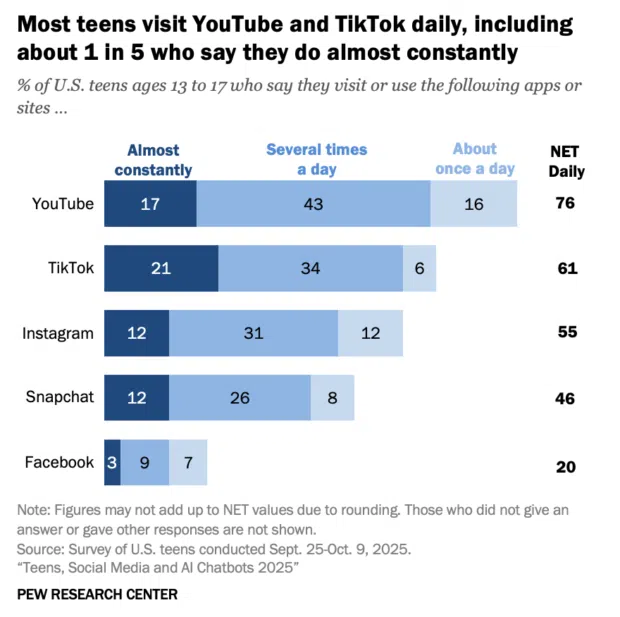
A particularly striking statistic reveals the “always-on” nature of TikTok engagement: 21% of Gen Z teens describe their TikTok use as “almost constantly.” This figure surpasses YouTube (17%) and Instagram/Snapchat (12% each), highlighting TikTok’s unparalleled ability to capture continuous attention. The platform’s powerful algorithm and endless stream of personalized content have cultivated a habit of incessant scrolling, making it a critical, albeit challenging, environment for brands to penetrate with meaningful content.
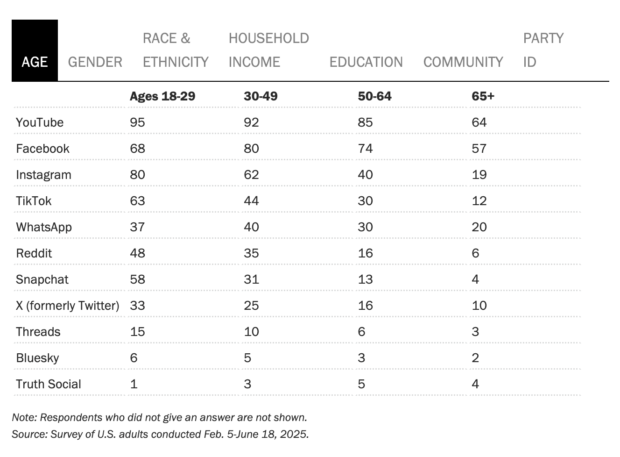
Beyond the mainstream giants, Reddit plays a surprisingly significant role for Gen Z, with almost half (48%) of Gen Z adults using the platform—a higher rate than any other age group. Often overlooked in marketing strategies, Reddit functions as a unique forum for authentic discussions, product comparisons, recommendations, and candid feedback. This makes it an invaluable “social listening goldmine” for brands, offering unfiltered insights into consumer sentiment. However, the Reddit community is notoriously resistant to overt, inauthentic marketing, requiring a nuanced, community-first approach.
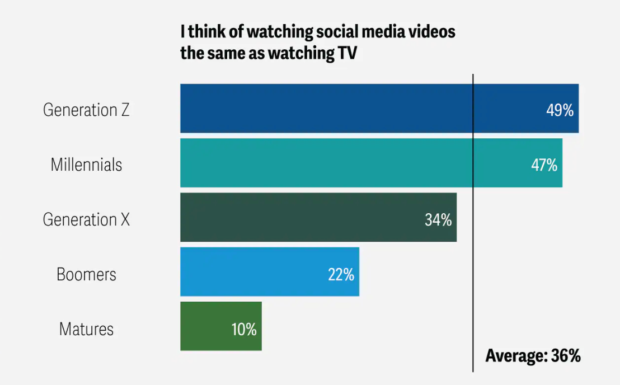
The distinction between social media and traditional television is rapidly eroding for Gen Z. Nearly half (49%) view watching social media videos as equivalent to watching TV, and 58% spend more time consuming videos on social platforms than on dedicated streaming services like Netflix or Hulu. This profound shift has significant implications for media budgets and content creation. If a short-form social clip commands the same attention as a prime-time television slot, social video transcends being a mere alternative; it becomes the primary “television” for this generation. Moreover, 53% of Gen Z find social content more relevant to their lives than traditional TV shows or movies, emphasizing the power of targeted, personalized content over broad-reach broadcasting.
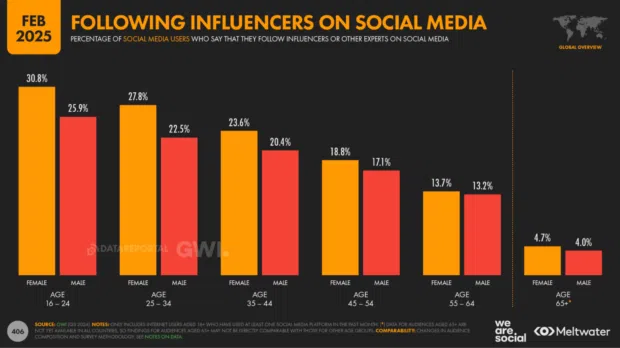
The rise of the creator economy is inextricably linked to Gen Z’s digital habits. Individuals aged 16-24 follow influencers more than any other age group, with 30% of women and 25% of men in this demographic engaging with creators. This trend signifies a shift in trust and connection from traditional celebrities to relatable online personalities. Gen Z actively seeks out voices that resonate with their values and interests, viewing creators as trusted peers rather than distant idols. This personal connection is further highlighted by 50% of Gen Z feeling a stronger personal bond with social media creators than with TV personalities, making influencer marketing an exceptionally potent strategy. Brands that partner with authentic creators who genuinely align with their values can tap into pre-existing trust and community, driving engagement and sales more effectively than traditional advertising.
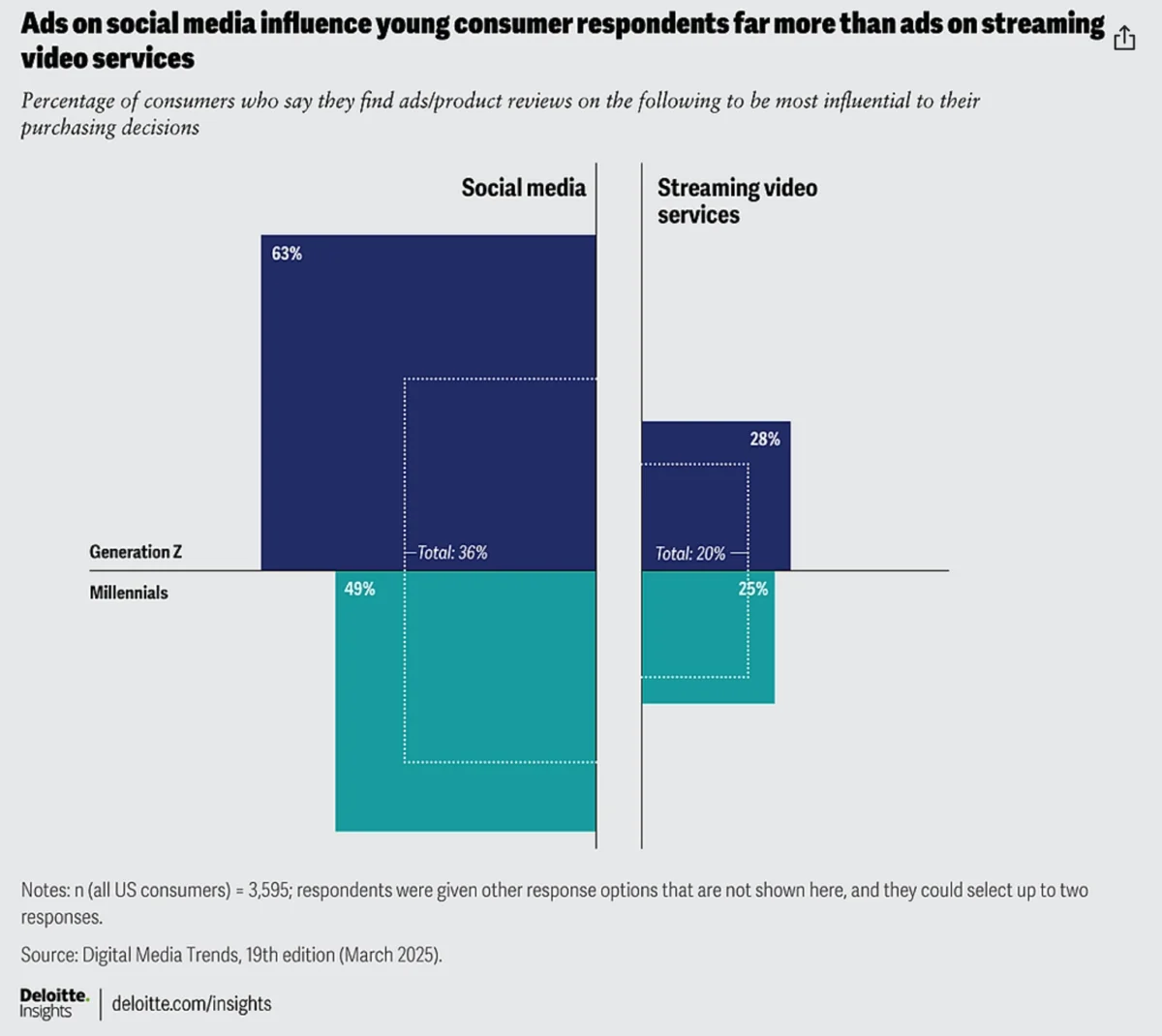
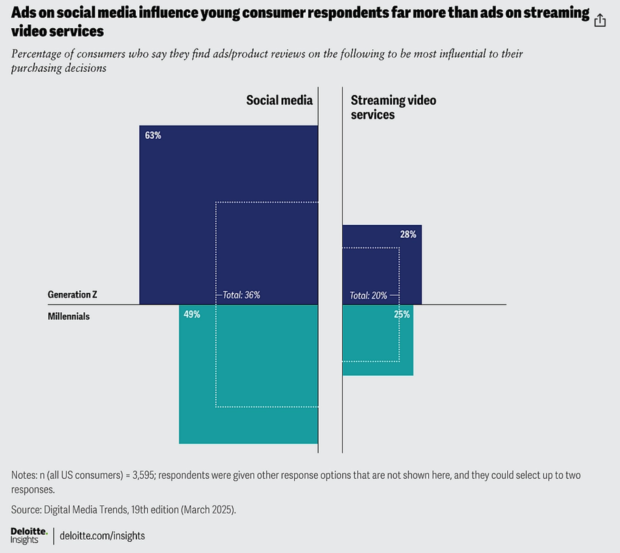
The influence of social media extends directly to purchasing decisions, with 63% of Gen Z reporting that social ads and reviews most impact their buying choices. Social platforms have become comprehensive ecosystems for product discovery, research, trend identification, and validation through social proof (customer feedback, tutorials, unboxings). The ability for a brand to spark desire and provide instant gratification within a single scroll makes social advertising highly effective, particularly when backed by genuine user testimonials and creator endorsements.
Cumulatively, Gen Z’s intensive social media engagement is reflected in the time they spend on these platforms: an average of 1.4 hours per day. This exceeds the time spent by millennials (1.1 hours), Gen Xers (0.9 hours), and Boomers (0.6 hours) on social media, and even surpasses their own streaming TV consumption (1.3 hours). This constant digital presence demands that marketers maintain a consistent, high-quality, and strategically diversified social media presence to capture and retain Gen Z’s fleeting attention.
Technology Adoption and the Evolving Search Paradigm

Gen Z’s relationship with technology is characterized by early adoption, high expectations, and a nuanced understanding of its benefits and drawbacks. A significant 74% of Gen Z report using Artificial Intelligence (AI) in their daily work, a substantial increase from 57% in 2025. This rapid integration of AI tools highlights their comfort with emerging technologies and their proactive approach to leveraging them for productivity and efficiency. However, this embrace of AI is tempered by growing skepticism.
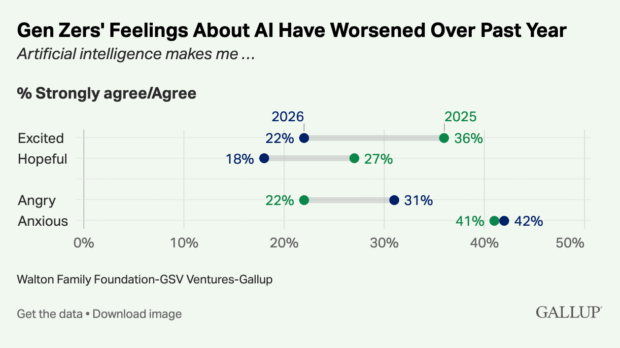
According to Gallup’s “Voices of Gen Z report,” optimism regarding AI is fading rapidly. The percentage of Gen Z individuals who felt excited by AI dropped from 36% in 2025 to 22% in 2026. Concurrently, negative emotions intensified, with anger rising from 22% to 31%, and anxiety, already the dominant emotion, surging to 42%. This shift reflects increasing concerns about AI’s ethical implications, potential for job displacement, misinformation, and data privacy. Brands deploying AI-driven solutions must navigate this landscape carefully, prioritizing transparency, ethical considerations, and clear communication about how AI enhances user experience without compromising privacy or authenticity.
In terms of hardware, Gen Z demonstrates a clear preference for mobile devices. Only 39% of 16- to 24-year-olds own a smart TV, significantly below the 49% average across all demographics. This statistic reinforces the mobile-first imperative for content creation and distribution, as Gen Z is more likely to consume media on their smartphones and tablets than on a large-screen television.
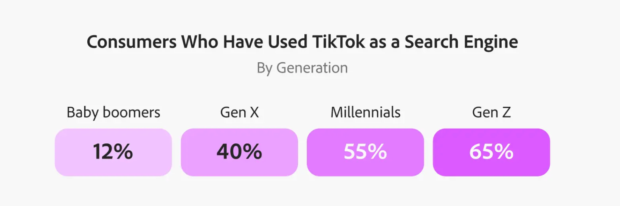
Perhaps one of the most disruptive trends is Gen Z’s evolving approach to information retrieval. A notable 40% of Gen Z consumers have utilized TikTok as a search engine, with 25% finding it effective for information discovery. This contrasts sharply with older generations, indicating a preference for visual, community-driven, and short-form video content over traditional text-based search results. For marketers, this means optimizing content for “social SEO” – incorporating keyword-rich captions, relevant hashtags, and compelling visuals on platforms like TikTok and Instagram to ensure discoverability.
Furthermore, 12% of Gen Z consumers are more likely to rely on ChatGPT than Google as a search engine, a statistic that, while small, signals the nascent but growing shift towards conversational AI as a default starting point for queries. This trend, observed across all generations (15% of Millennials and Gen Xers, 14% of Baby Boomers), suggests a broader acceptance of AI for direct answers and curated information, potentially reshaping the landscape of search engine optimization in the coming years.
The foundation of these digital habits is smartphone ubiquity. A staggering 95% of American teens aged 13-17 own a smartphone, up from 73% in 2015. The smartphone is not merely a device but an extension of Gen Z’s identity and their primary gateway to the digital world. Any marketing strategy that does not prioritize mobile optimization and seamless smartphone integration will inevitably fall short.
E-commerce and the Frictionless Path to Purchase
Gen Z’s shopping habits are deeply intertwined with their digital engagement, characterized by frequent online activity and a strong preference for social commerce. Instagram and TikTok have now surpassed Google as the leading product-discovery platforms for Gen Z. This seismic shift underscores the importance of visual appeal, influencer recommendations, and community engagement in driving awareness and interest. Brands must invest in compelling visual content and leverage social media features designed for product showcasing to capture Gen Z’s attention at the initial discovery phase.
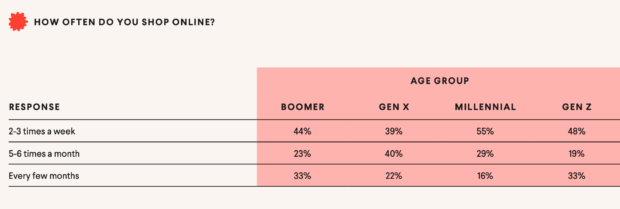
Online shopping is a regular ritual for this generation, with almost half (48%) of Gen Z individuals shopping online 2-3 times per week. This high frequency necessitates a continuous online presence from brands, offering fresh content, relevant deals, and engaging experiences to capture them mid-scroll. The expectation for seamless, instant gratification is paramount.
The power of social commerce is undeniable, with 72% of Gen Z having purchased a product directly through a social media app. This “frictionless” path to purchase, eliminating the need to navigate external websites, set up new accounts, or manually input payment details, aligns perfectly with Gen Z’s desire for convenience and efficiency. Brands must capitalize on in-app shopping features, shoppable posts, and integrated checkout processes to convert interest into sales.
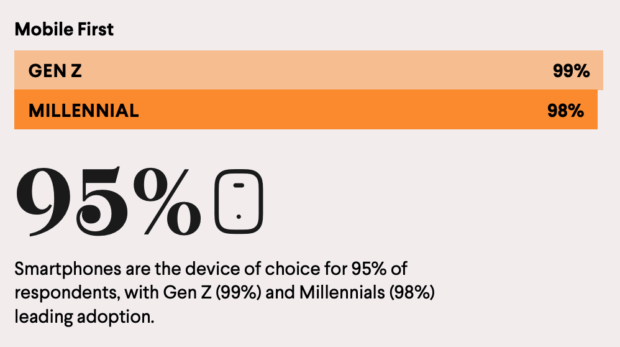
Unsurprisingly, 99% of Gen Z shoppers utilize their smartphones for online purchases, making mobile optimization an absolute necessity for e-commerce platforms. Websites must be fast, responsive, and intuitively designed for mobile interfaces. The integration of digital wallets like Apple Pay and Google Pay further streamlines the checkout process, reducing abandonment rates and enhancing the overall customer experience.
Finally, Gen Z’s openness to technological advancements extends to personalized shopping experiences. A significant 52% of Gen Z shoppers welcome AI-driven personalization, stating, “I love it, bring it on.” Only 12% express discomfort, with the remaining 35% undecided. This indicates a strong appetite for tailored recommendations and customized experiences that leverage data to anticipate their needs and preferences. However, this acceptance comes with a caveat: transparency. Brands must clearly communicate how customer data is being used to enhance personalization, fostering trust rather than exploiting privacy concerns.
Conclusion: A Blueprint for Future-Proof Marketing
The insights gleaned from Gen Z statistics paint a vivid picture of a generation that is not merely digitally adept but fundamentally redefines digital interaction and consumption. Their sheer demographic weight, coupled with their distinctive preferences for authenticity, value, diversity, and seamless digital experiences, necessitates a radical rethinking of traditional marketing paradigms.

For marketers, the blueprint for success in 2026 and beyond involves:
- Authentic Engagement: Prioritizing genuine connections over polished advertisements, leveraging creators, and embracing user-generated content.
- Mobile-First Everything: Designing all digital touchpoints—from content to e-commerce—with the smartphone as the primary interface.
- Social-Centric Strategies: Integrating social media not just for awareness but for product discovery, direct sales, and customer service. This includes mastering “social SEO” and exploring emerging platforms.
- Value-Driven Messaging: Acknowledging Gen Z’s economic concerns by emphasizing affordability, transparency, and tangible benefits.
- Inclusive Representation: Ensuring marketing efforts genuinely reflect the diversity of this generation across all facets.
- Ethical Technology Use: Leveraging AI for personalization while maintaining transparency and addressing concerns about data privacy and ethical implications.
- Quality Over Quantity: Combatting digital fatigue with highly relevant, engaging, and attention-worthy content rather than sheer volume.
Gen Z’s influence will only continue to grow as they mature into their peak earning and spending years. Brands that fail to adapt to these evolving dynamics risk becoming irrelevant. By deeply understanding and strategically responding to the unique characteristics and behaviors of this powerful generation, businesses can forge meaningful connections, drive sustained engagement, and secure their place in the future market.