rifanmuazin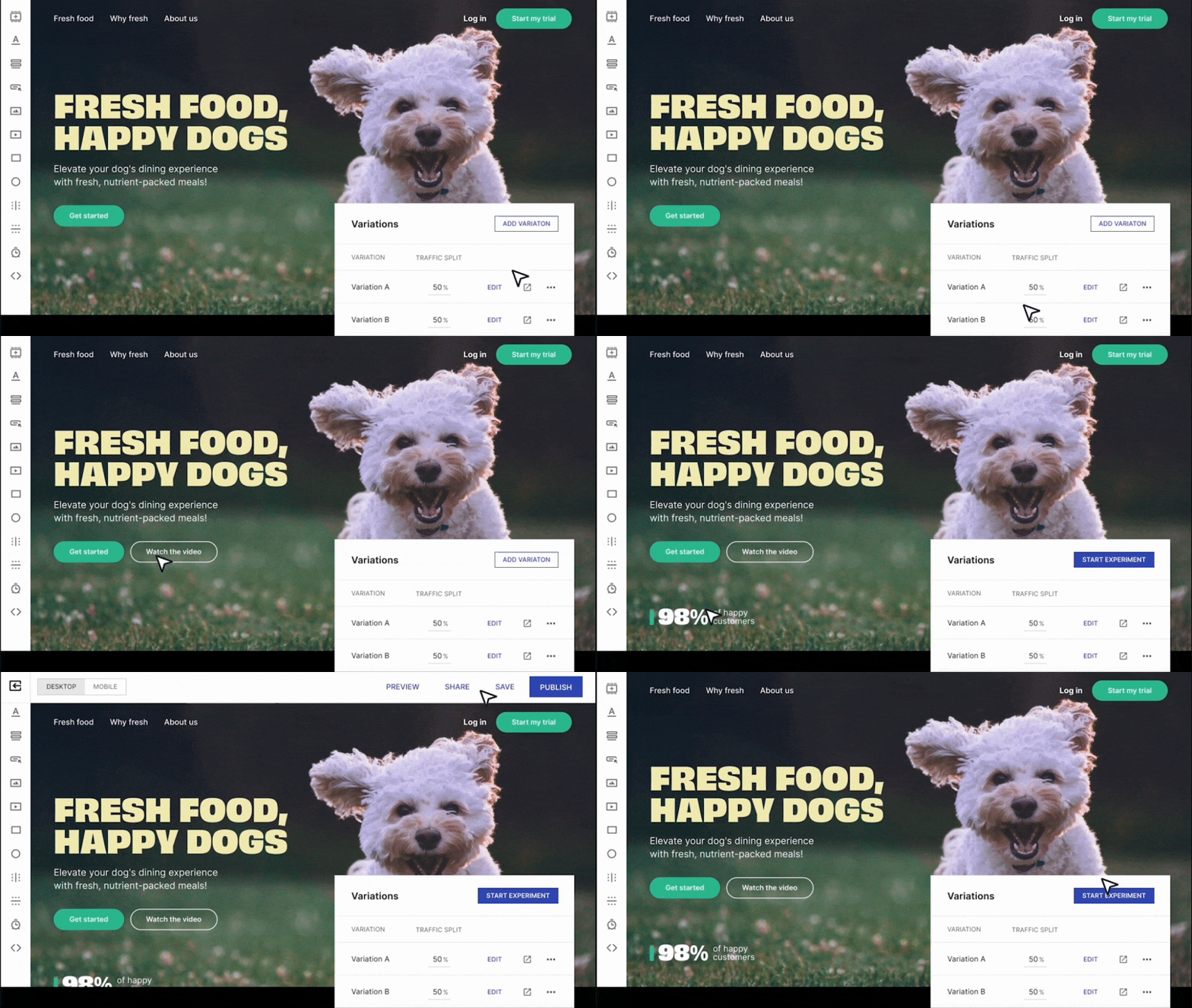
Digital marketing has reached a point of saturation where simply driving traffic to a website is no longer a guarantee of commercial success. As customer acquisition costs (CAC) continue to climb across platforms like Google Ads and Meta, the focus for growth marketers has shifted from broad-reach acquisition to the precision of Conversion Rate Optimization (CRO). At the heart of this discipline lies the landing page—a dedicated environment designed to convert a visitor into a lead or customer. However, the complexity of aligning ad-to-page relevance, value propositions, and user experience often results in conversion rates that fall short of industry benchmarks. When performance stagnates, industry experts argue that the solution is not to abandon the campaign, but to employ rigorous A/B testing to isolate and rectify friction points.
The Mechanics and Necessity of A/B Testing
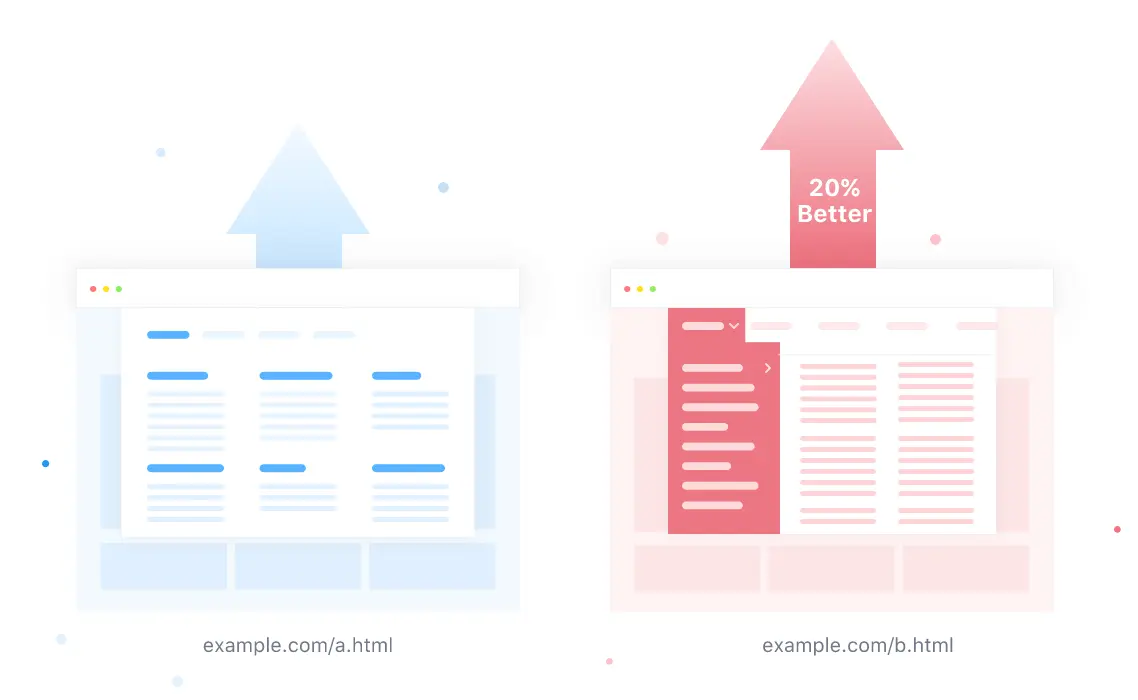
A/B testing, also known as split testing, is the process of comparing two versions of a webpage or app against each other to determine which one performs better. In a landing page context, this involves creating a “control” version (the original) and a “variation” with one or more elements changed—such as the headline, call-to-action (CTA) button, or hero image. Traffic is then split between these versions, and data is collected on user engagement and conversion metrics.

The necessity of this process is underscored by recent industry data. According to research from Econsultancy, only about 22% of businesses are satisfied with their current conversion rates. Furthermore, companies that take a structured approach to optimization are twice as likely to see a large increase in sales. A/B testing provides the empirical evidence required to understand which specific page elements—whether it be the placement of a form or the tone of the copy—are driving or deterring user action.
A Chronology of Experimentation in Digital Marketing
The practice of A/B testing has evolved significantly since its inception. In the early 2000s, experimentation was a manual, developer-heavy process. One of the most famous early examples occurred in 2009, when Google famously tested 41 different shades of blue for their toolbar links to see which shade earned more clicks—a test that reportedly resulted in an additional $200 million in annual revenue.
By the mid-2010s, the “no-code” revolution began to democratize testing. Tools emerged that allowed marketers to make visual changes to pages without writing HTML or CSS. Today, the industry has entered the era of AI-driven experimentation. Modern platforms no longer just split traffic; they use machine learning to predict which variations will perform best for specific audience segments and automatically allocate traffic to the winners in real-time, a process known as dynamic traffic allocation.
Evaluating the Leading A/B Testing Platforms
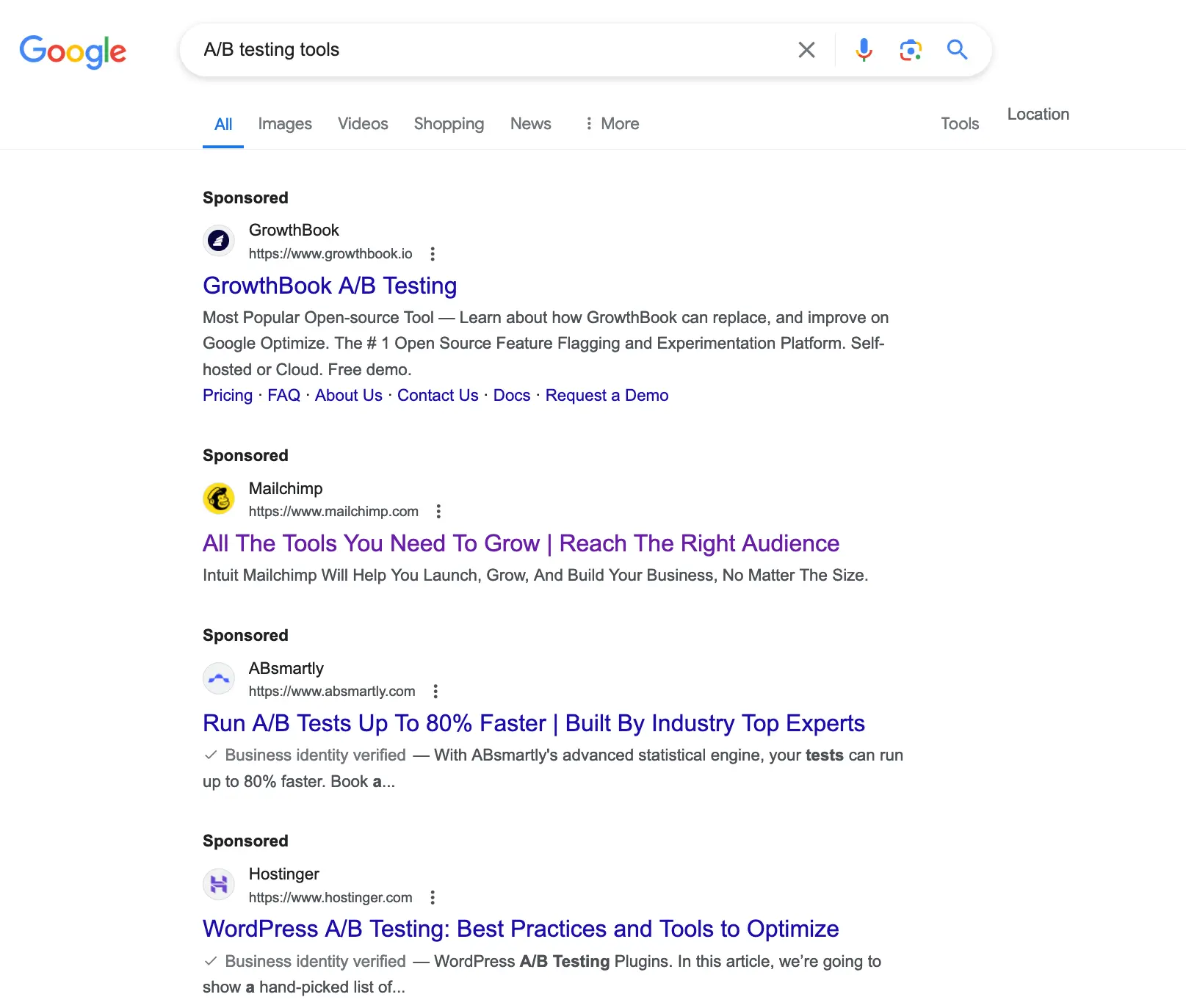
Selecting the right tool for experimentation is a strategic decision that depends on a company’s technical resources, budget, and volume of traffic. The following platforms represent the current gold standard in the industry, each offering unique capabilities for landing page optimization.
1. Instapage: Integrated Creation and Experimentation
Instapage has positioned itself as a leader by combining landing page construction with high-level experimentation. Unlike standalone testing tools that require integration with a third-party CMS, Instapage allows for server-side experimentation directly within its builder. This reduces “flicker”—the brief moment when a visitor sees the original page before the variation loads—which can negatively impact user experience and data accuracy.
A significant differentiator for the platform is its “AI Experiments” feature. Utilizing a “multi-armed bandit” approach, the system tracks the conversion rate of various versions in real-time and directs more traffic to the higher-performing pages automatically. This minimizes “regret”—the loss of potential conversions that occurs when traffic is sent to an underperforming variation during a traditional A/B test.
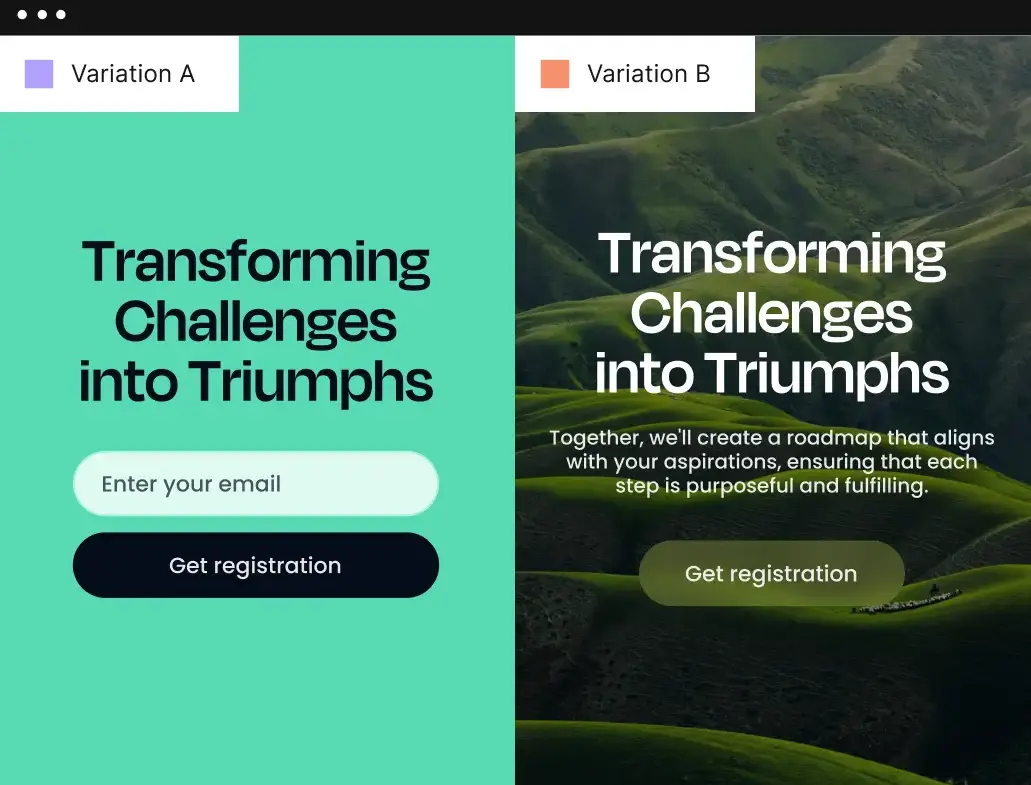
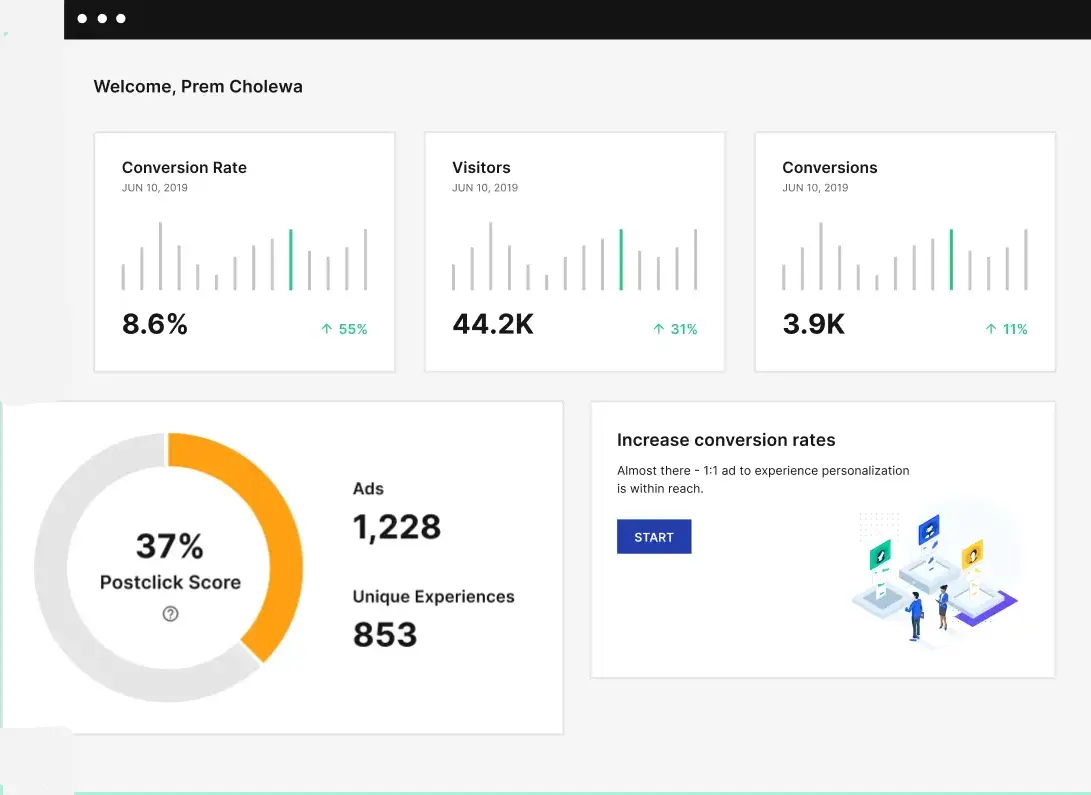
Case studies highlight the tangible impact of this technology. When the Verizon Digital Media Services (VDMS) team utilized Instapage’s testing suite, they were able to validate specific page elements through direct observation of visitor behavior. The result was a reduction in cost-per-conversion of more than 50%, illustrating how data-driven changes can directly influence the bottom line. Additionally, the inclusion of built-in heatmaps allows marketers to visualize mouse movements and scroll depth, providing qualitative context to the quantitative A/B test results.
2. VWO (Visual Website Optimizer): Multi-Metric Funnel Testing
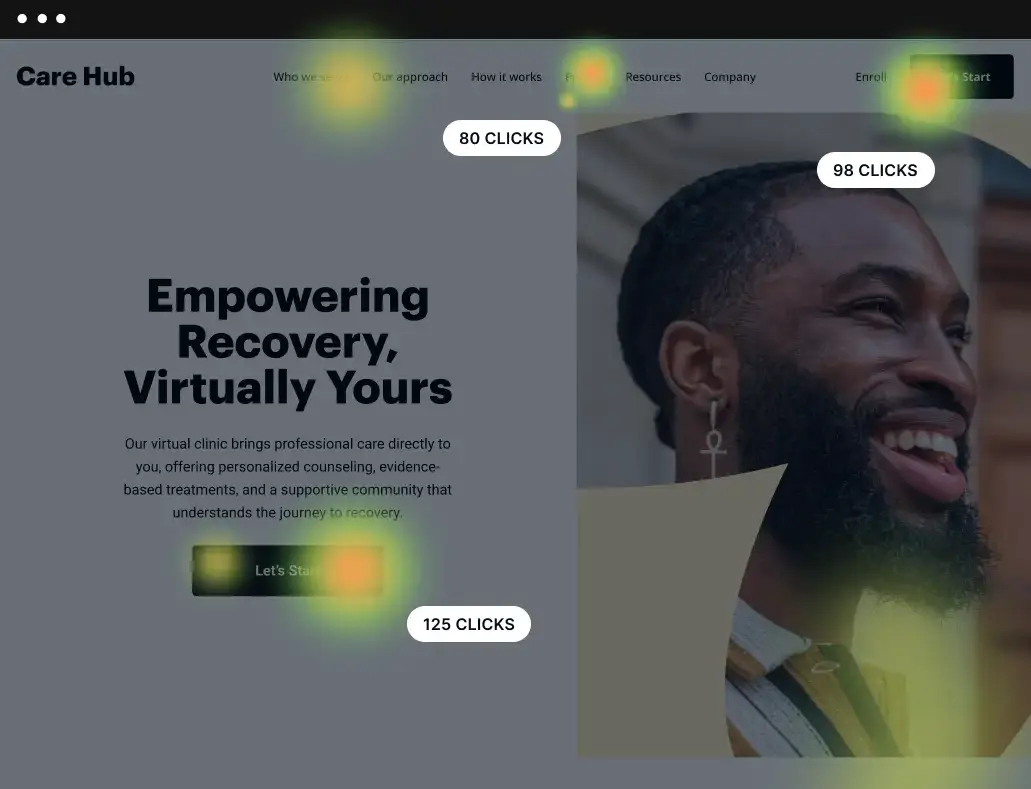
VWO is recognized for its ability to run complex split URL tests. This is particularly useful for radical redesigns where two versions of a page are hosted on different URLs. VWO’s strength lies in its ability to track multiple metrics simultaneously across the entire marketing funnel.
For instance, a marketer can measure how a change on a landing page affects not just the immediate click-through rate, but also the eventual purchase on a different part of the site. The platform uses Bayesian statistics to provide a “probability of being best” for each variation, helping marketers make informed decisions even with smaller sample sizes.
3. Optimizely: Enterprise-Grade Web Experimentation
Optimizely remains a dominant force in the enterprise sector, catering to organizations that require sophisticated, low-code solutions. Its visual editor is designed for both technical and non-technical users, allowing for rapid deployment of changes.
Optimizely’s “Web Experimentation” tool is built to run at the network edge, ensuring that the performance of the website remains fast even while complex tests are running. This is crucial for SEO and user retention, as page speed is a known ranking factor. The platform also leverages AI to suggest copy variations, further accelerating the testing cycle for large-scale marketing teams.
4. GrowthBook: Open-Source Flexibility and Data Control
GrowthBook has emerged as a preferred choice for companies that prioritize data sovereignty and integration with existing data stacks. As an open-source platform, it allows teams to run unlimited tests and manage “feature flags”—a method for turning features on or off for specific users.
GrowthBook integrates directly with major SQL data sources like BigQuery, Snowflake, and Redshift, as well as analytics tools like Google Analytics and Mixpanel. This allows data scientists to analyze experiment results using their own custom models, avoiding the “vendor lock-in” that often accompanies proprietary SaaS platforms.
Supporting Data: Why Small Changes Lead to Large Returns
The impact of these tools is supported by a wealth of industry data regarding user behavior. For example, research by Microsoft found that a mere 100-millisecond delay in page load time could reduce conversion rates by 7%. In the context of A/B testing, identifying a headline that resonates 10% better with a target audience can lead to a compound growth effect across the entire marketing spend.
Furthermore, according to a report by Forrester, every dollar invested in UX—which is refined through A/B testing—brings a return of $100 (an ROI of 9,900%). This underscores why A/B testing is no longer viewed as an optional “extra” but as a core component of a sustainable digital strategy.
Industry Reactions and Expert Perspectives
Marketing executives emphasize that the shift toward AI-powered testing is changing the nature of the job. “We are moving away from ‘gut-feeling’ marketing,” says one senior growth lead at a Silicon Valley tech firm. “In the past, the Creative Director’s opinion was final. Now, the data is the final arbiter. Tools like Instapage and Optimizely have made it so that we can prove what works in hours rather than weeks.”
However, experts also warn that testing requires a cultural shift within organizations. To be successful, companies must be willing to accept that their original hypotheses might be wrong. The goal of A/B testing is not just to “win,” but to learn about the customer’s preferences and pain points.
Broader Market Implications and Future Outlook
The broader implications of the rise in A/B testing tools suggest a future where the “static” web becomes obsolete. We are moving toward a “dynamic” web where landing pages are personalized in real-time based on the user’s past behavior, geographic location, and referral source.
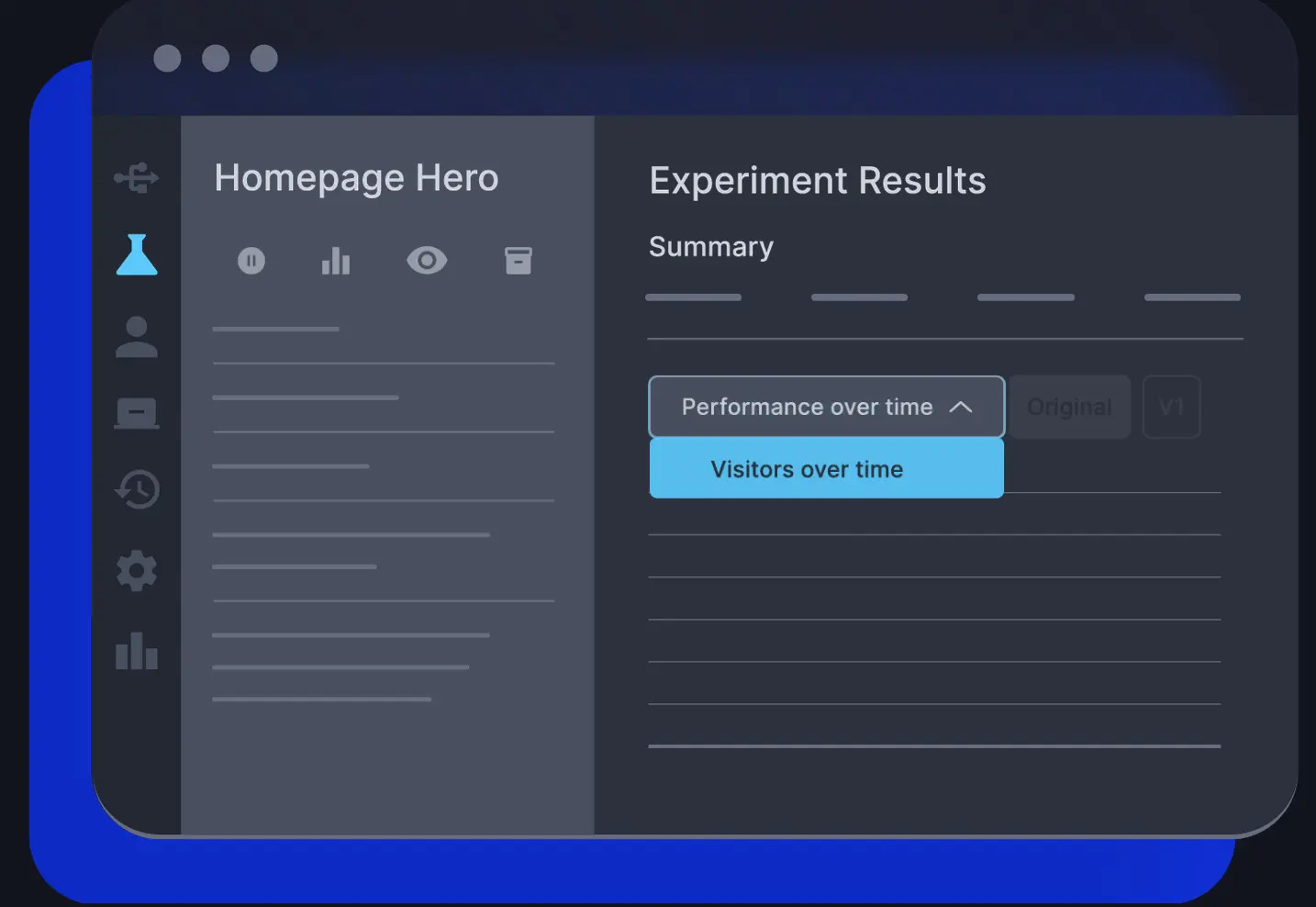
As AI continues to integrate with CRO tools, the barrier to entry for sophisticated experimentation will continue to lower. Small and medium-sized enterprises (SMEs) now have access to the same testing power that was once reserved for tech giants like Amazon and Netflix. This democratization of data means that the competitive advantage in digital marketing will no longer be held by those with the largest budgets, but by those who can most effectively interpret and act upon user data.
In conclusion, the current landscape of digital advertising demands a high degree of efficiency. With tools like Instapage, VWO, Optimizely, and GrowthBook, marketers possess a powerful arsenal to combat low conversion rates. By moving beyond basic page creation and embracing a culture of continuous experimentation, businesses can ensure that their digital presence is not just a placeholder, but a high-performance engine for growth. The transition from intuition-based design to data-validated optimization is the defining characteristic of successful 21st-century marketing.