rifanmuazin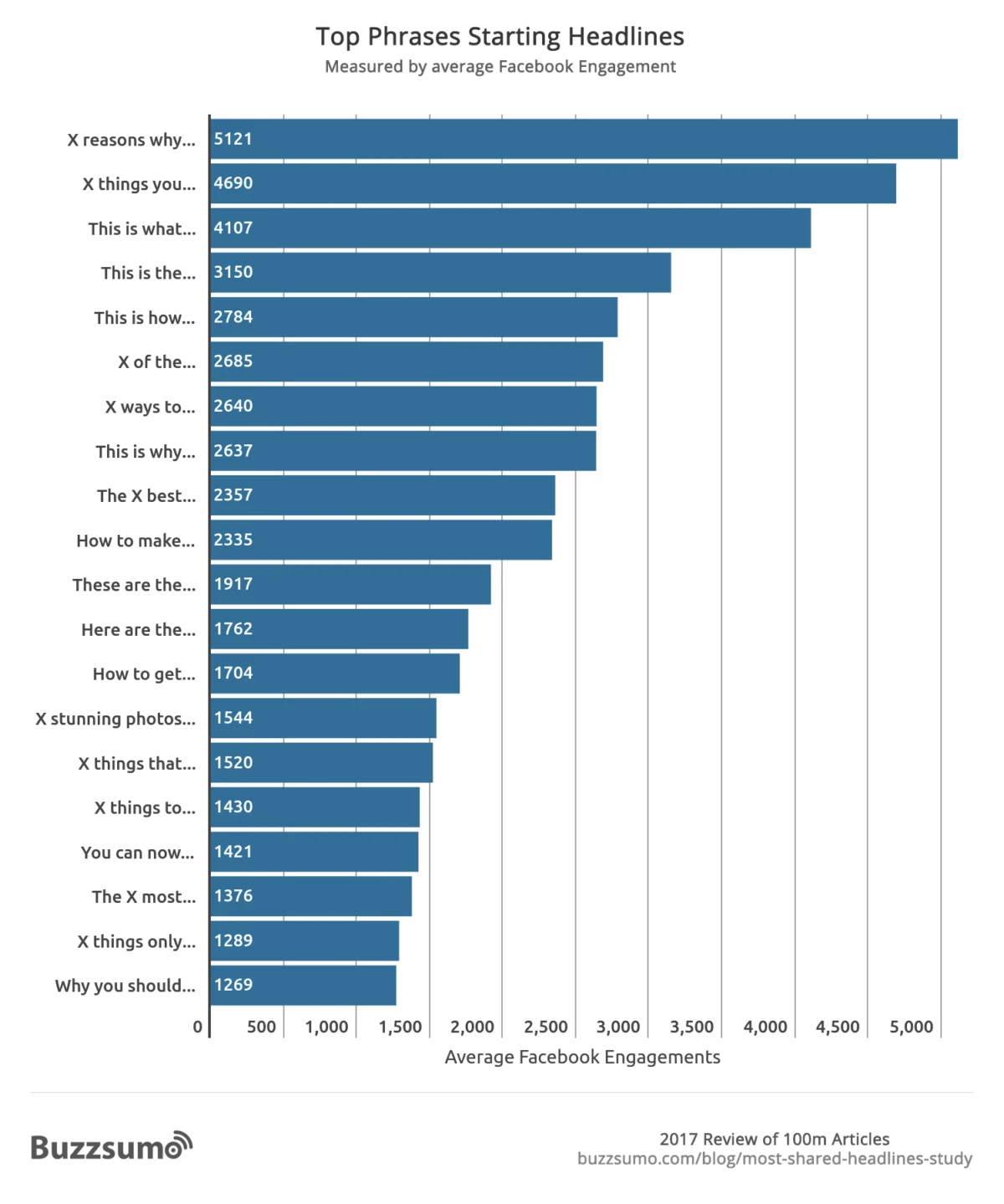
The Evolving Landscape of Digital Content
In the modern digital era, a headline transcends its traditional role as a mere article title; it serves as a crucial gateway, a subject line, a tweet, or a video title designed to capture attention and drive engagement. However, crafting an effective headline has become an increasingly formidable challenge. Content creators face intense competition, sophisticated algorithms dictating visibility, and an audience with exceptionally high standards for relevance and value. Recognizing this evolving dynamic, BuzzSumo, a leading content analysis platform, undertook a colossal study, delving into an index of 100 million headlines to uncover what truly constitutes a “good” headline today, building upon the foundational 2017 research by co-founder Steve Rayson. The updated analysis, conducted between 2019 and 2020, offers a timely snapshot of shifting preferences and algorithmic impacts.
Key Findings from the 2019-2020 Analysis
The updated study yielded several pivotal insights for content strategists:
1. Ideal Headline Length: Specificity Over Brevity
Contrary to outdated advice promoting extremely short headlines, the BuzzSumo analysis revealed that the most engaging headlines on Facebook and Twitter averaged 11 words and 65 characters. This finding underscores a preference for specificity and sufficient detail to pique reader interest. Modern audiences, bombarded with information, seek headlines that clearly articulate the content’s value proposition, moving beyond vague or overly concise phrasing. While headlines have become shorter since 2017, this trend signifies a move towards efficient information delivery rather than extreme brevity.
2. The Power of Numbers: Ten Reigns Supreme
Numerical inclusion in headlines continues to be a potent engagement driver. The study identified ’10’ as the “magic number,” leading to the highest engagement rates. Beyond this, single-digit numbers, particularly those from three to ten, consistently drove the most social media engagement. This indicates a preference for manageable lists and clear quantification of content. Interestingly, the study found no strong bias towards odd or even numbers, with both appearing frequently in top-performing headlines. This trend suggests that numbers provide structure and a promise of digestible information, appealing to an audience seeking quick insights.
3. Facebook’s Top Trigrams: Ranking, Newness, and Instruction Dominate
Analyzing three-word phrases (trigrams) that generated the highest average shares on Facebook, the study highlighted “of the year” as the top performer, often associated with rankings and awards (e.g., “Person of the Year”). Closely following was “in X years,” frequently used in phrases like “for the first time in X years,” signaling newness or unprecedented events. This suggests that Facebook users are drawn to content that establishes importance (ranking) or offers novel, intriguing information (newness), often invoking a sense of surprise or historical significance.
Further categorization of the top 60 Facebook trigrams revealed eight main themes:
- Ranking: Headlines focused on awards, public votes, or hierarchical order.
- Newness: Centered around unique, rare, or first-time occurrences.
- Hyperbole: Exaggerated statements using superlatives (e.g., “one of the most,” “of the best”).
- Instructional: Phrases conveying obligation or urgency, guiding the reader (e.g., “you need to know”).
- Surprise: Statements designed to shock or challenge conventional views.
- Curiosity: Content hinting at revelations, explanations, or analyses (e.g., “here are the,” “X reasons why”).
- Guidance: “How-to” or tutorial-based headlines.
- Story: Headlines centered on a person or topic, akin to a case study.
Notably, instructional headlines proved to be particularly successful, leveraging modal verbs and phrases like “you need to” or “need to know.” This direct, commanding language creates a sense of urgency and FOMO (Fear Of Missing Out), promising essential information or a clear benefit to the reader. Hyperbolic language also remained highly effective on Facebook, indicating that well-placed exaggeration can still capture attention, especially when referencing exceptional content.
4. Twitter’s Top Trigrams: Future, Research, and Immediacy
Twitter’s audience demonstrated distinct preferences. The phrase “future of” emerged as the most engaging trigram, indicating a strong interest in forward-looking, analytical content. This was further supported by the prevalence of words like “study” and “report” at the start of top-performing Twitter headlines. This suggests that Twitter users value research-backed insights and discussions about emerging trends and developments. Furthermore, Twitter headlines heavily emphasized immediacy and reactivity, with phrases related to “2020” or other recent timeframes dominating, reflecting the platform’s role as a real-time news and discussion hub.
5. Crossover Phrases: Universal Appeal
Despite platform-specific nuances, eight of the top 20 headline phrases were shared across both Facebook and Twitter, indicating certain universally appealing structures. These included phrases such as “of the year,” “for the first,” “need to know,” and “one of the most.” This suggests that while content strategy should be tailored, certain fundamental human interests—like recognizing excellence, discovering new things, acquiring essential knowledge, or identifying superlative examples—transcend specific social networks.
The Evolution of Headlines: 2017 vs. 2019-2020
A core aspect of the BuzzSumo study was its comparative analysis, revealing how headline trends have dramatically shifted in just a few years.
1. The Decline of Overtly Emotional, Tribal, and Quiz-Based Headlines
The 2017 study found emotional phrases like “will make you,” “melt your heart,” and “shocked to see” to be highly engaging on Facebook. Similarly, quiz-based headlines (“can we guess,” “only X in”) and tribal headlines (“X things only [group] will understand”) were prevalent. The 2019-2020 data shows a stark reversal: these types of headlines are now significantly less common and less effective. This shift is directly linked to Facebook’s algorithmic changes, which began demoting “clickbait” and sensational language in May 2017. The platform’s ongoing efforts to prioritize “trustworthy news” and “original, authoritative reporting” have reshaped content consumption, pushing users towards more substantive and less emotionally manipulative headlines.
2. Snappier Headlines for a Content-Saturated World
The ideal headline length has decreased from 15 words and 95 characters in 2017 to 11 words and 65 characters in 2019-2020. This reduction of approximately four words and 30 characters reflects a growing demand for speed and efficiency in information absorption. With online content volume increasing by 64% since 2016, audiences are experiencing “content overload,” leading to a preference for concise headlines that get straight to the point and promise quick insights.
3. Increased Homogenization Across Platforms
In 2017, Facebook and Twitter shared only one phrase in common among their top 20 headlines. By 2019-2020, this figure had risen to eight common phrases, indicating a 20% similarity. This suggests a growing convergence in effective headline strategies across these major social networks, allowing for greater potential in duplicating successful headline formats for content distribution.
4. Shifting Engagement Dynamics: Facebook Rises, Twitter Declines
The study observed a significant divergence in average engagement rates. The top Facebook trigram in 2019-2020 (“of the year”) garnered an average of 26,702 shares—nearly three times the average shares of the top 2017 Facebook phrase (“will make you,” with 8,691 shares). Conversely, Twitter shares for top phrases decreased by nearly four times over the same period. While Twitter’s monthly active users remained relatively stable, overall shares dropped by 14% from 2017-2020. This implies that while Facebook has successfully cultivated deeper engagement for certain content types, Twitter’s engagement may have become more diffused or specialized, reflecting its role as a fast-paced information stream.
5. Transformation of the Publisher Landscape
The analysis of top-performing domains revealed a dramatic change. On Twitter, only two publishers from the 2017 top 10 remained in 2019-2020. On Facebook, the shift was even more pronounced, with traditional news outlets like CNN, Daily Mail, NBC News, The Washington Post, CBS News, and Time ascending to prominent positions. This transformation is a direct consequence of Facebook’s sustained algorithmic efforts, initiated in 2018, to prioritize news content from “trustworthy sources” and, later in 2020, to boost “original and authoritative news reporting.” This preferential treatment has undoubtedly shaped the types of headlines that achieve widespread engagement, favoring established journalistic entities.
Expert Perspectives on the Findings
Leading marketing experts weighed in on these profound shifts. Heidi Cohen, Chief Marketing Officer at Actionable Marketing Guide, highlighted how the findings reflect changes in customer behavior due to the pandemic, advising marketers to focus on core marketing basics and adapt to evolving customer needs. Julian Shapiro, Founder of Demand Curve, lauded the report as “one of the highest signal-to-noise reports on content marketing.”
Rand Fishkin, Founder of SparkToro, emphasized the study’s value beyond just headline writing, noting its ability to contrast past and present content effectiveness. He underscored how it debunks myths around clickbait, emotional triggers, and quizzes, illuminating the “nuance of what’s really working.” Ross Simmonds, Founder of Foundation, pointed out the fascinating adoption of “click-friendly” headlines by mainstream publishers and the power of instructional copy, linking it to human psychology and the “desire of not missing out on information.”
Brian Dean, Founder of Backlinko, observed the “huge shift” on Facebook from BuzzFeed-style clickbait to instructional headlines, confirming that today’s Facebook users are seeking content that “will teach them something new.” Amanda Milligan, Marketing Director at Fractl, further elaborated on the instructional trend, attributing its success to a growing desire for expert insights and how such language inherently demonstrates authority, encouraging brands to leverage their expertise.
Implications for Content Strategy and Publishers
The BuzzSumo research offers actionable guidance for anyone crafting headlines:
- Embrace Specificity and Value: Longer headlines (around 11 words, 65 characters) that clearly communicate the content’s benefit or subject matter are more effective.
- Utilize Numbers Strategically: The number ’10’ and other single-digit numbers are powerful engagement boosters, particularly for listicles that promise digestible information.
- Tailor for Platforms, but Leverage Crossovers: While instructional and hyperbolic themes thrive on Facebook, Twitter favors research-backed, forward-looking, and immediate content. However, common crossover phrases indicate universal human interests that can be tapped for multi-platform distribution.
- Prioritize Authoritative and Informative Content: The decline of emotional clickbait and the rise of instructional and news-focused headlines reflect platform algorithms favoring trustworthy and valuable content. Publishers should align their headline strategies with these algorithmic preferences.
- Focus on the “Why”: Headlines should clearly articulate why the reader should care, promising a direct impact, a new insight, or essential information. This invokes curiosity and a sense of necessity.
- Continuously Test and Adapt: The rapid evolution of headline effectiveness underscores the need for ongoing analysis and A/B testing to understand what resonates with a specific audience on different platforms.
Methodology in Brief
The updated 2019-2020 study analyzed 100 million article headlines. To ensure robustness and prevent popular sites from skewing results, the analysis of trigrams and phrases included only one headline example per domain for each trigram. Furthermore, the three most shared examples of each trigram were removed to mitigate the impact of potential outliers. Engagement was primarily measured by average median shares across Facebook and Twitter, providing a balanced view of content performance. This rigorous approach, inspired by Steve Rayson’s original 2017 research, provides a reliable foundation for understanding contemporary headline dynamics.
In an increasingly competitive and algorithm-driven digital landscape, understanding the science behind engaging headlines is paramount. The latest BuzzSumo research not only quantifies what works but also illuminates the profound shifts driven by platform evolution and changing audience expectations, offering a vital roadmap for content success.