rifanmuazin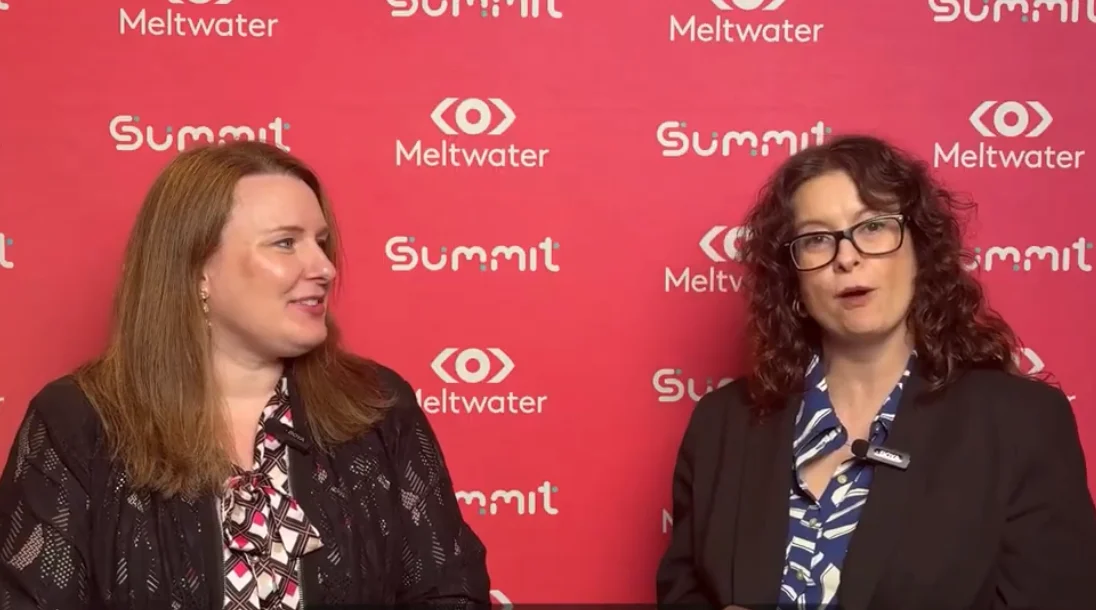
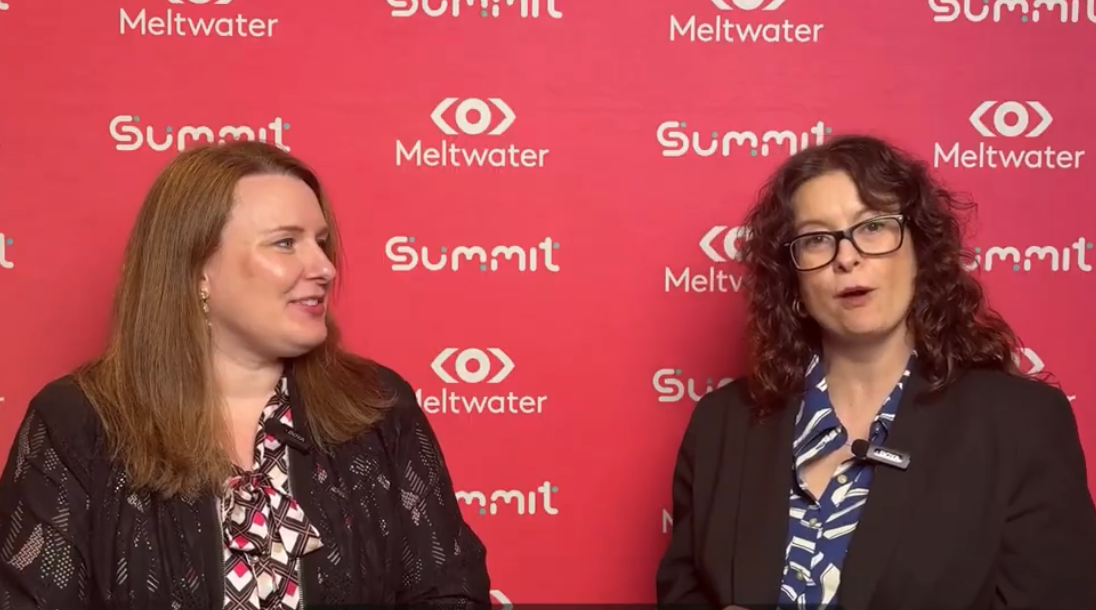
At the 2026 Meltwater Summit, a premier gathering for global communications and marketing leaders, Christina Bennett, Head of Communications at Priceline, detailed a transformative shift in how the travel industry approaches public relations and brand reputation. In a high-level dialogue with Nicole Schuman, Managing Editor at PRNEWS, Bennett outlined the emergence of Generative Engine Optimization (GEO) as a critical pillar for modern communication strategies. As Large Language Models (LLMs) increasingly provide direct answers to consumer queries—often bypassing traditional website traffic—Priceline is pivoting its focus from legacy click-based metrics toward a sophisticated “reputation engine” model.
The discussion arrived at a pivotal moment for the travel sector, which has historically functioned as a performance marketing powerhouse. However, the rise of AI-driven search and conversational agents has disrupted the traditional funnel. Bennett emphasized that for communications professionals, this era presents a unique opportunity to provide hard metrics for earned media, leveraging the way LLMs crawl and synthesize editorial content to establish brand authority.
The Shift from Performance Marketing to Reputation Engines
For decades, the success of a PR campaign was often tethered to website referrals, unique visitors per month (UVM), and direct attribution to sales. Bennett argued that these metrics are becoming insufficient in an ecosystem where AI platforms like ChatGPT, Claude, and Google’s Gemini summarize information for users on-platform. Instead of viewing the lack of outbound clicks as a loss, Bennett views it as an evolution of brand influence.
“The travel industry is so historically a performance marketing engine,” Bennett noted during the summit. “For comms in particular, I love this moment because it’s really giving us a chance to shine and have real metrics behind what we do.”
By framing PR as a “reputation engine,” Priceline is focusing on how the brand is perceived and summarized by AI. This involves monitoring the “synthesis layer” of the internet—where AI models aggregate news articles, reviews, and press releases to form a cohesive answer to a user’s prompt. In this context, the goal of a communications team is no longer just to get a headline, but to ensure that the brand’s core messaging is so deeply embedded in high-authority editorial content that the AI cannot help but include it in its summaries.
A Chronology of AI Integration at Priceline
Priceline’s current strategy is the result of a multi-year commitment to artificial intelligence. The company was among the earliest adopters of generative AI in the travel space, a journey that began in earnest in mid-2023.
In June 2023, Priceline leadership traveled to Silicon Valley to announce “Penny,” a generative AI travel advisor built in collaboration with Google Cloud. Penny was designed to act as a concierge, helping users navigate complex travel itineraries through a natural language interface. Since that initial launch, Priceline has expanded its partnerships to include all major LLM providers, ensuring that Penny remains at the cutting edge of consumer-facing technology.
By 2024, the company had moved beyond consumer tools, integrating AI into its internal operations. This included the deployment of AI for coding, productivity, and the creation of executive briefing books—a task Bennett described as a “slog” that has been significantly streamlined by automation.
By 2026, the focus has shifted toward external visibility in third-party AI engines. Priceline’s strategy now involves three distinct tracks:
- Consumer Experience: Utilizing Penny to find deals and hidden gems for travelers.
- External Citation: Ensuring the brand appears in third-party LLM responses.
- Corporate Thought Leadership: Articulating the company’s AI roadmap to investors and the public.
Measuring Influence in the Age of GEO
To quantify the impact of PR in this new landscape, Priceline has moved beyond traditional monitoring. Bennett revealed that the company is currently working with “Profound,” a specialized analytics firm, to benchmark editorial citation percentages. This allows the communications team to track how often Priceline is cited in LLM responses relative to its competitors.
“We are going to start benchmarking editorial citation percentage month over month,” Bennett explained. “We are looking at it with specific prompts tied to campaigns to see if we’re moving the needle and growing the share that our team is driving directly.”
This data-driven approach allows the team to identify which high-authority outlets are most frequently surfaced by LLMs. This, in turn, informs their pitching strategy. Instead of chasing high-volume clicks, the team prioritizes outlets that AI models perceive as authoritative sources of truth. This shift requires a focus on “synthesis-ready” content—press releases and stories that are clear, factual, and easily parsed by machines.
Auditing Brand Perception Through LLMs
One of the more unconventional tactics Bennett shared was the use of AI to audit PR strategy in real-time. During a trip back from LaGuardia Airport, Bennett utilized an LLM to assess Priceline’s PR efforts based on its current earned media footprint.
“It’s really revealing to see what it thinks you’re doing and why,” she said. While the AI’s assessment largely aligned with the company’s internal goals, Bennett noted that there were surprising nuances in how the models perceived the brand. These insights allow the communications team to “debunk” inaccuracies and refine their messaging to correct any AI-generated misconceptions.
This “reputation audit” is becoming a standard practice for forward-thinking brands. By asking the same questions a consumer might—such as “Does Priceline allow pets?” or “How does Penny find the best deals?”—comms teams can see exactly what information is being fed to the public and where the gaps in coverage exist.
The “Zero-Citation” Challenge: A Threat to Brand Visibility
Despite the opportunities presented by GEO, Bennett highlighted a significant concern for the future of the industry: the trend of LLMs moving away from citations altogether. While current models often provide links or footnotes to their sources, there is a growing movement toward “pure synthesis,” where the AI provides an answer without acknowledging the original source of the information.
“The one [challenge] that stresses me out is the move toward LLMs not using citations at all,” Bennett admitted. “That gets to the synthesis layer—your reputation and your content need to be strong enough and omnipresent enough that the LLMs include you regardless.”
If AI models stop citing sources, the traditional value proposition of earned media—third-party validation—becomes invisible to the end-user. To combat this, Bennett argues that a brand’s “internet ecosystem presence” must be so authoritative that the AI’s internal training data views the brand as an inseparable part of the topic. This requires a holistic approach to content, spanning earned, owned, and social media, to create a dominant digital footprint.
Broader Implications for the Communications Industry
The insights shared at the Meltwater Summit suggest a permanent shift in the hierarchy of PR metrics. As AI becomes the primary interface for information retrieval, the role of the communications professional is evolving into that of a “data architect” for brand reputation.
Industry analysts suggest that the “Zero-Click” reality will likely lead to a consolidation of media power. If LLMs only prioritize a handful of high-authority sources for their summaries, the competition for placement in those specific outlets will intensify. Furthermore, the ability to conduct A/B testing on PR messaging within LLM environments—much like performance marketers do with search engine ads—will become a required skill set for comms teams.
Bennett’s “Penny” hack—asking the AI to find “hidden gems” in an existing itinerary—serves as a metaphor for the broader PR challenge. Just as travelers are looking for unique value that they can’t find through a standard search, brands must find ways to provide unique, authoritative content that AI models find indispensable.
Conclusion
The 2026 Meltwater Summit served as a clarion call for the PR industry to embrace the technical complexities of AI. Christina Bennett’s strategy at Priceline demonstrates that while the tools of the trade are changing, the fundamental goal remains the same: managing a brand’s reputation. By leveraging GEO, benchmarking editorial citations, and proactively auditing AI perceptions, Priceline is setting a blueprint for how legacy brands can remain relevant in an automated world.
As the session concluded, the consensus among attendees was clear: the era of “counting clips” is over. In its place is a more complex, data-rich, and strategically vital discipline that sits at the intersection of technology and human storytelling. For Bennett and Priceline, the journey into AI is not just about staying ahead of the curve—it is about redefining the curve itself.