rifanmuazin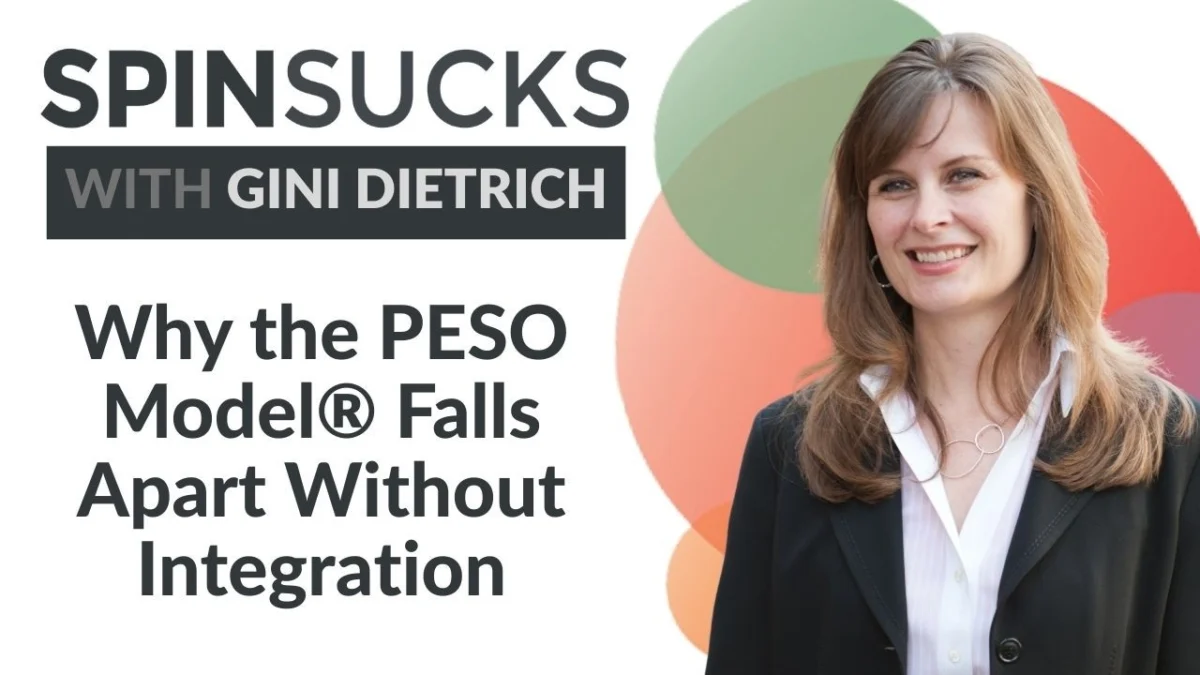
The modern communications landscape has moved beyond the era of fragmented tactical execution, necessitating a shift toward a unified “operating system” known as the PESO Model®. Originally introduced in 2014 by Gini Dietrich, the founder of Spin Sucks, the PESO Model—which stands for Paid, Earned, Shared, and Owned media—was initially perceived by many practitioners as a checklist of separate activities. However, as the digital ecosystem has become increasingly complex and driven by Large Language Models (LLMs), industry experts now emphasize that the framework only achieves its full potential when these four pillars function as a cohesive, interdependent system. The failure to integrate these elements often results in what experts describe as “activity without momentum,” where teams remain perpetually busy but fail to achieve compounding results or measurable business impact.
The Historical Context and Reimagining of PESO
When the PESO Model was first launched over a decade ago, the media environment was significantly less fragmented. At that time, social media platforms were in their ascendancy, and the primary challenge for communicators was simply understanding where new digital tactics fit alongside traditional media relations. The original model provided a visual map to help PR professionals expand their skill sets into paid and owned territories.
By 2024, the landscape had undergone a radical transformation. The rise of generative AI, the decline of organic social reach, and the increasing sophistication of search engine algorithms meant that a tactical approach was no longer sufficient. This prompted a comprehensive rebuilding of the PESO Model Certification® to reflect how information is discovered and processed in the current era. The updated framework focuses on the “visibility engine,” where owned media serves as the authoritative foundation, and earned media provides the third-party validation necessary for trust.
The Economic and Operational Costs of Siloed Tactics
Industry data suggests that organizations operating in silos face significantly higher costs and lower efficiency. According to research from McKinsey & Company, companies with integrated marketing and communications models are more likely to see a meaningful increase in market share compared to those with fragmented structures. When PESO is executed as four separate tactics—such as a blog post produced in isolation from social strategy or earned media efforts—it creates three primary types of organizational “waste.”
1. The Burden of Duplication
In a siloed environment, teams often rebuild the same core messaging repeatedly for different channels. This leads to a multiplication of content briefs, creative angles, and internal meetings. Communications analysts note that this duplication not only inflates budgets but also exhausts human resources, as staff spend more time “managing the work” than “doing the work.”
2. Message Confusion and Brand Dilution
Consistency is the cornerstone of trust. When the website (Owned) tells one story, social media (Shared) highlights another, and press coverage (Earned) focuses on a third, the brand narrative becomes diluted. For modern AI crawlers and LLMs, which rely on consistent data points to categorize and rank brands, this inconsistency can be catastrophic. If a brand’s digital footprint is fragmented, AI tools are less likely to recommend it as a definitive authority in its space.
3. Wasted Paid Spend
A common pitfall in modern communications is using Paid media as a “panic button” to compensate for underperforming organic content. Without an integrated system, paid promotion often directs traffic to owned assets that lack the necessary proof or conversion architecture. Industry experts argue that paid media should function as an “accelerant” for proven narratives rather than a “duct tape” solution for a disconnected strategy.
The Mechanics of Integration: How Media Types Compound
The true power of the PESO Model lies in the intersections between the four media types. Integration is defined as a mechanical process where the output of one channel becomes the direct input for another.
- Owned Media as the Destination: Owned media, such as white papers, blogs, and proprietary research, serves as the primary authority. It is the “proof-backed” content that the organization controls entirely.
- Earned Media as Validation: Rather than being a standalone trophy, earned media is used to corroborate the claims made in owned content. A mention in a major trade publication serves as external proof that the organization’s owned authority is legitimate.
- Shared Media as Distribution: Shared media is the portable version of the core narrative. It is where the organization engages in two-way dialogue, gathering feedback and questions that subsequently inform future owned media topics.
- Paid Media as the Accelerant: Once an owned asset has been validated by earned media and tested via shared channels, paid spend is applied to scale that proven success to a wider, targeted audience.
Establishing an Operating Rhythm
To prevent the system from collapsing into reactive “triage,” successful organizations implement a rigorous operating rhythm. This rhythm is a sequence of scheduled decisions that ensure all work remains connected. Experts suggest that a functional PESO operating system must answer three critical questions on a weekly basis:
- What is the primary narrative we are reinforcing this week?
- How is the output from one media type being repurposed as an input for another?
- What are we intentionally not doing to maintain focus?
This “Stop List” is a crucial, often overlooked component of the system. It involves identifying and eliminating one-off requests, reactive assets, and disconnected brainstorms that do not contribute to the long-term momentum of the brand. By removing these distractions, teams can focus on building “assets” rather than merely “outputs.”
The Role of the Integration Map
A central tool in this new operating system is the “one-page integration map.” Unlike a traditional content calendar, which focuses on dates and channels, the integration map focuses on the connective tissue of the strategy. It provides a visual representation of how a single piece of intellectual property (Owned) will be validated (Earned), distributed (Shared), and amplified (Paid).
This map serves as a defensive tool against “silo drift.” When stakeholders request new, disconnected projects, the map allows the communications team to demonstrate where resources are currently allocated and how a new request might disrupt the compounding effect of the existing system. It shifts the internal conversation from “What are you doing today?” to “How is the system performing?”
Implications for the Communications Industry
The shift toward the PESO Model as an operating system has significant implications for professional development and agency-client relationships. For agencies, it moves the value proposition away from “placements” and toward “systemic growth.” For internal teams, it requires a broader skill set that encompasses data analysis, SEO, and strategic planning alongside traditional writing and media relations.
Furthermore, the integration of AI into this model is no longer optional. As search engines evolve into “answer engines,” the ability of an organization to provide a consistent, authoritative, and validated narrative across all PESO pillars will determine its visibility. The PESO Model Certification® has been updated to address these AI-driven shifts, emphasizing that “findability” is now a result of system-wide consistency rather than just keyword optimization.
Conclusion: Momentum Over Activity
The transition from a tactical approach to a PESO-based operating system represents the professionalization of modern communications. By focusing on the intersections of media types and maintaining a disciplined operating rhythm, organizations can stop the cycle of “busywork” and start building long-term brand equity. As the industry continues to grapple with technological disruption, the ability to run a connected, compounding system will be the primary differentiator between brands that simply exist and those that lead their markets. The ultimate goal of the PESO Model is to ensure that every minute spent and every dollar invested contributes to a larger, self-sustaining engine of authority and trust.