rifanmuazin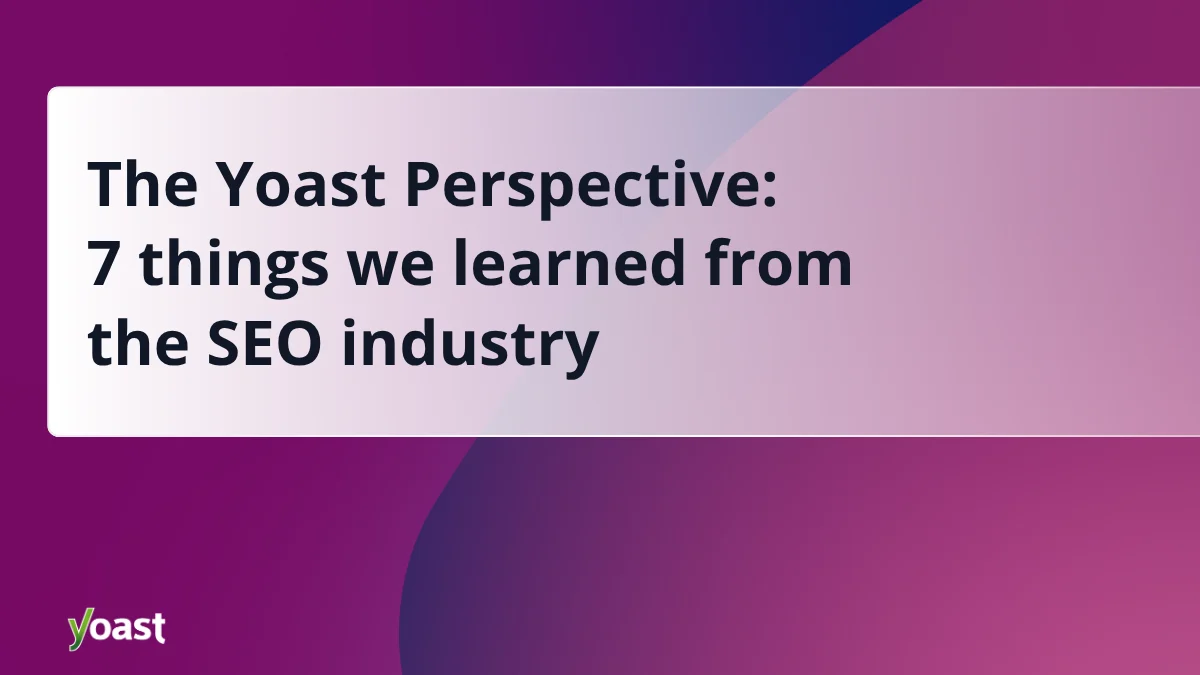
The digital marketing landscape is undergoing a profound transformation in 2026, driven primarily by the pervasive integration of Artificial Intelligence across various platforms. Search Engine Optimization (SEO), once primarily focused on traditional web search engines, is now expanding its purview to encompass AI-driven discovery, social media platforms, and conversational chatbots. While the fundamental principles of clarity, structure, authority, and relevance remain sacrosanct, the channels through which these principles are applied have multiplied exponentially. To better understand how the industry is navigating these seismic shifts, Yoast conducted a comprehensive survey of 59 SEO professionals, offering a revealing snapshot of an industry in flux, grappling with new realities, and forging new paths forward.
Methodology and Demographics: A Pulse Check on the SEO Community
The Yoast survey gathered insights from a diverse group of 59 SEOs, representing a wide spectrum of experience levels. Some respondents brought less than a year of professional experience to the table, while others boasted over a decade in the field, having witnessed numerous evolutions in search algorithms and digital strategies. This blend of seasoned veterans and emerging talent provides a rich tapestry of perspectives, illustrating an industry collectively figuring out its next steps. While a vanguard of professionals appears to be ahead of the curve, proactively adapting to new technologies and methodologies, the majority are still in the process of catching up, integrating AI and multi-platform optimization into their existing frameworks. The survey aimed to identify common challenges, emerging opportunities, and the prevailing sentiment regarding the future of SEO.
The Inevitable Evolution: SEO Adapts, Not Declines
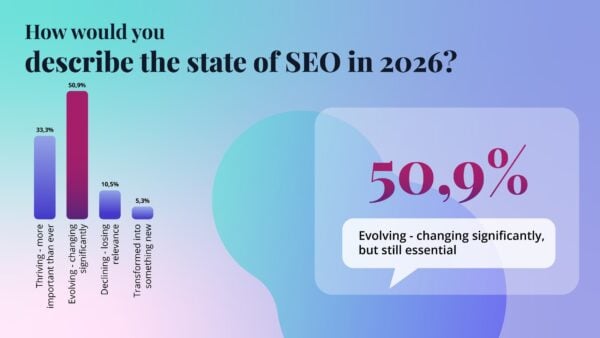
A central finding of the survey underscored a prevailing optimism regarding the future of SEO, albeit one tempered by a recognition of ongoing change. A significant 51% of respondents characterized SEO as "evolving," indicating a dynamic state of adaptation rather than stagnation. Another 33% expressed an even more positive outlook, stating that SEO is actively "thriving." In stark contrast, only a small minority of 10% believed SEO to be "declining." This interesting divide reveals a nuanced understanding within the community.
Intriguingly, the survey data suggests a correlation between experience and perspective. SEO professionals with 10 or more years in the field were more likely to perceive SEO as thriving, perhaps drawing on their historical experience of adapting to constant change. For these veterans, the current shifts, while significant, are another chapter in a long history of evolution, reinforcing the discipline’s resilience. Newer entrants, on the other hand, more frequently used the term "evolving," suggesting they are observing a rapid redefinition of the field as they enter it.
Alex Moss, a principal SEO at Yoast, succinctly captured this sentiment: "SEO has always adapted to changes in the SERP, and now it’s adapting again. The traditional SERP is gone, but SEO isn’t." Carolyn Shelby, another principal SEO at Yoast, further elaborated, emphasizing that the fundamentals remain robust: "SEO is evolving, but not because its fundamentals are breaking. The interfaces between users and information are changing. Search is no longer confined to ten blue links, but the need for structured, relevant, trustworthy content hasn’t diminished."
From Yoast’s perspective, SEO is not merely enduring; it is transforming. While traditional search engines like Google and Bing continue to drive substantial traffic, the emergence of AI-driven discovery, powered by Large Language Model (LLM) assistants, is increasingly shaping user perception and information discovery. The most effective SEO strategies in 2026 therefore involve mastering both traditional optimization techniques and the nuances of AI visibility.
Identity Crisis or Strategic Stability? The "SEO" Name Debate
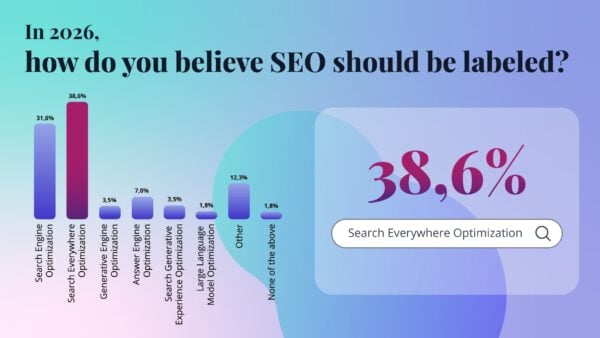
Amidst this evolution, a debate has emerged regarding the very name of the discipline. The survey revealed considerable support for relabeling SEO, with 39% of respondents favoring "Search Everywhere Optimization." This figure even included 41% of veteran SEOs, suggesting a broad recognition that search now extends far beyond conventional search engines. However, only 32% wished to retain the established name "Search Engine Optimization."
Despite the significant preference for a new moniker, Yoast’s experts advocate for retaining the familiar term. Alex Moss stated, "The term ‘SEO’ will stay. The role will widen to include AI and other disciplines, but the name doesn’t need to change." Carolyn Shelby reinforced this, highlighting the existing value and recognition of "SEO": "The term ‘SEO’ still holds shared meaning, credibility, and market recognition. There’s no strong evidence that rebranding the discipline itself is necessary or beneficial. Responses favoring ‘Search Everywhere Optimization’ reflect where SEO outcomes now surface, not a fundamentally different practice."
The Yoast perspective posits that while the scope of SEO has undeniably broadened to include AI overviews, chatbots, and social media platforms, the core work remains consistent. The emphasis on technical foundations, high-quality content, robust brand building, and establishing authority continues to be paramount. "Search Everywhere Optimization" may accurately describe the expanded reach of SEO activities, but it does not fundamentally alter the essence of the practice. The challenge lies not in rebranding, but in effectively communicating how the established principles of SEO apply to these new, diverse digital environments.
The AI Imperative: How Traditional SEO Fuels Large Language Models
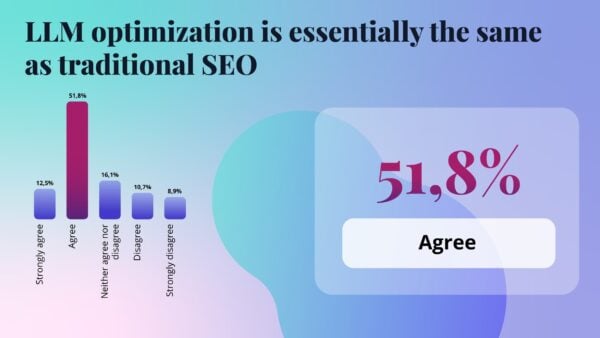
A critical insight from the survey pertained to the relationship between traditional SEO and Large Language Model (LLM) optimization. A strong majority of 64% of respondents agreed that LLM optimization is "essentially the same" as traditional SEO. Curiously, 59% admitted they are "not even actively optimizing for LLMs," suggesting a belief that their existing SEO practices are sufficient. This perceived "laziness" could, in fact, be a form of efficiency, as the underlying principles often align.
However, a smaller contingent of 9% strongly disagreed with this equivalence, arguing that LLMs prioritize synthesis over direct rankings, thereby necessitating a greater focus on structured data and brand mentions. While seemingly contradictory, these viewpoints actually complement each other. LLMs do not inherently demand entirely new tactics; rather, they more stringently reward the established principles of good SEO.
Alex Moss underscored this point: "If you’re undertaking good SEO, you’re already optimizing well for LLMs. The tactics don’t change—just the audience." Carolyn Shelby added, "The same practices that make content discoverable and trustworthy for search engines also make it usable for LLMs. The confusion arises when people treat LLMs as a completely separate system. In reality, LLM visibility rewards clarity, relevance, and authority—all long-standing SEO principles."
The Yoast Perspective confirms that LLM optimization is not a distinct discipline but rather an extension of SEO tailored for AI. The core tenets of clarity, structured information, and demonstrable authority are magnified in importance. AI systems, due to their analytical nature, are less forgiving of ambiguous or mediocre content, effectively raising the bar for overall quality. Content that is precise, well-organized, and backed by credible sources will naturally perform better in AI-driven summaries and responses, irrespective of whether it was explicitly "optimized" for an LLM.
Beyond the Blue Links: Redefining Ranking and Visibility
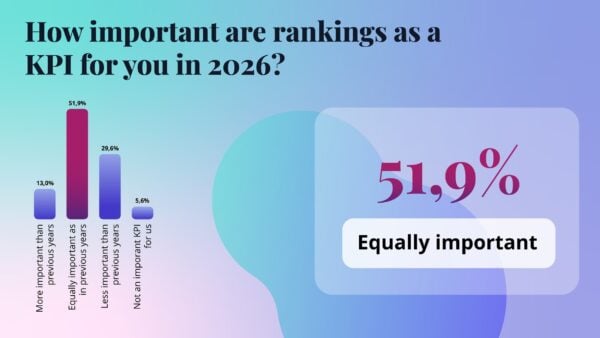
The traditional obsession with achieving the number one ranking on a search engine results page (SERP) is undergoing a significant re-evaluation. While 52% of respondents still considered rankings "equally important" as before, a substantial 30% viewed them as "less important." This sensible shift acknowledges the rise of AI overviews, featured snippets, and other "zero-click" results that provide immediate answers without requiring users to navigate to a website. In this new paradigm, high visibility does not always translate directly into website traffic.
Nevertheless, rankings retain their significance as a critical authority signal for AI systems. Alex Moss explained, "Traditional rankings are still important because agents still search the web to ingest information. If you aren’t visible there, it’s less likely an agent will identify and select you into their responses." Carolyn Shelby offered a further refinement: "Rankings still matter, but they are no longer the end goal. They are a proxy for visibility, not a guarantee of impact."
The Yoast Perspective advises a strategic pivot: rather than fixating solely on numerical rankings, SEO professionals should prioritize overall visibility and presence. This includes actively monitoring whether content is cited in AI-driven answers, being mentioned in industry discussions, and ensuring a strong brand presence across various digital touchpoints. In this evolving landscape, AI visibility and credible citations are emerging as the new metrics of "ranking" success. Businesses must adapt their key performance indicators (KPIs) to reflect this broader definition of success, focusing on brand mentions, sentiment analysis, and the authoritative representation of their content in AI-generated summaries.
The Organic Traffic Paradox: Quality Over Quantity
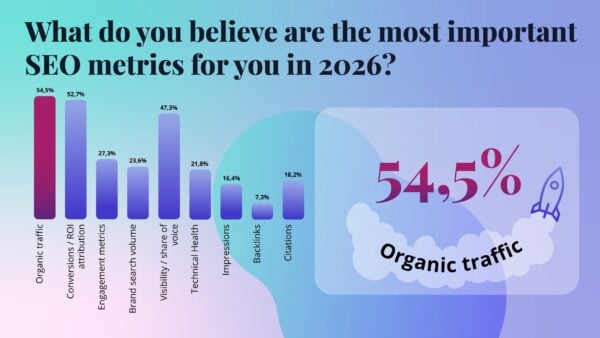
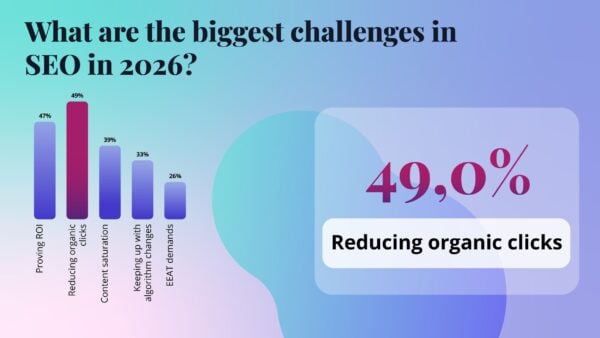
A striking paradox emerged from the survey regarding organic traffic: 55% of SEOs still identify "organic traffic" as their top metric, yet 49% cite "reducing organic clicks" as their biggest challenge. This apparent contradiction highlights a fundamental shift in the value proposition of organic visibility. While the sheer volume of organic traffic might be decreasing due to zero-click answers and AI summarization, the quality and intent of the clicks that do occur are often significantly higher.
As Carolyn Shelby articulated, "As AI reduces the need for some visits, success looks like being represented correctly rather than merely visited. Visibility in AI overviews doesn’t always drive clicks, but it builds legitimacy. Being included signals that you’re a credible source, even when users don’t click." This implies a recalibration of success metrics, moving beyond raw traffic numbers to focus on engagement, conversion rates, and the brand authority derived from being featured in AI responses.
Our Advice for Navigating the Organic Traffic Paradox:
- Focus on intent: Optimize content not just for keywords, but for user intent that signals a deeper need for information or action beyond a quick answer.
- Measure engagement, not just clicks: Track time on page, scroll depth, conversion rates, and repeat visits to understand the true value of organic traffic.
- Cultivate brand authority: Invest in building a strong brand reputation and subject matter expertise that AI systems will recognize and prioritize.
- Diversify traffic sources: While organic search remains crucial, explore other channels like social media, email marketing, and direct traffic to reduce over-reliance on traditional search.
- Analyze AI citation patterns: Actively monitor how AI systems are referencing content to understand what elements contribute to being cited, and replicate those strategies.
Navigating the Deluge: Strategies Against Content Saturation
The proliferation of AI-generated content presents one of the most significant threats to SEO professionals. The survey indicated that 39% of respondents consider "competing with AI-generated content" as their top challenge, far outstripping concerns about a "talent gap" (4%). The primary concern isn’t merely that AI can produce "bad" content, but that it can generate "good enough" content at an unprecedented scale, potentially flooding the web with noise and making it increasingly difficult for original, high-quality human-created content to stand out.
Alex Moss offered a human-centric perspective: "AI-generated content is artificial. Humans connect with stories, not regurgitated lists." Carolyn Shelby emphasized the raised bar for quality: "AI doesn’t change what good content is, but just raises the bar. Mediocrity doesn’t just rank lower; it disappears."
Our Advice for Combating Content Saturation:
- Embrace unique human perspectives: Focus on original research, personal experiences, unique insights, and authentic storytelling that AI cannot replicate.
- Prioritize E-E-A-T (Experience, Expertise, Authoritativeness, Trustworthiness): Demonstrate genuine expertise and build trust through verifiable credentials, detailed case studies, and transparent sourcing.
- Invest in multimedia content: Create engaging videos, interactive tools, and rich infographics that offer a more immersive experience than text-only AI output.
- Foster community and interaction: Build a loyal audience through comments, forums, and social engagement, creating a value layer that goes beyond static content.
- Focus on niche expertise: Instead of trying to cover everything, become the definitive source for a highly specific topic, making it harder for AI to generate content of comparable depth.
- Utilize AI as a tool, not a replacement: Leverage AI for research, idea generation, and efficiency, but always infuse human creativity, critical thinking, and empathy into the final output.
The Untapped Frontier: Social Platforms as Emerging Search Channels
While traditional search engines (Google/Bing) predictably remain the top priority for SEOs, the survey unveiled a significant "blind spot" for many: TikTok search ranked #5, surprisingly lower than Amazon. This statistic highlights a generational and behavioral shift, as younger demographics increasingly utilize platforms like TikTok, YouTube, and Instagram for a wide array of searches, including entertainment, product recommendations, tutorials, and even B2B advice.
Alex Moss pointed out the indirect SEO value of social platforms: "Social platforms influence how LLMs perceive freshness and authority. Ignoring them means missing out on signals that AI systems value." Carolyn Shelby added, "You don’t need to rank on TikTok, but you do need to be discoverable there. LLMs scrape social platforms for real-world signals."
The Yoast Perspective emphasizes that the modern definition of SEO must now include social platforms like TikTok. While the goal might not be traditional "ranking" in the same way as Google, discoverability on these platforms is crucial. LLMs actively scrape social media for fresh, trending, and authoritative content, meaning a strong presence on platforms like TikTok or YouTube can significantly boost overall brand authority and visibility in AI responses. A compelling video channel, for instance, can become a powerful signal of expertise that AI systems will incorporate.
Our Advice for Optimizing Social Search Channels:
- Understand platform-specific search behaviors: Research how users search on TikTok (e.g., hashtags, trending audio, short-form video content) versus traditional search.
- Create engaging, platform-native content: Develop content formats (e.g., Reels, Shorts, TikToks) that are optimized for each social platform’s algorithm and user preferences.
- Leverage user-generated content (UGC): Encourage followers to create and share content related to your brand, amplifying reach and authenticity.
- Monitor social trends and keywords: Stay abreast of trending topics and hashtags to ensure content remains relevant and discoverable.
- Integrate social content into overall content strategy: Repurpose long-form content into bite-sized social snippets, and use social insights to inform broader content creation.
- Build an active community: Engage with comments, respond to queries, and foster a loyal following that contributes to your brand’s perceived authority.
Expert Perspectives: Yoast’s Leaders on the Future
The insights from Yoast’s principal SEOs, Carolyn Shelby and Alex Moss, provide invaluable depth to the survey data, illuminating the strategic considerations behind the trends.
On "Search Everywhere Optimization":
- Alex Moss: "The term ‘SEO’ will stay. The role will widen, but the name doesn’t need to change." He stresses the practical advantages of maintaining a widely recognized professional identity.
- Carolyn Shelby: "Rebranding risks fragmenting understanding. ‘SEO’ is already well-established outside the industry." She highlights the importance of shared terminology for communication and market recognition.
On the Future of SEO Metrics:
- Alex Moss: "As we move from being seen to being selected, visits don’t hold the same value they used to. The business goal should be the most important metric." This shifts the focus from vanity metrics to tangible business outcomes.
- Carolyn Shelby: "Visibility in AI overviews doesn’t always drive clicks, but it builds legitimacy. Being included signals that you’re a credible source." She underscores the reputational and authoritative value of AI visibility.
On Rankings vs. Influence:
- Alex Moss: "Rankings still matter because agents search the web to ingest information." He emphasizes that rankings remain foundational for AI’s content acquisition process.
- Carolyn Shelby: "Rankings are a proxy for visibility, not a guarantee of impact. Focus on presence." She advocates for a broader, more holistic view of digital presence.
On the Role of SEOs in 2026:
- Alex Moss: "100% all three: marketers, brand builders, and SEO specialists. Brand and marketing have become intertwined with SEO as our role expands." This illustrates the increasingly interdisciplinary nature of the SEO role.
- Carolyn Shelby: "A blended mindset is essential. SEO can’t operate in isolation from brand, product, or communications." She champions a collaborative approach, integrating SEO seamlessly into broader organizational strategies.
These expert views collectively paint a picture of an SEO professional who is no longer a siloed technical specialist but a holistic digital strategist, deeply integrated with marketing, brand, and content initiatives. The role demands adaptability, a keen understanding of technological shifts, and an unwavering commitment to the core principles of delivering valuable, trustworthy information.
Conclusion: A Holistic Approach for the Modern SEO Professional
The 2026 SEO landscape is undeniably complex, characterized by rapid technological advancement and evolving user behaviors. The Yoast survey and expert analysis confirm that SEO is not dying but expanding, necessitating a broader definition of "search" and "optimization." While the foundational principles of clarity, structure, authority, and relevance remain constant, their application must now span traditional search engines, AI-driven assistants, and a multitude of social platforms.
The modern SEO professional must adopt a blended mindset, acting as a marketer, brand builder, and specialist all at once. Success will be measured not just by traditional rankings or raw organic traffic, but by overall digital visibility, authoritative citations in AI responses, and the ability to cut through content saturation with truly valuable, human-centric content. Ignoring emerging search channels like TikTok and underestimating the indirect influence of social signals on AI systems would be a critical oversight. In essence, the future of SEO belongs to those who embrace this expanded, multi-faceted approach, leveraging AI as a tool to amplify human creativity and expertise, rather than succumbing to its challenges.
Access the Full Yoast Perspective Report
These insights offer merely a glimpse into the comprehensive analysis contained within the full Yoast SEO report. The complete document delves deeper into additional survey questions, providing more granular data and further expert perspectives from Carolyn Shelby and Alex Moss on topics such as the future of SEO tools, budget allocations, and the most critical skills for SEO professionals in the coming years. To gain a complete understanding of the strategic shifts and actionable advice for navigating the dynamic world of SEO in 2026, sign up below to download the full Yoast Perspective PDF report immediately.