rifanmuazin
In today’s competitive e-commerce landscape, customer support is no longer a secondary concern but a critical driver of growth and customer loyalty. Businesses of all sizes recognize the imperative to efficiently manage customer inquiries, track order histories, and ensure timely resolutions. This has led to a proliferation of support software solutions, each vying for the attention of teams seeking to streamline their operations. Among the frontrunners, HubSpot Service Hub and Zendesk stand out, each with distinct strengths tailored to different business needs.
While many businesses rely on robust support systems, the nuanced demands of customer service workflows can be challenging to navigate. The effectiveness of these tools often hinges on their ability to adapt to the specific operational rhythms of a company. HubSpot, once primarily known for its inbound marketing prowess, has significantly expanded its offerings, now integrating its CRM, Service Hub, and advanced AI capabilities to deliver substantial results for a wide range of businesses. For instance, Liquidity Services reported a remarkable 50% reduction in support costs by consolidating its operations onto HubSpot’s interconnected platform, highlighting the tangible benefits of a unified approach.
Zendesk, on the other hand, has carved out a niche as a powerful, high-volume ticket management system, ideally suited for contact centers where the sheer volume of incoming requests is a primary concern. Its architecture is purpose-built for teams that thrive on managing extensive ticket queues and prioritize efficient, voice-centric support.
The fundamental question for businesses evaluating these platforms boils down to identifying the core problems they aim to solve. This article delves into a comparative analysis of HubSpot Service Hub and Zendesk, examining their features, functionalities, and ideal use cases to guide informed decision-making.
HubSpot Service Hub vs Zendesk: An Overview
HubSpot’s foundational strength lies in its pioneering of inbound marketing, a philosophy centered on empowering and delighting customers rather than overwhelming them with unsolicited messaging. This customer-centric ethos has seamlessly translated into its customer service offerings. The HubSpot CRM, augmented by its AI capabilities like Breeze AI, serves as the central nervous system for its suite of hubs. For support teams, Service Hub is the key component, unifying every touchpoint of the customer journey and facilitating seamless task automation.
The AI tools integrated into HubSpot, such as its customer agent, intelligent reply suggestions, and sophisticated routing logic, are designed to feel like natural extensions of the team. Trained on the extensive CRM data, these AI assistants and text generation tools are capable of producing brand-aligned and contextually relevant responses.
Zendesk, conversely, is often perceived as the go-to solution for organizations grappling with high-volume customer support. Its reputation among seasoned support managers is well-earned, owing to its clean, fast, and predictable interface, which is optimized for agents who spend their days managing and resolving tickets. The Zendesk Suite consolidates various communication channels, including email, chat, SMS, social media, and phone calls, into a unified workspace. Its voice support capabilities, in particular, remain a strong suit, offering a robust experience for teams heavily reliant on phone interactions.
However, Zendesk’s CRM, Zendesk Sell, presents a different proposition. While functional, it does not possess the same level of seamless integration as HubSpot’s CRM. Acquired from Base CRM, Sell can sometimes feel like an add-on rather than an intrinsic part of the ecosystem. This can lead to agents toggling between different interfaces to access customer history, a friction point that can impact efficiency during peak periods.
How I Tested HubSpot vs Zendesk
As a reviewer specializing in platform analysis, pitting two prominent solutions like HubSpot and Zendesk head-to-head offers a unique perspective, even when their core functionalities diverge. While both aim to enhance customer support, their underlying architectures and primary use cases differ significantly.
To ensure a comprehensive comparison, the evaluation focused on several critical aspects:
- Ease of Use and Onboarding: How intuitive is the interface for new users, and how quickly can teams become proficient?
- AI and Automation Capabilities: What advanced features are available for automating tasks, personalizing interactions, and gaining insights?
- Omnichannel Support and Ticket Management: How effectively do the platforms handle inquiries across various channels, and how streamlined is the ticket resolution process?
- CRM Integration and Data Unification: To what extent is customer data integrated, and how does this impact the support experience?
- Reporting and Analytics: What insights can be gleaned from the platforms, and how do they support strategic decision-making?
- Pricing and Scalability: How do the cost structures align with business growth, and what are the long-term implications for scalability?
- Integrations and Ecosystem: How well do the platforms connect with other essential business tools?
HubSpot vs Zendesk: Comparison Table
| Feature Category | HubSpot Service Hub | Zendesk Suite |
|---|---|---|
| Core Positioning | Built around HubSpot CRM + inbound marketing + sales tools. Everything connects seamlessly. | Built for high-volume support teams; ticketing and voice at the center. |
| AI & Automation | Breeze AI generates replies, routes tickets, leverages CRM context, and triggers workflows across the entire platform. | Strong for service-only teams: AI agents, voice automation, summaries, QA, Workforce Management (WFM). |
| Ticketing & Channels | Help desk integrated within the CRM. Email, chat, WhatsApp, Messenger, forms all funnel into a single view. | Broader mix of messaging channels, particularly SMS and in-app chat. |
| CRM Connection | CRM is the foundational layer. Every ticket instantly accesses complete customer history. | Zendesk Sell exists as a separate CRM. Agents frequently switch between tools for comprehensive customer data. |
| Reporting | Service analytics are intrinsically linked to CRM data, sales notes, and marketing behavior for holistic insights. | Explore dashboards are finely tuned for contact-center performance metrics. |
| Integrations | Robust ecosystem. Data Hub ensures clean, two-way synchronization with e-commerce and sales systems. | Extensive marketplace, but integration with Zendesk Sell requires additional configuration. |
| Voice | Basic calling features with call recordings and logs within the CRM. Lacks advanced AI voice features. | One of the most comprehensive voice solutions available, including IVR, queue management, and call summaries. |
| Pricing | Offers a free CRM with low-cost Starter tiers. Costs increase with advanced enterprise features. | No free option. Core functionalities are often included in higher-priced plans. |
| Best Fit | E-commerce teams seeking unified customer history, marketing, and service within a single platform. | Support-centric organizations focused on high ticket volume, voice support, and quality assurance tools. |
Deep Feature Comparison: HubSpot vs Zendesk
Examining the granular features of HubSpot Service Hub and Zendesk reveals distinct approaches to customer service management. For e-commerce teams looking for reliable tools to manage customer service, understanding these differences is paramount.
Ease of Use, Onboarding & Support
Both HubSpot and Zendesk are frequently lauded for their user-friendliness, a key factor for businesses looking to quickly implement and leverage support software.
Zendesk presents an immediately functional environment, akin to entering a pre-configured workshop. Its interface is intuitive, with tools logically placed and the system performing efficiently even under heavy load. New agents can quickly acclimate, and the mobile application is surprisingly robust, offering full platform functionality on the go, including the ability to handle voice interactions. Crucially, Zendesk provides access to all core support channels (email, chat, phone) across all paid plans, ensuring immediate human interaction capabilities for teams that need it from day one.
HubSpot offers a different kind of user experience. While its interface can appear more densely packed, it prioritizes comprehensive onboarding resources. The learning curve is notably gentle, especially for users who may not be inherently tech-savvy. This is largely due to the platform’s consistent underlying logic: a singular CRM, a unified timeline, and a singular customer record across all hubs. HubSpot’s approach to direct support differs; free users do not receive one-on-one assistance, and phone support is reserved for higher tiers. However, HubSpot Academy provides an extensive library of training materials, often enabling teams to resolve issues independently and efficiently.
AI & Automation: HubSpot Breeze AI vs Zendesk’s Service AI
The current landscape of customer service software is heavily influenced by artificial intelligence. Both HubSpot and Zendesk have significantly enhanced their AI capabilities. HubSpot’s AI initiative, Breeze, is an integrated intelligent system designed to work in concert with users across the entire platform.
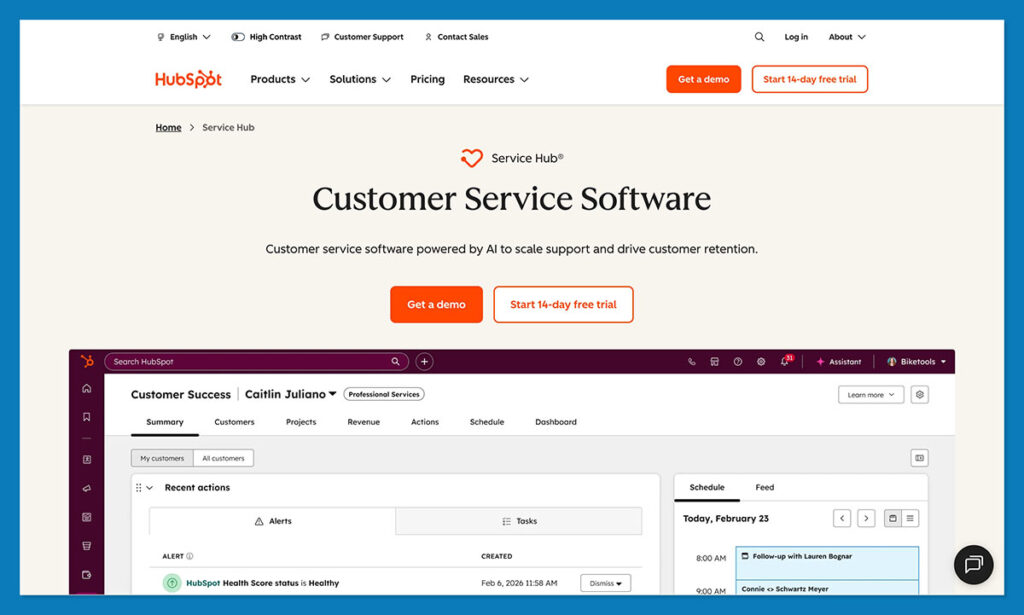
The Breeze Assistant aids in information retrieval and response generation. HubSpot Agents, such as the customer agent, are designed to automate entire customer service interactions, with HubSpot reporting that these agents can resolve up to 65% of conversations automatically for many teams.
A particularly impressive aspect of Breeze Intelligence is its ability to unify and cleanse data, simplify forms, and uncover insights that would typically require extensive manual effort.
Zendesk’s AI is more focused on traditional support functions, offering features like suggested replies, automated ticket triage, call summarization, quality assurance scoring, and workforce management tools that are essential for organizing large support teams. These features are highly beneficial for businesses managing constant high volumes, and the voice capabilities are especially strong for teams spending significant time on calls.
The fundamental divergence lies in their strategic focus: Zendesk concentrates intensely on optimizing the support queue, whereas HubSpot aims to manage the entire customer journey, integrating AI tools that bridge sales, marketing, and customer support.
Omnichannel Support & Ticket Management
The concept of a shared inbox, while seemingly basic, becomes indispensable when implemented effectively. HubSpot consolidates email, chat, WhatsApp, Messenger, and form submissions into a unified view directly within the CRM. This seamless integration allows agents to transition between inquiries such as shipping status and product sizing without losing critical context. The platform’s ticket pipelines are designed for easy management, enabling teams to effectively categorize and address returns, complaints, VIP customer messages, and general inquiries.
Zendesk boasts a more extensive list of supported channels, including SMS, in-app messaging, and a wider array of social media platforms. For businesses operating across multiple fronts—chat, email, Instagram DMs, and phone—Zendesk’s workspace can feel more comprehensive. However, without direct CRM integration, Zendesk’s workspace may not automatically pull complete customer history, necessitating additional configuration to ensure full context is available across all interactions.
CRM Strength and Product Extras
The underlying CRM capabilities represent a significant differentiator between these two platforms.
HubSpot’s CRM is the operational core of the business. Every interaction, from ticket submission to sales notes, is integrated into a unified customer timeline, providing agents with immediate access to purchase history, abandoned cart data, email engagement, and past service interactions.
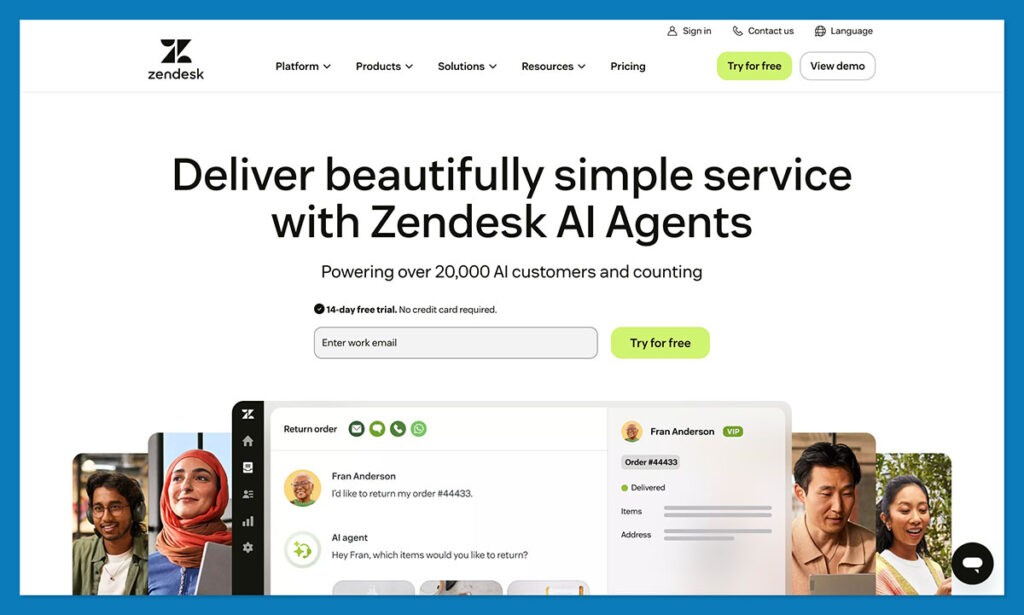
Zendesk Sell, while competent, operates more independently. Its acquisition history as Base CRM is evident in its distinct operational logic. This separation can lead to agents frequently switching between the support workspace and the CRM to access complete customer information, which can be time-consuming during busy periods.
Beyond core CRM functionalities, HubSpot offers supplementary features that foster a more connected business environment:
- Customer Success Workspace: Provides tools for proactive customer management, including health scoring and playbooks.
- NPS Tracking: Enables businesses to measure customer satisfaction and identify areas for improvement.
- Playbooks: Guides agents through specific customer scenarios, ensuring consistent and effective responses.
Zendesk’s additional features are geared towards operational efficiency within the support function:
- Workforce Management (WFM): Tools for scheduling, forecasting, and managing support staff.
- Quality Assurance (QA): Features for monitoring and evaluating agent performance.
- Advanced Reporting: Deep dives into contact center metrics, queue performance, and agent productivity.
HubSpot’s reporting capabilities stand out due to their holistic nature. Tickets are presented alongside deals, marketing campaign data, order histories, and subscription information, allowing businesses to analyze the impact of service on revenue and retention, not just response times. The customer success workspace, health scoring, NPS tracking, and playbooks offer sophisticated tools that can mature smaller teams’ operational capabilities without requiring additional software.
Zendesk’s reporting is more akin to a traditional support analytics suite. Its Explore feature provides robust ticket metrics, queue trends, QA scores, and staffing insights, which are highly valued by contact center managers. However, without further integrations, Zendesk does not inherently connect the dots between customer support and the broader customer lifecycle.
Pricing & Scalability: HubSpot vs Zendesk
The pricing models and scalability of these platforms are closely intertwined with their overall value proposition.
HubSpot’s pricing structure is characterized by its accessibility. The free CRM offers genuine utility, including contact management and basic ticketing for two users. Service Hub’s Starter tiers are competitively priced, with costs escalating for Professional and Enterprise features. While there can be a significant jump between tiers, HubSpot’s integrated nature can lead to cost savings by consolidating multiple disparate tools.
Zendesk does not offer a free tier, though demo options are available. Its entry-level paid plans begin at a higher price point, but the cost increments between tiers are generally smaller. However, it’s important to note that Zendesk Sell incurs additional costs, and even with its integration, businesses are often working with functionally separate tools. When the costs of Zendesk Suite, Zendesk Sell, and necessary integrations are aggregated, the total expenditure can approach enterprise-level pricing for mid-sized businesses.

Scalability: Where Each Platform Holds Up
HubSpot demonstrates strong scalability when a business prioritizes a unified customer record. Adding users, workflows, and data is a straightforward process, as the CRM is designed for extensive growth. The primary consideration at higher tiers becomes the overall cost, especially if a business adopts multiple HubSpot hubs.
Zendesk excels in handling high ticket volumes. Its architecture is robust enough to manage significant influxes of customer inquiries without performance degradation. However, as a business scales and requires a broader suite of tools beyond core support, Zendesk’s "service-first" architecture can reveal limitations. While scaling the support team may be seamless, other business functions might continue to rely on disconnected tools.
Integrations & App Ecosystems
In the e-commerce world, seamless integration with other business tools is non-negotiable. Support platforms must interact effectively with checkout systems, marketing platforms, and sales tools.
HubSpot’s ecosystem has matured considerably, offering a robust App Marketplace, the Data Hub for synchronization, and numerous connectors for platforms like Shopify, WooCommerce, and BigCommerce. The Data Hub facilitates true two-way synchronization, ensuring that data updates in one system are reflected across others. Critically, because Service Hub resides within the HubSpot CRM, all integrations automatically benefit sales, marketing, and support functions concurrently.
Zendesk’s marketplace is also extensive, allowing for integration with a wide array of applications. However, the quality and depth of these integrations can vary. While many applications integrate smoothly with the support workspace, fewer offer seamless integration with Zendesk Sell. This inherent separation between Zendesk Suite and Zendesk Sell can lead to a fragmented integration landscape. Many e-commerce businesses utilizing Zendesk often find themselves managing a separate CRM, marketing stack, and various custom scripts, a setup that can become vulnerable during peak operational periods. While connectors exist, some rely on intermediary solutions like Zapier, which can introduce latency and occasional bugs during high order volumes.
HubSpot vs Zendesk: The Verdict
The choice between HubSpot Service Hub and Zendesk often becomes clear upon practical evaluation. Both platforms are excellent in their respective domains, but HubSpot consistently emerges as the preferred option for businesses that value interconnectedness across their customer-facing operations. Its ability to maintain a unified view of the customer journey is a significant advantage.
Zendesk remains a formidable solution for organizations that prioritize pure ticket management and operate at a high volume. Its sturdiness and efficiency in managing extensive queues are unparalleled.
However, for e-commerce businesses that rely on more than just ticket volume—for those seeking to foster repeat business and customer loyalty—HubSpot offers a more natural, manageable, and time-saving solution. Its integrated approach ensures that support, sales, and marketing efforts are aligned, creating a more cohesive and effective customer experience.
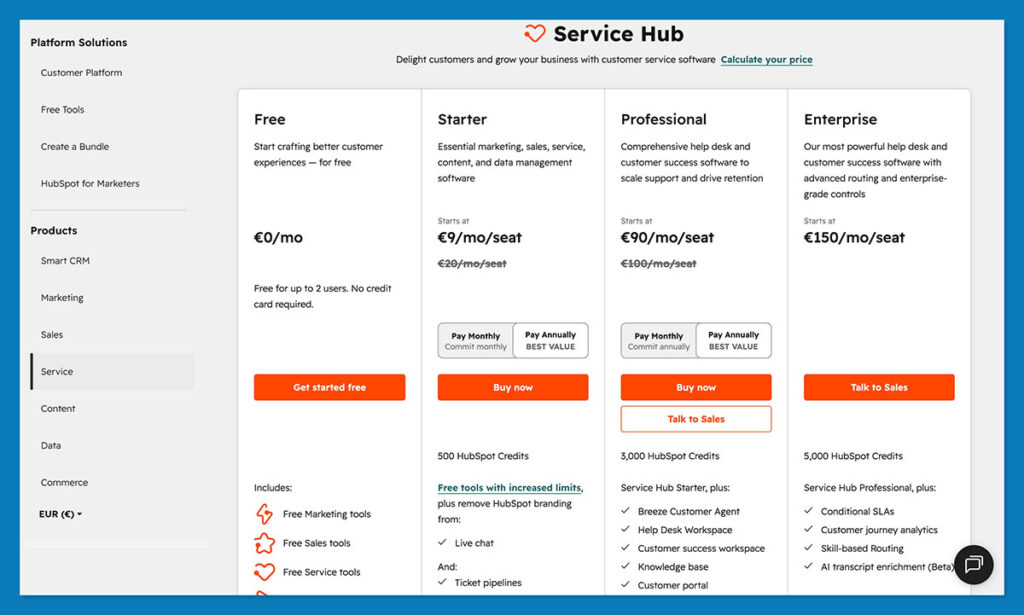
For businesses leaning towards HubSpot, the best next step is to create a free HubSpot CRM account and test its capabilities with real-world scenarios. This hands-on experience will provide the most accurate assessment of its suitability for your specific needs.
FAQ
How does HubSpot compare to Zendesk?
HubSpot integrates support into the entire customer journey, while Zendesk focuses on ticket flow. For businesses prioritizing context and a unified customer view, HubSpot generally offers a more comprehensive solution. For organizations with a primary focus on high-volume ticket management, SLAs, and extensive voice support, Zendesk often feels more optimized.
When should you use HubSpot for e-commerce?
HubSpot is ideal for e-commerce stores that depend on repeat customers and require clear visibility across all customer interactions. Its unified CRM ensures that support, marketing, and sales teams share the same customer data, providing insights into the root causes of support tickets and facilitating strategies to enhance customer retention and lifetime value.
Is HubSpot affordable for small businesses?
Yes, HubSpot is accessible for small businesses. Its free CRM includes essential features like contact management and basic ticketing for up to two users. Service Hub Starter plans begin at a competitive price per seat per month. While costs increase at the Professional and Enterprise tiers, the integrated nature of the platform can offer significant cost efficiencies compared to managing multiple separate tools.